World Cuisine
Traditional Greek Moussaka Recipe
Why This Traditional Greek Moussaka Is Worth Every Minute
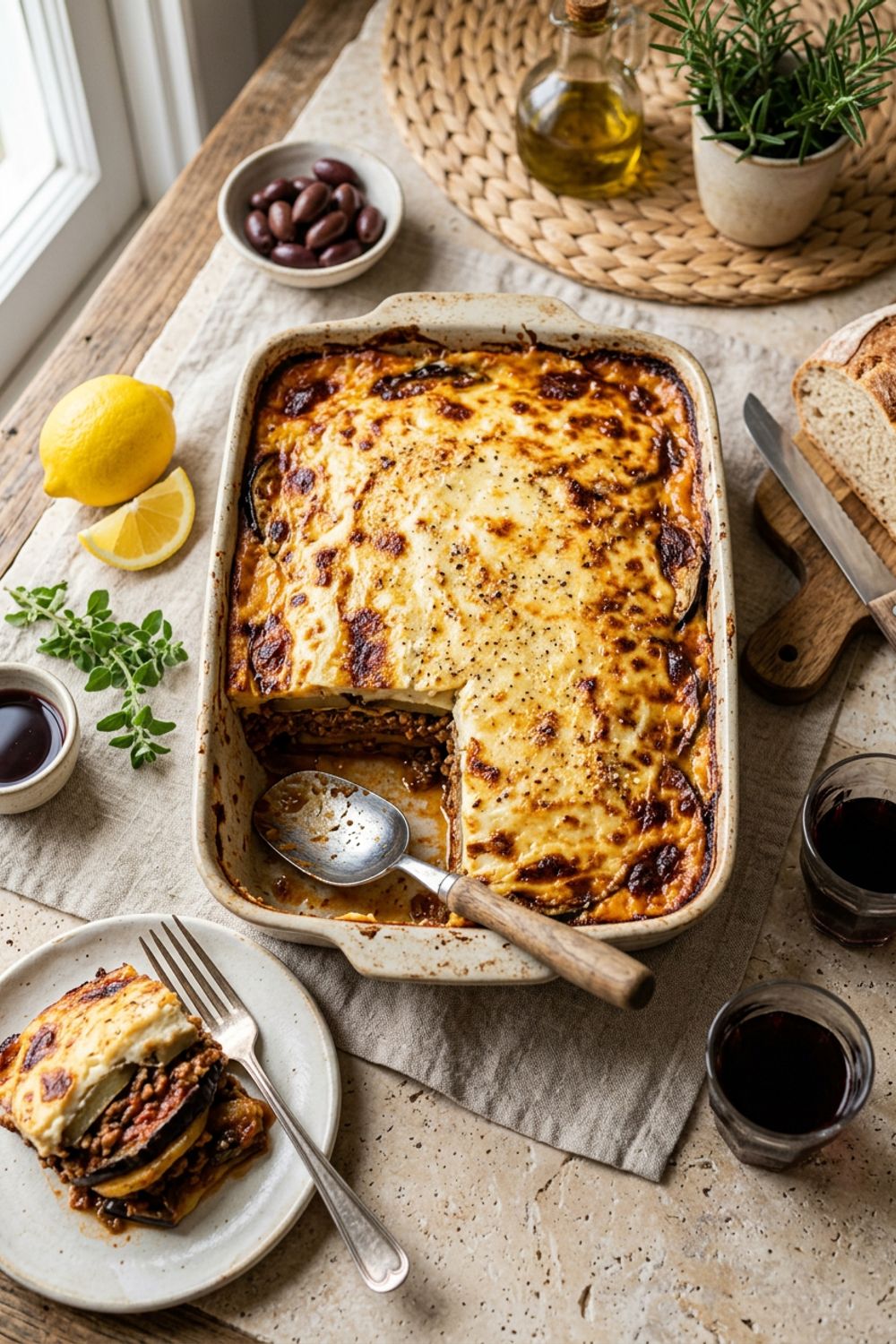
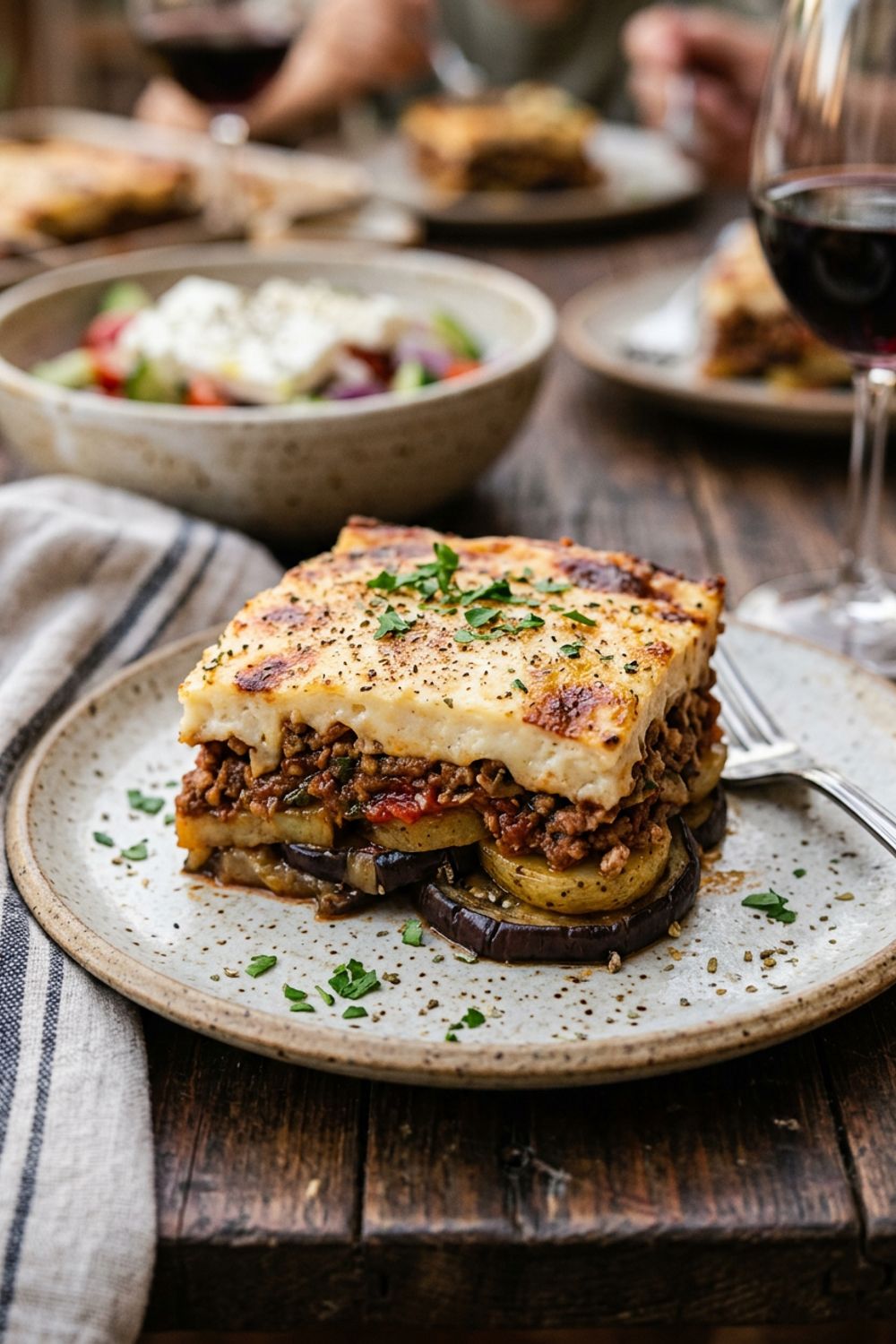
If I had to choose one dish that perfectly embodies the soul of Greek cuisine, it would be moussaka without a moment’s hesitation. I first tasted truly authentic moussaka on the island of Crete, at a family taverna perched on a hillside overlooking the Aegean Sea. The grandmother of the family brought out a steaming casserole dish and cut me a generous square that revealed those gorgeous layers — silky eggplant, deeply spiced lamb, and a golden béchamel crown that was puffed and caramelized like a savory cloud. Each bite was a masterclass in how simple ingredients, prepared with love and patience, can create something transcendent.
What makes this moussaka recipe special is the attention I pay to each individual layer. Many recipes rush through the eggplant preparation, but I roast mine until they are completely tender and slightly caramelized. The meat sauce gets its complexity from a combination of warm spices — cinnamon, allspice, and nutmeg — that are the hallmarks of authentic Greek cooking. And the béchamel is enriched with egg yolks and Parmesan, giving it a richness and depth that sets it apart from a basic white sauce.
I understand that moussaka is a project — it is not a weeknight throw-together meal. But I promise you that the result is absolutely worth the effort. This is the kind of dish that feeds a crowd, impresses at dinner parties, and makes your entire house smell like a Greek grandmother’s kitchen. I make moussaka at least once a month during the cooler seasons, and it has become one of the most requested recipes in my repertoire.
The beauty of moussaka lies in its versatility and make-ahead friendliness. You can prepare each component up to a day in advance and assemble just before baking. This makes it the perfect dish for entertaining because most of the work happens well before your guests arrive. All you need to do is slide it into the oven and let the magic happen while you enjoy a glass of wine and some good conversation.
The Key to Perfect Eggplant Layers
The eggplant is the backbone of moussaka, and getting it right makes or breaks the entire dish. I have experimented with frying, grilling, and roasting, and I have landed firmly on roasting as the best method for home cooks. Roasting requires far less oil than frying, produces more consistent results, and allows you to prepare all the eggplant at once rather than standing over a sizzling pan for an hour.
The salting step is one that I never skip, even though some modern eggplant varieties have been bred to be less bitter. Beyond reducing bitterness, salting draws out a significant amount of water from the eggplant, which serves two important functions: it prevents the eggplant from releasing moisture into the moussaka during baking (which would make it watery), and it improves the texture of the roasted slices, making them creamier and more velvety. I arrange the slices on a wire rack set over a baking sheet and salt both sides generously, then let them sit for a full 30 minutes.
When roasting, the slices should be golden brown on both sides and completely tender when pierced with a knife. Under-roasted eggplant will have an unpleasant, slightly rubbery texture in the finished dish, while properly roasted slices will meld seamlessly with the meat sauce and béchamel. I brush each slice with just enough olive oil to coat — eggplant is like a sponge, and it will absorb as much oil as you give it, so moderation is important.
Building a Rich, Aromatic Meat Sauce
The meat sauce in Greek moussaka is fundamentally different from an Italian bolognese, and the difference lies in the spice profile. Cinnamon is the star ingredient that gives Greek meat sauces their distinctive character — it adds a warm, slightly sweet complexity that plays beautifully against the acidity of the tomatoes and the richness of the lamb. I use a full teaspoon of ground cinnamon, which might seem like a lot, but it mellows beautifully during the long simmer and becomes a subtle background note rather than an overpowering flavor.
Browning the meat is a step I take very seriously. I cook the ground lamb in batches over high heat without stirring for the first few minutes, allowing a deep, caramelized crust to form. This Maillard reaction creates hundreds of flavor compounds that simply cannot be achieved if you break up the meat too early or cook it at too low a temperature. The browned bits that stick to the bottom of the pan are pure gold — the red wine deglazes the pan and incorporates all of that concentrated flavor into the sauce.
The tomato component should be restrained in a traditional Greek moussaka. This is not a pasta sauce where tomatoes dominate; rather, the tomatoes provide acidity and moisture that balance the richness of the lamb. I use crushed tomatoes for their smoother texture and add just enough tomato paste to deepen the color and concentrate the flavor. After 20 minutes of uncovered simmering, the sauce should be thick enough to mound on a spoon without spreading.
Tips for Achieving Moussaka Perfection
Let the Moussaka Rest Before Cutting. This is the single most important tip I can give you, and it is the one that I see violated most often. Moussaka needs a minimum of 20 minutes of resting time after it comes out of the oven. During this time, the layers set and the béchamel firms up enough to hold its shape when sliced. Cutting into moussaka too early results in a messy, soupy pile rather than those gorgeous, distinct layers. I aim for 25 to 30 minutes of resting, and the moussaka is still plenty hot when served.
Temper Your Egg Yolks Carefully. Adding egg yolks to the béchamel sauce is what gives it that luxurious, custard-like quality that sets authentic moussaka apart. However, if you dump cold egg yolks directly into the hot sauce, you will end up with scrambled eggs. Always temper first by whisking a few tablespoons of the hot sauce into the yolks to raise their temperature gradually, then stir the warmed yolk mixture back into the pot. Work quickly and whisk constantly.
Use a Large Enough Baking Dish. A 9x13-inch dish is the minimum size I recommend for this recipe. Anything smaller will result in a moussaka that is too tall, which means the center will take forever to cook and the top will burn before the interior is hot. If you do not have a dish that large, divide the moussaka between two smaller dishes and reduce the baking time by about 10 minutes.
Choose the Right Eggplant. Globe eggplants (the large, dark purple variety) are the most traditional choice for moussaka and have the best texture for layering. Italian eggplants also work well due to their fewer seeds and creamier flesh. I avoid Japanese eggplants for this recipe because their thin profile makes layering difficult, and they tend to become too soft during the long baking time.
Season Each Layer Independently. Rather than relying on the meat sauce to season the entire dish, I make sure each component is well seasoned on its own. The eggplant gets salt during the drawing step, the meat sauce is seasoned with salt, pepper, and spices, and the béchamel gets its own salt, nutmeg, and cheese. This layered seasoning ensures that every bite is flavorful from top to bottom, no matter where your fork lands.
Variations to Try
Vegetarian Moussaka with Lentils. Replace the lamb with 2 cups of cooked green or brown lentils for a hearty vegetarian version that loses none of the satisfaction. I add an extra tablespoon of tomato paste and a splash of balsamic vinegar to the lentil sauce to compensate for the reduced richness. The spice profile stays identical, and the lentils absorb the cinnamon and allspice beautifully. This version is actually lighter and I find I can eat more of it without feeling overly full.
Potato Moussaka (Papoutsakia Style). Add a layer of thinly sliced potatoes beneath the eggplant for an even heartier version. Parboil 2 large Yukon Gold potatoes, sliced 1/4-inch thick, for 5 minutes before layering. The potato layer adds a creamy, starchy element that is incredibly comforting. In some Greek households, the potatoes replace the eggplant entirely, but I love having both for maximum textural variety.
Moussaka with Zucchini. During summer months when zucchini is abundant, I sometimes replace half the eggplant with sliced zucchini. Salt and roast the zucchini using the same method. The zucchini adds a lighter, slightly sweeter element that makes the dish feel less heavy while still maintaining the classic layered structure. This variation is especially popular in the Greek islands where summer vegetables are celebrated.
Chicken Moussaka. For a lighter protein option, use ground chicken thigh meat instead of lamb. The dark meat provides more flavor and moisture than chicken breast. I add a tablespoon of Worcestershire sauce and an extra clove of garlic to boost the savory depth. The result is a moussaka that is just as satisfying but significantly lower in fat.
How to Store and Reheat
Moussaka stores beautifully and many Greeks will tell you it tastes even better the next day after the flavors have had time to meld. Cool the moussaka completely, then cover tightly with aluminum foil or transfer individual portions to airtight containers. It will keep in the refrigerator for up to 4 days. To reheat, place individual portions in a 350 degree Fahrenheit oven for 15 to 20 minutes until heated through. You can also microwave individual slices for 2 to 3 minutes, though the oven method preserves the crispy top better.
Moussaka freezes well for up to 3 months. I recommend freezing it in individual portions wrapped tightly in plastic wrap and then aluminum foil. Thaw overnight in the refrigerator before reheating. You can also freeze the unbaked assembled moussaka — wrap the entire dish tightly and freeze. Bake from the refrigerated (thawed) state, adding about 15 extra minutes to the baking time.
Troubleshooting Your Moussaka
If your moussaka is watery when you cut into it, the most likely culprits are under-salted eggplant or under-reduced meat sauce. The eggplant must be thoroughly salted and patted dry before roasting, and the meat sauce should be thick and concentrated, not loose and saucy. Another common cause is cutting into the moussaka too soon — give it the full 20 to 30 minutes of resting time.
If the béchamel is too thin and runs off the sides instead of sitting in a golden cap on top, it was not cooked long enough before the egg yolks were added. The sauce should be thick enough to coat a spoon heavily before you remove it from heat. If it is already in the dish and too thin, you can sprinkle a thin layer of breadcrumbs over the top before baking to help absorb excess moisture and create a golden crust.
If the top is browning too quickly while the interior is still cold, your oven is running hot or the moussaka is on a rack that is too high. Move the dish to the lower third of the oven and tent with aluminum foil for the remaining baking time. An oven thermometer is an inexpensive investment that can solve many baking inconsistencies.
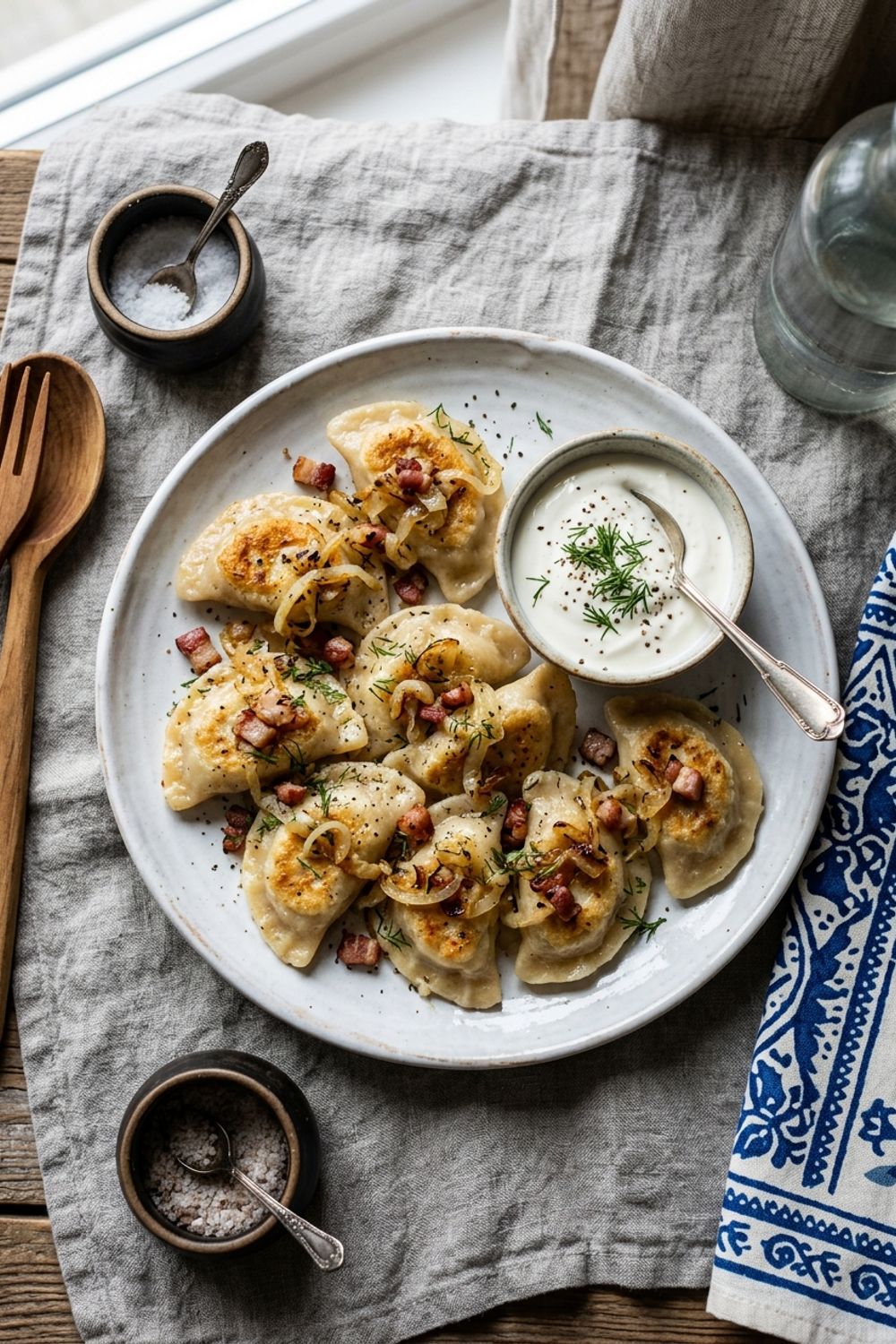
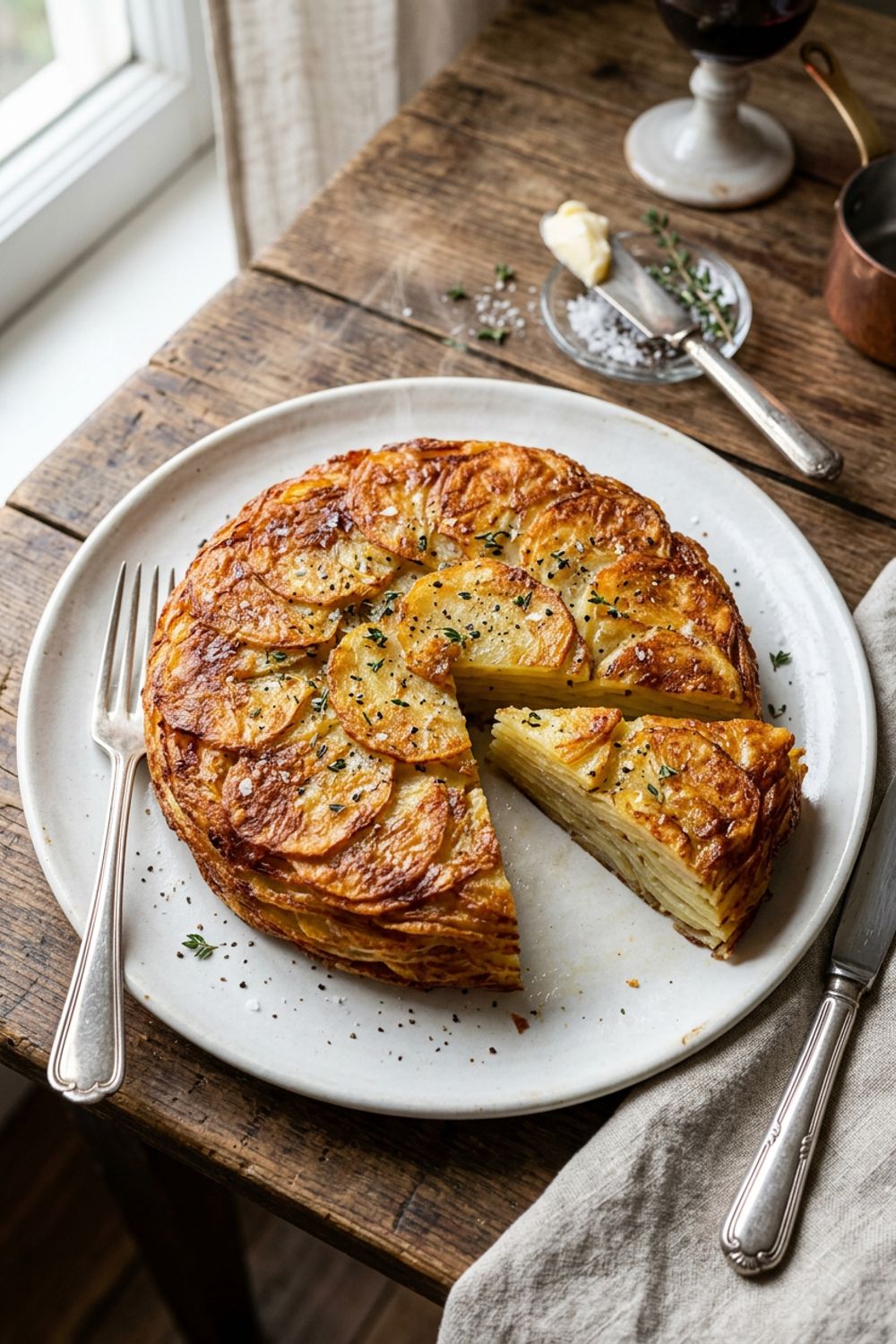
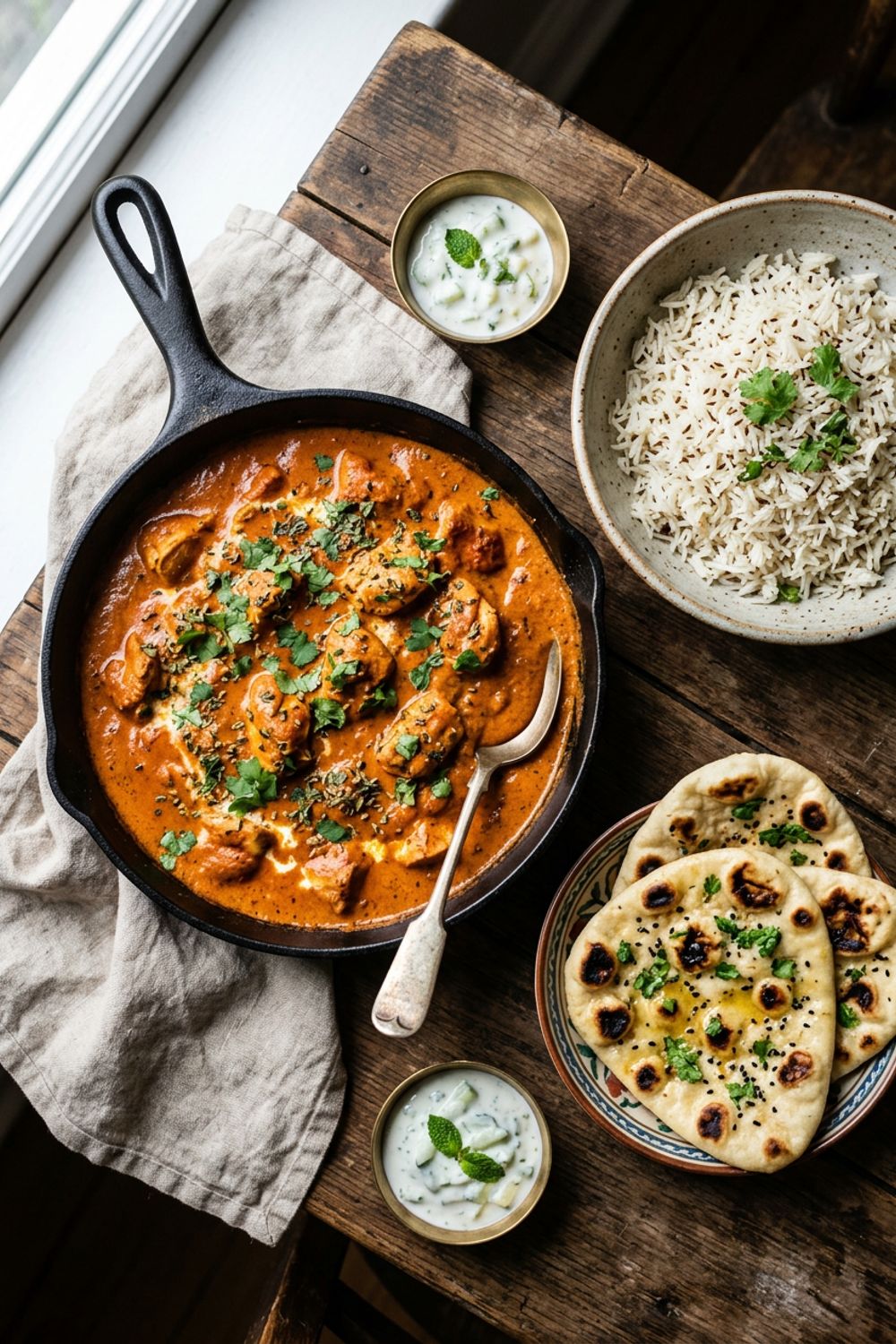
This traditional Greek moussaka is one of the most rewarding dishes you can master, and it never fails to receive compliments. For another European comfort classic, try my Cabbage Dumplings Polish Style or the elegant Pommes Anna. If you are craving something from a different corner of the world, my Homemade Butter Chicken and Chocolate Lava Cake are both absolute crowd favorites.
Never Miss a Recipe
Join 5,000+ home cooks and get new recipes straight to your inbox.
Ingredients
Eggplant Layer
Meat Sauce
Béchamel Sauce
Instructions
- 1
Prepare the Eggplant
Slice the eggplants into 1/3-inch thick rounds. Arrange on baking sheets and sprinkle both sides generously with coarse salt. Let sit for 30 minutes to draw out moisture and bitterness. Rinse under cold water and pat thoroughly dry with paper towels. Preheat the oven to 400°F (200°C). Brush both sides of each slice with olive oil and arrange on parchment-lined baking sheets. Roast for 20 minutes, flipping halfway, until golden and tender.
- 2
Make the Meat Sauce
Heat olive oil in a large, deep skillet over medium-high heat. Add the ground lamb and cook, breaking it up with a wooden spoon, for 6-8 minutes until deeply browned. Drain excess fat, leaving about 1 tablespoon in the pan. Add the diced onion and cook for 5 minutes until softened. Add garlic and cook 1 minute more. Pour in the red wine and scrape up any browned bits from the bottom. Add the crushed tomatoes, tomato paste, cinnamon, allspice, nutmeg, oregano, bay leaf, salt, and pepper. Simmer uncovered for 20 minutes until thick. Remove the bay leaf.
- 3
Make the Béchamel
Melt butter in a medium saucepan over medium heat. Add flour and whisk constantly for 2 minutes to cook out the raw taste. Gradually pour in the warm milk, whisking vigorously after each addition to prevent lumps. Continue cooking, stirring constantly, for 5-7 minutes until the sauce is thick enough to coat the back of a spoon. Remove from heat. Temper the egg yolks by whisking a few tablespoons of the hot sauce into the yolks, then stir the yolk mixture back into the pot. Add the nutmeg, Parmesan, salt, and white pepper. Stir until smooth.
- 4
Assemble the Moussaka
Reduce oven temperature to 375°F (190°C). Lightly oil a 9x13-inch baking dish. Arrange half the roasted eggplant slices in a single overlapping layer on the bottom. Spread all of the meat sauce evenly over the eggplant. Layer the remaining eggplant slices on top of the meat. Pour the béchamel sauce over the top, spreading it evenly to the edges with a spatula.
- 5
Bake to Perfection
Place the baking dish on a sheet pan to catch any drips. Bake for 40-45 minutes until the top is deeply golden brown and the sauce is bubbling around the edges. If the top is browning too quickly, tent loosely with foil. Remove from the oven and let rest for at least 20 minutes before cutting — this is essential for the layers to set and the slices to hold together.
- 6
Serve
Cut the moussaka into squares and use a spatula to lift each piece carefully from the dish. Serve with a simple Greek salad of tomatoes, cucumber, red onion, olives, and feta cheese dressed with olive oil and oregano. A piece of crusty bread is the perfect accompaniment for soaking up any extra sauce.
Nutrition Information
Per serving (serves 8). Values are approximate.
| Calories | 480 calories |
| Total Fat | 28g |
| Saturated Fat | 12g |
| Carbohydrates | 28g |
| Sugar | 10g |
| Protein | 30g |
| Sodium | 780mg |
| Fiber | 6g |
* Percent Daily Values are based on a 2,000 calorie diet. Your daily values may be higher or lower depending on your calorie needs. Nutritional information is an estimate and may vary.
Frequently Asked Questions
Can I make moussaka with beef instead of lamb?
Yes, ground beef works as a substitute. The flavor will be milder than lamb but still delicious. You can also use a 50/50 blend of beef and lamb for a balanced flavor. Season the beef slightly more aggressively since it has a less pronounced natural flavor than lamb.
Why do I need to salt the eggplant?
Salting serves two purposes: it draws out excess moisture so the eggplant doesn't make the moussaka watery, and it removes some of the natural bitterness found especially in larger, more mature eggplants. The drier eggplant also absorbs less oil during cooking.
Can I assemble moussaka ahead of time?
Absolutely! Assemble the moussaka, cover tightly with plastic wrap, and refrigerate for up to 24 hours. When ready to bake, remove from the fridge 30 minutes before baking to take the chill off, and add 10-15 minutes to the baking time.
How do I prevent my béchamel from getting lumpy?
The key is to add the warm milk gradually while whisking constantly. Add about 1/2 cup at a time, whisking until smooth before adding more. Using warm milk instead of cold also helps prevent lumps because it incorporates more smoothly into the hot roux.

Hi, I'm Lisa!
I create simple, tested recipes from around the world that anyone can make at home.
Learn More →Reader Reviews
Based on 198 reviews