World Cuisine
Thai Coconut Red Lentil Soup — Easy Creamy Vegan Soup
Why This Thai Coconut Red Lentil Soup Is My Ultimate Comfort Bowl
There are certain recipes that feel like a warm hug in a bowl, and this Thai coconut red lentil soup is the absolute queen of that category for me. I created this recipe during a particularly dreary winter when I was craving something that would warm me up from the inside out while also being nourishing, satisfying, and — crucially — incredibly easy to make on a tired weeknight. What I ended up with exceeded every expectation and has since become one of the most popular recipes I have ever shared.
The genius of this soup lies in the red lentils themselves. Unlike green or brown lentils that hold their shape during cooking, red lentils completely dissolve into a silky, creamy base that mimics the texture of a blended soup without ever touching a blender. Combined with the richness of full-fat coconut milk and the aromatic punch of Thai red curry paste, you get a soup that tastes like it took hours of careful preparation but actually comes together in about 35 minutes from start to finish.
I love how this recipe bridges two of my favorite cuisines — Thai and Indian — into something that feels entirely its own. The curry paste and coconut milk nod to Thai cooking, while the lentils and warm spices echo the dals that are the backbone of Indian home cooking. The fresh lime juice and cilantro at the end tie everything together with a brightness that lifts the whole bowl out of heavy winter stew territory and into something vibrant and energizing.
What really seals the deal for me is the nutritional profile. This soup is naturally vegan, packed with plant-based protein from the lentils, rich in fiber, and loaded with anti-inflammatory ingredients like turmeric and ginger. It is the kind of meal that makes you feel genuinely good after eating it — satisfied and energized rather than heavy and sluggish. I make a big batch every Sunday and eat it for lunches throughout the week, and it only gets better as the flavors develop in the fridge.
The Magic of Red Lentils in Soup
Red lentils are one of the most underappreciated ingredients in the Western kitchen, and I am on a personal mission to change that. These tiny, salmon-colored legumes are a powerhouse of nutrition — a single cup of cooked red lentils provides about 18 grams of protein, 15 grams of fiber, and significant amounts of iron, folate, and manganese. But beyond their nutritional credentials, they have a culinary superpower that makes them perfect for soups: they disintegrate during cooking, transforming from individual legumes into a thick, velvety puree.
This natural thickening ability means you never need to add cream, butter, or flour to achieve a luxuriously creamy texture. The lentils do all the work for you. I have found that the key is to rinse them thoroughly before cooking — red lentils release a significant amount of starch, and rinsing removes the excess that would otherwise make the soup gluey rather than creamy. I rinse until the water runs mostly clear, which usually takes about three or four changes of water.
The cooking time for red lentils is remarkably forgiving. They begin breaking down at around 15 minutes and are completely dissolved by 25 minutes. You can adjust the final texture by controlling the cooking time — if you want a soup with some visible lentil pieces for texture, pull it off the heat at 18 minutes. If you prefer a completely smooth, velvet-like consistency, let it go the full 25 minutes and then give it a few pulses with an immersion blender. I personally land somewhere in the middle, letting about two-thirds of the lentils break down while leaving a few intact for textural interest.
How Thai Curry Paste Transforms Simple Soup
Thai red curry paste is one of the most flavor-dense ingredients you can keep in your kitchen, and it is the secret weapon that elevates this soup from a simple lentil puree to something extraordinary. A good quality red curry paste contains a complex blend of dried red chilies, lemongrass, galangal, garlic, shallots, cilantro root, kaffir lime zest, shrimp paste, and various spices — all pounded together into a concentrated paste that delivers an incredible depth of flavor in every teaspoon.
I cook the curry paste directly in the oil with the aromatics rather than adding it later with the liquid. This technique, called blooming, allows the fat-soluble flavor compounds in the paste to dissolve into the coconut oil, releasing their full aromatic potential. You will notice a dramatic intensification of aroma when the paste hits the hot oil — it should smell intoxicatingly fragrant, like a Thai kitchen in full swing. If you just stir it into the liquid, you miss this crucial step and the curry flavor remains muted and one-dimensional.
The amount of curry paste I use in this recipe — two tablespoons — provides a moderate warmth that is approachable for most palates. If you are sensitive to heat, start with one tablespoon and taste the soup before adding more. If you love spicy food, go up to three tablespoons for a soup that will warm you from the inside out. Different brands of curry paste vary enormously in their heat level, so adjust based on your specific paste. I always keep Mae Ploy and Thai Kitchen brands on hand, with Mae Ploy being the spicier of the two.
Tips for the Perfect Thai Coconut Lentil Soup
Rinse Your Lentils Until the Water Runs Clear. This might seem like a minor step, but it makes a significant difference in the final texture of your soup. Unrinsed lentils release excess starch that can make the soup overly thick and starchy rather than silky and creamy. I place them in a fine-mesh strainer and run cold water over them, stirring with my hand, until the water beneath is mostly clear. This takes about 60 seconds and is well worth the effort.
Use Full-Fat Coconut Milk from a Can. The fat content is what gives this soup its luxurious, creamy body. Lite coconut milk will result in a thin, watery soup that does not have the same satisfying mouthfeel. I shake the can vigorously before opening to combine the thick cream with the thinner liquid. Carton coconut milk is too dilute for this recipe — stick with the canned version for the best results.
Add the Lime Juice at the Very End. Acid added too early in the cooking process can prevent lentils from breaking down properly, resulting in a gritty soup with firm, uncooked lentils floating in a thin broth. I always add the lime juice and soy sauce after the lentils are fully cooked and the soup has reached its final texture. The transformation is immediate — what was a rich, somewhat heavy soup suddenly becomes bright, vibrant, and alive with flavor.
Build Flavor in Stages. I season this soup at three distinct stages: first with the curry paste and dry spices during the sauté, then with salt during the simmer, and finally with lime juice, soy sauce, and maple syrup at the end. This layered approach ensures complexity rather than a single monotone flavor. Taste at each stage and adjust. The final seasoning should hit all five taste receptors — sweet (maple syrup), salty (soy sauce), sour (lime), bitter (turmeric), and umami (curry paste).
Wilt the Spinach Gently. The baby spinach is added in the last two minutes of cooking and should be just barely wilted — bright green and tender but still with a slight body. Overcooked spinach turns army green, slimy, and bitter. If you prefer, you can substitute with chopped kale (add it 5 minutes earlier as it takes longer to tenderize) or leave the greens out entirely. Swiss chard is another excellent option that adds a beautiful ruby color to the soup.
Variations to Try
Green Curry Lentil Soup. Swap the red curry paste for an equal amount of Thai green curry paste for a completely different flavor profile. Green curry paste is more herbaceous and brighter, with flavors of fresh green chilies, lemongrass, and Thai basil. I add a handful of frozen peas during the last 5 minutes of cooking and garnish with Thai basil instead of cilantro for a soup that tastes like spring even in the depths of winter.
Coconut Lentil Soup with Sweet Potato. Add 2 cups of peeled, diced sweet potato along with the lentils and broth. The sweet potato breaks down slightly during cooking, adding extra creaminess and a beautiful natural sweetness that pairs wonderfully with the curry spices. This heartier version is incredibly filling and can serve as a complete meal even without bread on the side.
Spicy Tom Yum Lentil Soup. For a more traditionally Thai flavor, replace the curry paste with 2 tablespoons of tom yum paste, add 3 sliced fresh lemongrass stalks and 4 kaffir lime leaves to the simmering soup (remove before serving), and finish with fish sauce instead of soy sauce. The sour-spicy profile of tom yum creates a completely different but equally delicious soup that is lighter and more broth-like.
Protein-Boosted Version with Tofu. For extra protein, press and cube a block of extra-firm tofu, then pan-fry the cubes in sesame oil until golden on all sides. Float the crispy tofu cubes on top of each bowl just before serving. The contrast between the crispy, golden exterior and the creamy soup is absolutely wonderful, and it turns the soup into a more substantial dinner.
How to Store and Meal Prep
This soup is an absolute champion for meal prep. It stores beautifully in the refrigerator for up to 5 days and actually develops deeper, more complex flavor as the spices continue to meld. The soup will thicken considerably as it cools — this is completely normal and caused by the lentil starch setting up. Simply add a splash of vegetable broth or water when reheating to thin it back to your preferred consistency.
For freezing, let the soup cool completely, then transfer to freezer-safe containers leaving about an inch of headspace for expansion. It freezes beautifully for up to 3 months. Thaw overnight in the refrigerator and reheat on the stovetop over medium-low heat, stirring frequently. I recommend freezing the soup without the spinach and adding fresh spinach when you reheat, as frozen and reheated spinach has a less appealing texture. Always finish with a fresh squeeze of lime juice after reheating.
Troubleshooting Your Lentil Soup
If your soup is too thick and paste-like rather than soupy, simply add more vegetable broth or water, half a cup at a time, until you reach your desired consistency. Red lentils absorb a remarkable amount of liquid, especially as the soup sits, so this is a very common issue rather than a mistake. I usually keep an extra cup of broth nearby while cooking for this exact reason.
If the soup tastes flat despite having all the right ingredients, it almost certainly needs more acid and salt. Add lime juice one tablespoon at a time, tasting after each addition, until the flavors pop. Then adjust the salt — lentils need a surprising amount of salt to taste their best. A splash of soy sauce adds both salt and umami in one go, which is why I include it in this recipe.
If the curry paste flavor is too subtle, you can intensify it by dissolving an additional tablespoon of curry paste in a splash of coconut milk and stirring it into the finished soup. This gives you a fresh burst of curry flavor without having to cook it again. Conversely, if the soup is too spicy, stir in an extra half cup of coconut milk to temper the heat.
This Thai coconut red lentil soup has become a beloved staple in my kitchen, and I hope it becomes one in yours too. For more Thai-inspired recipes, do not miss my Nam Jim Jaew dipping sauce, which pairs brilliantly with grilled vegetables on the side. For other cozy, nourishing meals, I recommend my Harissa Chickpeas and for a decadent treat after a healthy meal, my Chocolate Lava Cake is always a winner.
Never Miss a Recipe
Join 5,000+ home cooks and get new recipes straight to your inbox.
Ingredients
Soup Base
Finish and Garnish
Instructions
- 1
Sauté the Aromatics
Heat the coconut oil in a large pot or Dutch oven over medium heat. Add the diced onion and cook for 4-5 minutes until soft and translucent. Add the garlic, ginger, and Thai red curry paste. Cook, stirring constantly, for 1-2 minutes until very fragrant. The curry paste should darken slightly and become aromatic.
- 2
Add Spices and Lentils
Stir in the turmeric, cumin, and coriander. Cook for 30 seconds to bloom the spices. Add the rinsed red lentils and stir to coat them in the spice mixture. The lentils will absorb the curry paste and spices, turning a beautiful golden-orange color.
- 3
Add Liquids and Simmer
Pour in the vegetable broth, diced tomatoes with their juices, and coconut milk. Stir well to combine. Increase heat to high and bring to a boil. Once boiling, reduce heat to medium-low, partially cover, and simmer for 18-20 minutes, stirring occasionally, until the lentils have completely broken down and the soup is thick and creamy.
- 4
Blend for Creaminess (Optional)
For an extra creamy texture, use an immersion blender to blend about half the soup directly in the pot, leaving some lentils whole for texture. Alternatively, transfer 2 cups of soup to a blender, blend until smooth, and return to the pot. If you prefer a chunkier soup, skip this step entirely — the red lentils will naturally break down into a creamy consistency.
- 5
Finish the Soup
Stir in the baby spinach and let it wilt for 1-2 minutes. Add the lime juice, soy sauce, maple syrup, salt, and pepper. Taste and adjust the seasoning — it should be a balance of creamy, tangy, slightly sweet, and mildly spicy. The lime juice is essential and should brighten the entire soup.
- 6
Serve
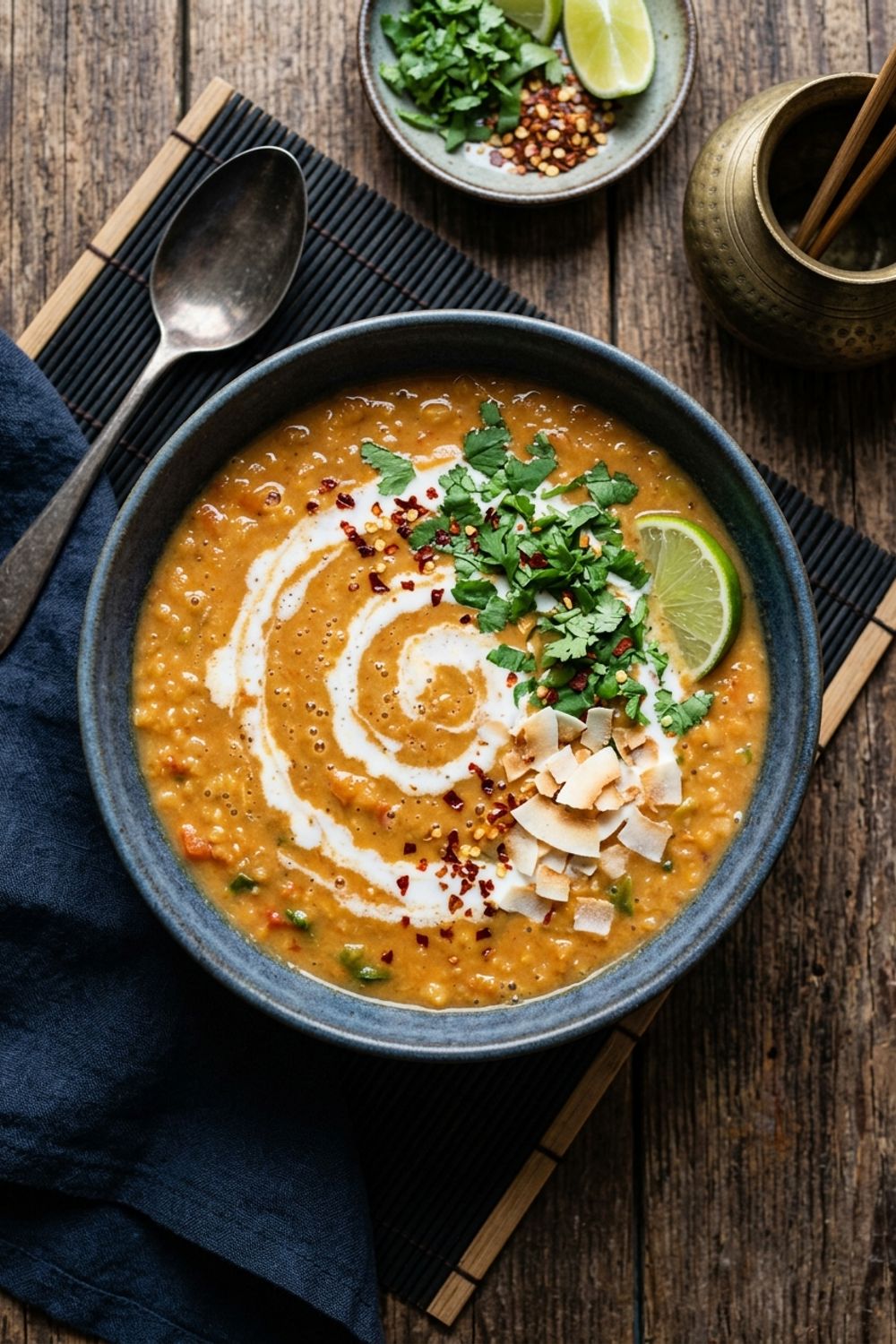
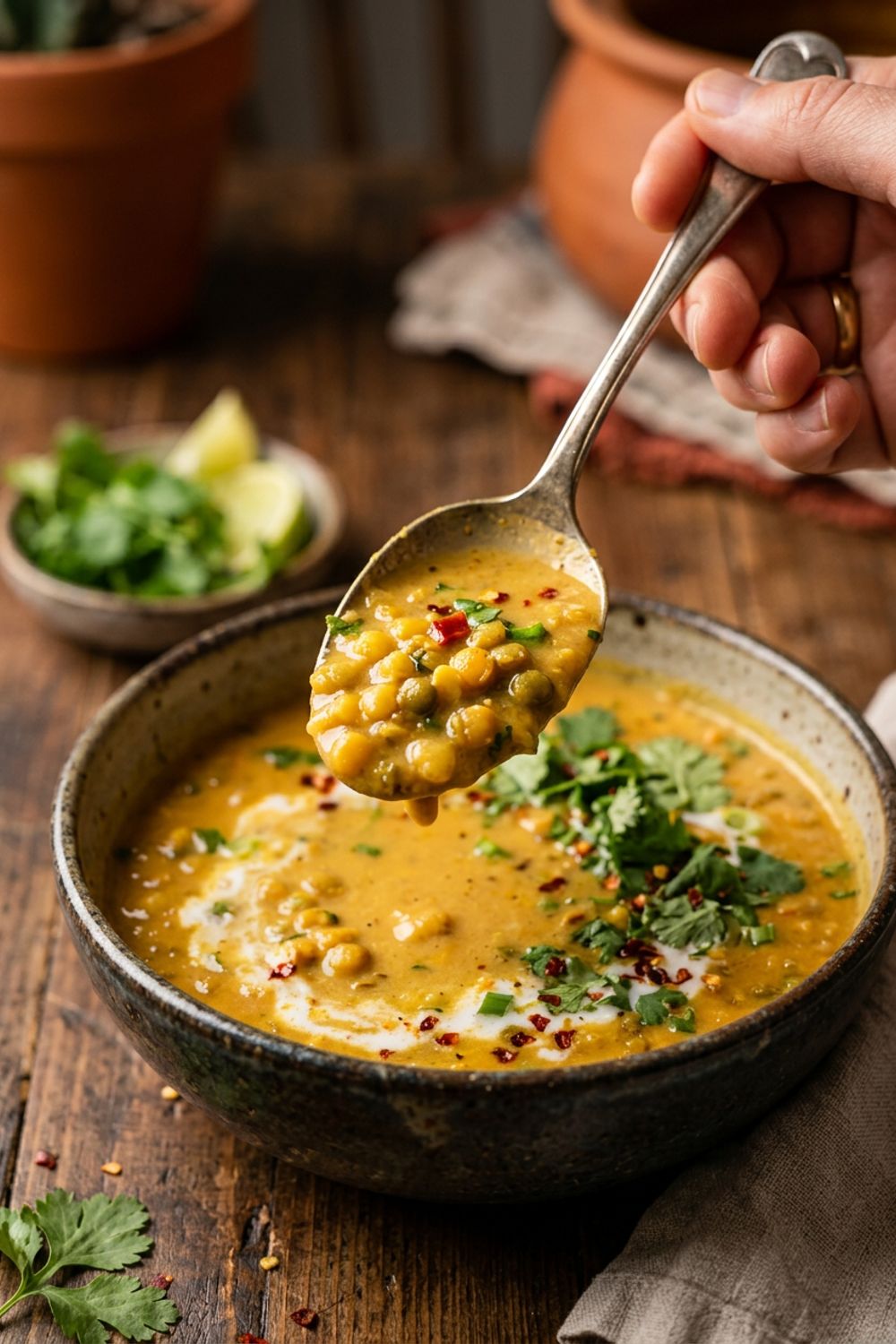
Ladle the soup into bowls. Drizzle with extra coconut milk in a spiral pattern, sprinkle with chopped cilantro, and add a pinch of red pepper flakes. Serve with warm naan bread or crusty sourdough for dipping.
Nutrition Information
Per serving (serves 6). Values are approximate.
| Calories | 320 calories |
| Total Fat | 14g |
| Saturated Fat | 11g |
| Carbohydrates | 38g |
| Sugar | 6g |
| Protein | 14g |
| Sodium | 680mg |
| Fiber | 8g |
* Percent Daily Values are based on a 2,000 calorie diet. Your daily values may be higher or lower depending on your calorie needs. Nutritional information is an estimate and may vary.
Frequently Asked Questions
What makes red lentils ideal for soup?
Red lentils are perfect for soup because they break down completely during cooking, creating a naturally thick and creamy texture without needing any cream or thickener. They cook in about 20 minutes — much faster than green or brown lentils — and have a mild, slightly sweet flavor that absorbs spices beautifully.
Can I use a different curry paste?
Yes! Thai yellow curry paste gives a milder, slightly sweeter flavor, while green curry paste adds a brighter, more herbaceous heat. Indian curry paste will work too but will change the flavor profile significantly. Adjust the amount based on the heat level of your specific paste.
How do I make this nut-free?
This recipe is already naturally nut-free. Just check your curry paste ingredients, as some brands contain peanuts or tree nuts. Thai Kitchen and Mae Ploy are generally nut-free options.
Can I use other lentils?
Red lentils give the best creamy texture, but yellow lentils (moong dal) work similarly. Green or brown lentils will hold their shape instead of breaking down, giving you a more chunky, stew-like result rather than a smooth soup. They also take longer to cook (30-40 minutes).

Hi, I'm Lisa!
I create simple, tested recipes from around the world that anyone can make at home.
Learn More →Reader Reviews
Based on 263 reviews