Quick & Easy
Nutella Crêpes with Fresh Strawberries
Why This Recipe Is Special
There is a crêpe stand on a narrow side street near the Eiffel Tower where I had the single best thing I have ever eaten. It was late on a chilly November evening, and the man behind the counter spread warm Nutella across a freshly made crêpe, layered on sliced strawberries, folded it into a perfect triangle, and handed it to me wrapped in paper. I stood on that street corner eating it in the cold air, completely oblivious to everything around me, and I remember thinking that something this simple had no business being this perfect.
That memory is why I make these Nutella crêpes at least twice a month. They are one of those rare recipes that manage to be both incredibly easy and genuinely showstopping. The crêpes themselves are thin, delicate, and buttery with lacy golden edges. The warm Nutella melts into every fold, and the macerated strawberries add a burst of fresh, slightly tart sweetness that cuts through the chocolate richness beautifully.
What makes this recipe special is the attention to the small details that most people skip. Resting the batter, warming the Nutella, macerating the strawberries — these are not complicated techniques, but they are the difference between a good crêpe and an unforgettable one. Each step takes only a few extra minutes but the cumulative impact on flavor and texture is enormous.
I serve these for weekend brunches, casual dinner parties, and late-night dessert cravings. They work for every occasion because they straddle that perfect line between casual and elegant. Kids go crazy for them, adults feel transported to a Parisian café, and nobody ever believes how easy they are to make. That gap between perceived difficulty and actual effort is the greatest magic trick in cooking, and Nutella crêpes perform it flawlessly.
The beauty of crêpes is that they are a canvas. Once you master the basic technique — and I promise you will after just 2 or 3 crêpes — the filling variations are endless. But Nutella and fresh strawberries remain my absolute favorite combination. There is a reason it is the most popular order at every crêpe stand in Paris.
The Science Behind Perfect Crêpe Batter
Understanding what is happening in your batter gives you the confidence to troubleshoot on the fly and produce consistently beautiful crêpes every single time. The science is simple but fascinating, and knowing it has made me a much better cook.
Flour provides structure through gluten — the protein network that forms when flour meets liquid. In crêpes, you want just enough gluten for the crêpe to hold together in a thin sheet, but not so much that it becomes tough or chewy. This is why resting the batter is critical. When you first mix flour and liquid, the gluten is tense and elastic. During the 30-minute rest, those gluten strands relax, producing a batter that flows more smoothly and crêpes that are delightfully tender.
The eggs serve dual purposes. The whites provide additional structure (they set as they cook, helping the crêpe hold its shape), while the yolks contribute fat and emulsifiers that create richness and a smooth, cohesive batter. Room-temperature eggs are important because cold eggs can seize the melted butter into small clumps that create an uneven batter.
The liquid ratio is where crêpes diverge from pancakes. Crêpes use a much higher proportion of liquid to flour — roughly 2:1 by volume. I split the liquid between milk and water deliberately. Milk adds flavor, fat, and browning ability (the lactose sugar caramelizes in the pan), while water keeps the batter thin enough to spread into those delicate, almost translucent sheets.
Melted butter in the batter does two things: it adds flavor and it acts as a built-in release agent. The fat coats the flour proteins, limiting gluten development and ensuring tenderness. It also means you need less butter in the pan between crêpes, so the cooking goes faster and the flavor stays clean rather than greasy.
The consistency check is simple — your batter should coat the back of a spoon and drip off in a steady stream. If it plops in thick globs, it needs more liquid. If it runs off like water, it needs a tablespoon more flour. Get this right and every crêpe will spread evenly and cook perfectly.
Mastering the Swirl Technique
The swirl is what separates a crêpe from a thin pancake, and it is the one technique that intimidates most people. I completely understand the anxiety — you are tilting a hot pan full of liquid batter and hoping for the best. But I promise that once you get the motion down, it becomes completely automatic, like riding a bike.
Here is the key insight: the swirl happens OFF the heat. Lift the pan away from the burner before pouring the batter. This gives you a few extra seconds before the batter starts to set, which is all the time you need to spread it evenly. Pour the batter into the center of the pan and immediately begin rotating your wrist in a smooth circular motion, tilting the pan so the batter flows outward toward the edges.
The motion should be confident and continuous. Hesitation creates thick spots because the batter sets wherever it stops moving. Think of it as painting a thin circle — start from the center and let gravity pull the batter outward as you tilt. One full rotation of the pan is usually enough for an 8-inch crêpe.
Do not worry if your first few crêpes are not perfect circles. The French have a saying that the first crêpe is always for the dog — it seasons the pan and lets you gauge the heat. By your third or fourth crêpe, you will have calibrated the amount of batter, the speed of your swirl, and the heat level, and they will start coming out beautifully.
If you find the swirl too challenging, there is a backup technique: pour the batter in and immediately tilt the pan in four directions — north, south, east, west — to spread it. It is less elegant but produces a perfectly acceptable crêpe. You can also pour the batter and spread it with the back of a spoon in a quick spiral motion, though this tends to make slightly thicker crêpes.
Temperature management matters too. Medium heat is the sweet spot — hot enough that the batter sets quickly when it hits the pan, but not so hot that it sets before you can spread it. If the batter sets into a thick lump the moment it hits the pan, your heat is too high. If it sits there looking wet for too long, turn it up slightly.
Tips for Perfect Results
Warm the Nutella properly. Cold Nutella straight from the jar is thick and will tear your delicate crêpes when you try to spread it. Warming it in the microwave for 15-20 seconds makes it pourable and silky. Adding a tablespoon or two of heavy cream creates an even smoother consistency that spreads like a dream. Do not overheat — Nutella that is too hot becomes thin and runs off the crêpe.
Macerate the strawberries. This tiny step makes an outsized difference. Tossing sliced strawberries with a tablespoon of sugar and letting them sit for 20-30 minutes draws out their natural juices, creating a ruby-red syrup that pools beautifully on the plate. The strawberries themselves become more intensely flavored and slightly softened, complementing the warm Nutella perfectly.
Keep your crêpes warm. As you cook them, stack the finished crêpes on a plate set over a pot of simmering water (a makeshift double boiler) or in a 200°F (95°C) oven. Cover with a clean kitchen towel to prevent drying. Warm crêpes are pliable and fold beautifully. Cold crêpes crack and the Nutella does not melt into them properly.
Use the right amount of butter in the pan. You want just a whisper of butter — enough to prevent sticking but not so much that the crêpe fries in a pool of fat. A pastry brush or a paper towel dipped in melted butter gives you the precise control you need. Re-butter every 2-3 crêpes, or whenever the crêpe starts to stick or loses its golden color.
Do not flip too early. The most common mistake is flipping before the first side is fully set. Watch for these signs: the edges curl up slightly and pull away from the pan, the surface goes from shiny and wet to matte and dry, and you can slide a spatula underneath without the crêpe tearing. This usually takes 60-90 seconds over medium heat.
Dust with powdered sugar at the very end. Powdered sugar starts to dissolve and disappear within minutes, so add it just before serving for that beautiful snowy effect. Use a fine-mesh sieve for an even dusting rather than sprinkling from a spoon, which creates clumps.
Variations to Try
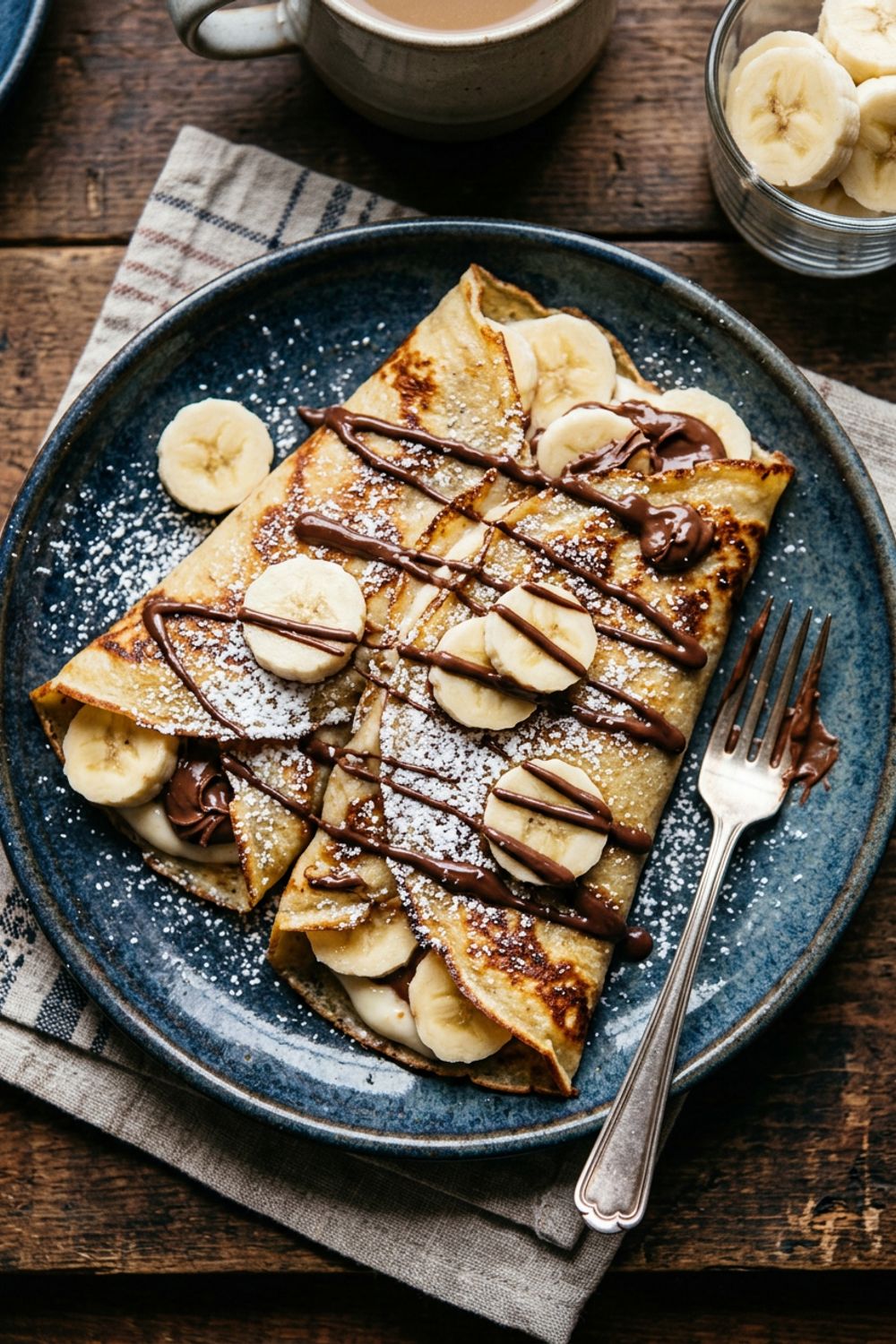
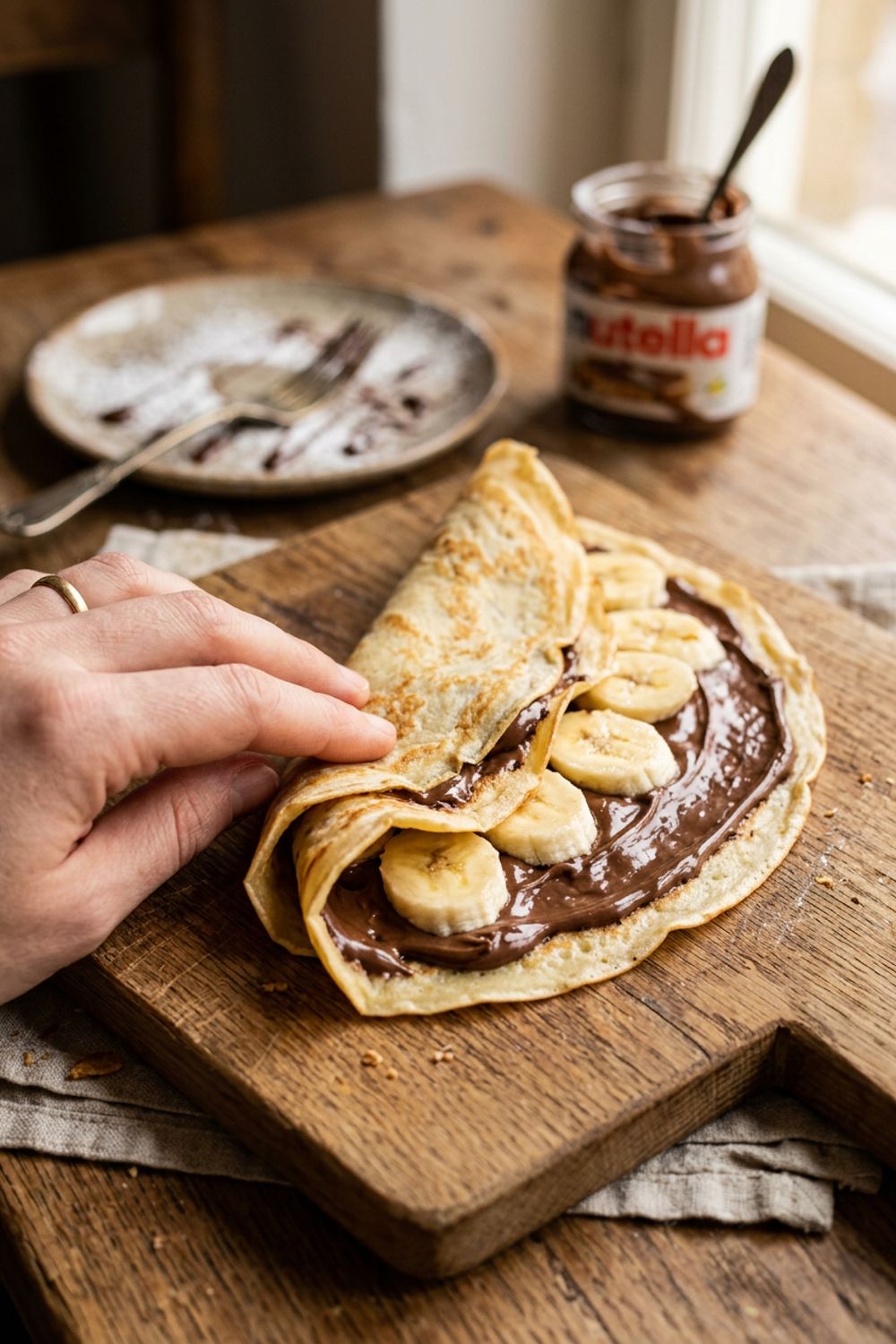
Banana Nutella Crêpes. Replace the strawberries with sliced banana — the classic Parisian street food combination. The soft, sweet banana and warm Nutella together are pure comfort food. For extra indulgence, caramelize the banana slices in a little butter and brown sugar before adding them to the crêpe.
Dark Chocolate and Sea Salt Crêpes. Skip the Nutella and make a quick ganache with 4 ounces of chopped dark chocolate and a quarter cup of heavy cream. Microwave until smooth, spread on the crêpes, and finish with a pinch of flaky sea salt. The contrast of bitter dark chocolate, sweet crêpe, and crunchy salt is sophisticated and addictive.
Savory Crêpes. Omit the sugar and vanilla from the batter for savory crêpes. Fill with ham and gruyère cheese, or smoked salmon with crème fraîche and dill. Savory crêpes (galettes) are traditionally made with buckwheat flour in Brittany, but all-purpose flour crêpes work beautifully for savory fillings too.
Crêpe Cake. Stack 15-20 crêpes with a thin layer of Nutella between each one to create a stunning layered cake. Refrigerate for 2 hours, then slice like a regular cake. The layers are gorgeous when you cut into it, and the presentation is spectacular for special occasions with very little actual effort.
S’mores Crêpes. Spread Nutella on the crêpe, add mini marshmallows, and fold. Place under the broiler for 30 seconds until the marshmallows puff and turn golden. The toasted marshmallow against the chocolate and delicate crêpe is an elevated take on a campfire classic.
Hosting a Crêpe Party
One of the most fun things I have ever done with this recipe is hosting a crêpe party, and I cannot recommend it highly enough. The concept is simple — make a big stack of crêpes in advance, set out a variety of fillings, and let everyone assemble their own. It is interactive, social, and surprisingly low-stress for the host because all the hard work is done before anyone arrives.
For fillings, I set out warm Nutella, sliced strawberries, banana slices, whipped cream, lemon curd, salted caramel sauce, fresh blueberries, toasted hazelnuts, and powdered sugar. Each person gets a plate and a warm crêpe, and they build their own creation. Kids especially love this — there is something magical about choosing your own fillings and watching someone fold a crêpe just for you.
How to Store
Unfilled crêpes store remarkably well and having a stash ready to go makes weeknight Nutella crêpes a 5-minute affair. Let the crêpes cool completely on a wire rack, then stack them with a piece of parchment paper or wax paper between each one. Wrap the stack tightly in plastic wrap.
Refrigerated, they keep for 2-3 days. Frozen, they last up to 1 month. To thaw, let the stack sit at room temperature for 20 minutes, or peel off individual crêpes and warm them in a dry skillet for 20 seconds per side. They reheat beautifully and taste nearly identical to fresh.
Filled crêpes should be eaten immediately — the Nutella soaks into the crêpe and the strawberry juices make everything soggy after about 30 minutes. If you need to serve them buffet-style, keep the components separate and let guests fill their own crêpes at the table. This is actually a wonderful interactive meal.
Leftover batter keeps in the refrigerator for up to 24 hours. Give it a good stir before using, as the flour will have settled. The batter might thicken overnight — add a tablespoon of milk to thin it back to the right consistency.
Troubleshooting
Crêpes are too thick. Your batter is too thick — add milk one tablespoon at a time until it reaches heavy cream consistency. You might also be pouring too much batter into the pan. For an 8-inch pan, 3 tablespoons is enough. Pour less than you think you need and swirl quickly.
Crêpes tear when folding. They are too dry or too cold. Fold them while still warm and pliable. If they have cooled, warm them briefly in the pan or microwave for 10 seconds under a damp paper towel. Also check that you are using enough fat in the batter — underfat crêpes are brittle.
First crêpe always fails. This is completely normal and even expected. The first crêpe calibrates the pan temperature and absorbs excess butter. Consider it a cook’s snack (or the dog’s treat, per French tradition) and move on. The second crêpe onward will be much better.
Nutella seizes or gets grainy. This happens when Nutella gets too hot. Microwave in 15-second intervals and stir between each. If it has already seized, stir in a tablespoon of warm cream and whisk vigorously until smooth. The fat in the cream will bring it back to a smooth consistency.
These Nutella crêpes are proof that extraordinary food does not require extraordinary effort. A simple batter, a hot pan, a jar of Nutella, and a handful of fresh strawberries — that is all it takes to create something that tastes like a Parisian dream. Every time I make them, I am right back on that cold November street corner, completely wrapped up in the simple joy of perfect food.
Never Miss a Recipe
Join 5,000+ home cooks and get new recipes straight to your inbox.
Ingredients
Crêpe Batter
Nutella Filling
Toppings
Instructions
- 1
Make the Batter
Whisk together the flour, sugar, and salt in a large bowl. Create a well in the center and crack in the eggs. Whisk the eggs while gradually incorporating the flour from the edges. Slowly pour in the milk and water, whisking continuously until the batter is completely smooth with no lumps. Stir in the melted butter and vanilla extract. The batter should be thin — similar to the consistency of heavy cream.
- 2
Rest the Batter
Cover the bowl with plastic wrap and refrigerate for at least 30 minutes, or up to overnight. Resting allows the gluten to relax and the flour to fully hydrate, resulting in crêpes that are more tender and less likely to tear. Stir gently before using — the batter will have thickened slightly.
- 3
Macerate the Strawberries
While the batter rests, toss the sliced strawberries with 1 tablespoon of sugar. Let them sit at room temperature for 20-30 minutes. The sugar draws out the natural juices, creating a beautiful syrupy liquid that becomes part of the topping.
- 4
Cook the Crêpes
Heat an 8-10 inch non-stick skillet or crêpe pan over medium heat. Brush lightly with melted butter. Lift the pan off the heat, pour about 3 tablespoons (45ml) of batter into the center, and immediately swirl the pan to spread the batter into a thin, even circle. Return to heat and cook for 60-90 seconds until the edges curl and the bottom is golden. Flip with a spatula (or a confident wrist flick) and cook the second side for 30 seconds.
- 5
Warm the Nutella
Place the Nutella in a microwave-safe bowl and microwave in 15-second intervals, stirring between each, until it is warm and pourable — about 30-45 seconds total. Stir in the heavy cream if using. Warm Nutella spreads much more easily and does not tear the delicate crêpes.
- 6
Fill and Fold
Lay a warm crêpe flat and spread about 2 tablespoons of warm Nutella over one half. Arrange sliced strawberries over the Nutella. Fold the crêpe in half, then in half again to create a quarter-fold triangle. Repeat with remaining crêpes.
- 7
Serve
Arrange 2 filled crêpes on each plate. Top with extra macerated strawberries and their juices, a dollop of whipped cream, a sprinkle of chopped hazelnuts, and a generous dusting of powdered sugar. Garnish with fresh mint leaves. Serve immediately while warm.
Nutrition Information
Per serving (serves 8). Values are approximate.
| Calories | 285 calories |
| Total Fat | 14g |
| Saturated Fat | 5g |
| Carbohydrates | 35g |
| Sugar | 20g |
| Protein | 6g |
| Sodium | 95mg |
| Fiber | 2g |
* Percent Daily Values are based on a 2,000 calorie diet. Your daily values may be higher or lower depending on your calorie needs. Nutritional information is an estimate and may vary.
Frequently Asked Questions
Can I make the crêpes ahead of time?
Absolutely. Cook the crêpes, let them cool completely, stack them with parchment paper between each one, wrap the stack in plastic, and refrigerate for up to 2 days or freeze for up to 1 month. Reheat gently in a dry skillet for 20-30 seconds per side before filling. They reheat beautifully and taste just as good as freshly made.
Why are my crêpes tearing when I flip them?
The most common causes are: the batter did not rest long enough (gluten needs to relax), the pan is too hot (reduce to medium-low), or the crêpe is too thin. Make sure the first side is fully set before flipping — the edges should pull away from the pan and the surface should look dry and matte, not wet and shiny.
Can I use something other than Nutella?
Yes. Any chocolate-hazelnut spread works, or try dark chocolate ganache for a more sophisticated version. Biscoff spread, peanut butter, or Dulce de leche are all fantastic alternatives. For a lighter option, use a thin layer of good-quality jam or fresh fruit compote.
How do I make crêpes without a crêpe pan?
Any 8-10 inch non-stick skillet works perfectly. The key is having a pan with low, sloped sides so you can easily swirl the batter and slide the crêpe out. Cast iron also works once well-seasoned, but non-stick gives the most consistent results for beginners.

Hi, I'm Lisa!
I create simple, tested recipes from around the world that anyone can make at home.
Learn More →Reader Reviews
Based on 298 reviews