World Cuisine
Natural Metabolism-Boosting Green Smoothie
Why This Recipe Is Special
I started drinking green smoothies about three years ago, and I am not exaggerating when I say it changed how I feel every single day. I was going through a period where my energy crashed every afternoon, my skin looked dull, and I felt like I was running on fumes despite sleeping enough. A friend who had been making green smoothies for years handed me a glass of something bright green and promised me I would feel the difference within a week. I was skeptical, but she was absolutely right.
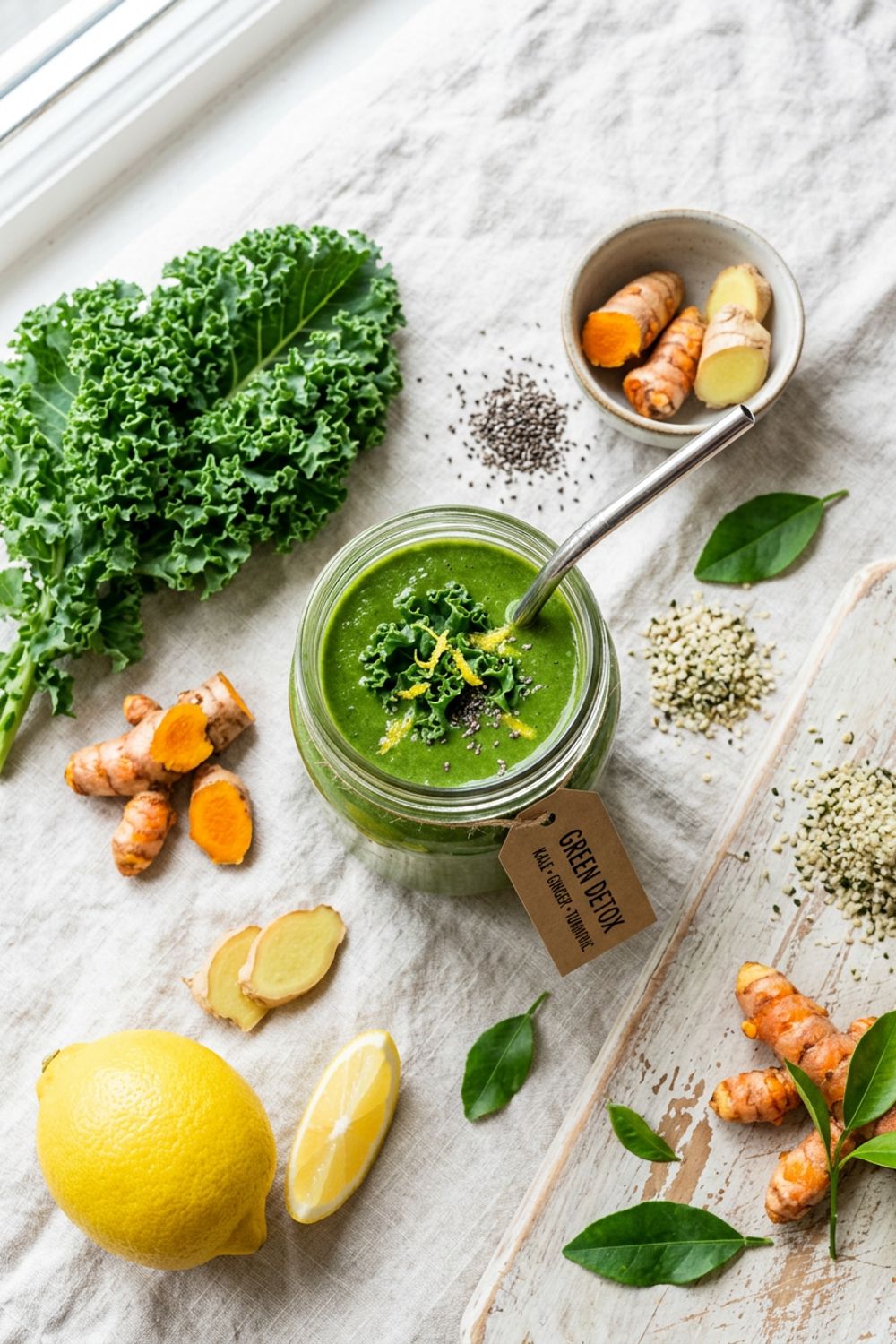
This particular recipe is the one I have settled on after testing dozens of combinations. It is not a random assortment of healthy things thrown into a blender — every ingredient is chosen for a specific reason and, more importantly, they taste incredible together. The kale and spinach provide a powerful dose of vitamins A, C, and K, plus iron and calcium. The ginger and turmeric are potent natural anti-inflammatory compounds that support digestion and reduce bloating. The lemon adds vitamin C that helps your body absorb the iron from the greens, and the black pepper makes the turmeric actually bioavailable.
But here is what really matters to me — it tastes genuinely good. I have had green smoothies that taste like someone blended a salad with water, and I would never ask anyone to drink something like that regularly. This smoothie is bright, refreshing, slightly sweet, and actually enjoyable. The frozen banana gives it a creamy body, the green apple adds natural sweetness and a little tartness, and the cucumber makes it incredibly refreshing. The ginger adds a warm zing that wakes you up better than coffee.
I drink this every morning, and on the rare days I skip it, I notice the difference. My energy is not as steady, my digestion feels sluggish, and I just feel less sharp. It has become as essential to my morning as brushing my teeth, and I genuinely look forward to making it. That is the true test of any health habit — it has to be something you enjoy enough to keep doing.
Understanding the Power of Each Ingredient
I want to walk you through the science behind each ingredient because understanding why these specific foods work together so well has made me a much better cook and a much healthier person. This is not about trends or buzzwords — these are real nutritional properties that have been studied extensively.
Kale is the foundation and for good reason. Two cups of kale provide more than 200 percent of your daily vitamin A (as beta-carotene), over 130 percent of your vitamin C, and nearly 700 percent of your vitamin K. It is also rich in lutein and zeaxanthin, which support eye health, and contains sulforaphane, a compound that supports the body’s natural detoxification pathways. Curly kale blends more smoothly than lacinato (dinosaur) kale, which is why I specify it here.
Ginger is one of nature’s most effective digestive aids. The active compounds, gingerols and shogaols, stimulate digestive enzyme production and help food move through your system more efficiently. Fresh ginger is significantly more potent than dried — you can actually feel the warmth spreading through your stomach within minutes of drinking this smoothie. I use a tablespoon, which is assertive but not overpowering. If you are new to ginger, start with a teaspoon and work up.
Turmeric contains curcumin, one of the most studied anti-inflammatory compounds in the world. Research has linked regular turmeric consumption to reduced inflammation markers, improved joint comfort, and better cognitive function. The catch is that curcumin is poorly absorbed on its own — which is exactly why I include black pepper. The piperine in black pepper increases curcumin absorption by up to 2000 percent. This combination is not random; it is backed by solid research.
Lemon juice does double duty. The vitamin C supports immune function and helps your body absorb the non-heme iron from the kale and spinach. The citric acid also helps preserve the green color and the nutrients, slowing the oxidation that starts the moment you blend leafy greens.
The frozen banana and green apple are not just there for flavor — they provide natural sugars that give you immediate energy, plus prebiotic fiber that feeds the beneficial bacteria in your gut. This combination of quick energy and sustained fuel is what keeps you going through the morning without a crash.
Blending Techniques for the Smoothest Green Smoothie
Getting a truly smooth green smoothie — no chunks, no stringy bits, no gritty texture — requires a specific approach that I have refined over hundreds of batches. The order you add ingredients and the way you blend them makes a real difference.
Always start with liquids at the bottom. This creates a vortex when the blade starts spinning, pulling solid ingredients down and ensuring everything circulates properly. If you put greens in first, they compact above the blade and form a dry mass that the blender cannot process. I have broken a cheap blender by making this mistake.
Layer soft ingredients in the middle and frozen items on top. The greens go in after the liquid because they blend down easily once the vortex is established. The frozen banana goes on top because its weight pushes everything down toward the blade. This layering order is not just preference — it is physics.
Start on low speed for 10 seconds, then ramp up gradually. Jumping straight to high speed with frozen ingredients can stall the motor or create air pockets. The low-speed start breaks up the large pieces, and then high speed pulverizes everything into a smooth, uniform consistency.
Blend for a full 60-90 seconds on high. This sounds long, but green smoothies need that time. Kale has tough cell walls that require sustained blending to break down completely. Under-blending is the number one reason green smoothies have an unpleasant, stringy texture. You should see no visible leaf pieces at all — the smoothie should be a uniform, opaque green.
If you have a standard blender rather than a high-speed one, chop your kale very finely before adding it, use the frozen banana slightly thawed, and blend for a full 2 minutes. You might also want to strain the finished smoothie through a fine-mesh sieve to catch any remaining fiber pieces, though you will lose some of the beneficial fiber this way.
Tips for Perfect Results
Prep freezer smoothie kits. On Sunday, I wash and de-stem a big bunch of kale, portion it into freezer bags with the spinach, and freeze them flat. I also freeze banana chunks on a tray and add them to the bags once solid. Each bag has one smoothie’s worth of greens and banana — in the morning, I just dump a bag in the blender with the fresh ingredients and liquid. This cuts my morning prep time to under 3 minutes.
Use the freshest ginger you can find. Fresh ginger should be firm, smooth-skinned, and snap cleanly when you break off a piece. Wrinkled, soft ginger has lost much of its potency. Store fresh ginger in the freezer — it grates beautifully straight from frozen and keeps for months. Frozen ginger is actually easier to grate than fresh because it does not get stringy.
Do not skip the lemon. Beyond the nutritional benefits I mentioned earlier, lemon juice is what makes this smoothie taste bright and refreshing rather than heavy and vegetal. It is the single ingredient that transforms a healthy obligation into something you actually crave. I use a full large lemon — about 3 tablespoons of juice. Roll the lemon firmly on the counter before cutting to release more juice.
Adjust sweetness gradually. Start with one tablespoon of honey and taste after blending. The banana and apple provide significant natural sweetness, and many people find they do not need any additional sweetener at all. If you are transitioning from sugary drinks, you may want a full tablespoon at first and then gradually reduce it as your palate adjusts to the natural flavors.
Drink it right away. Green smoothies begin losing nutritional value the moment the greens are blended because the broken cell walls expose vitamins and enzymes to oxygen. Ideally, drink it within 15 minutes. If you must take it to go, fill the container to the very top to minimize air exposure, seal tightly, and keep it cold. Adding extra lemon juice slows oxidation.
Add healthy fats for absorption. Many of the vitamins in this smoothie — A, K, and E — are fat-soluble, meaning your body absorbs them better in the presence of fat. A tablespoon of flaxseed, hemp seeds, or half an avocado provides enough healthy fat to maximize nutrient absorption without significantly changing the flavor.
Variations to Try
Tropical Green Smoothie. Replace the green apple and cucumber with a half cup of frozen pineapple and a half cup of frozen mango. The tropical fruits pair brilliantly with ginger and add bromelain, an enzyme that supports digestion. This version is slightly sweeter and tastes like a tropical vacation despite being packed with greens.
Creamy Green Smoothie. Add half a ripe avocado to the base for an incredibly silky, creamy texture. The avocado adds healthy monounsaturated fats, potassium, and a luxurious mouthfeel that makes this feel more like a treat than a health drink. Reduce the banana to half if you add avocado, since both contribute thickness.
Green Protein Smoothie. Add a scoop of vanilla plant-based protein powder and a tablespoon of almond butter for a post-workout version with over 25 grams of protein. The nut butter adds creaminess and healthy fats, while the protein powder helps with muscle recovery. This version keeps me full for a solid 4-5 hours.
Spicy Green Detox. Add a small piece of fresh jalapeño (seeds removed) and an extra tablespoon of lemon juice for a smoothie with serious kick. The capsaicin in the pepper adds a gentle heat that is invigorating in the morning and has its own metabolism-supporting properties. Start with a quarter of the pepper and add more if you enjoy the heat.
Berry-Green Blend. Add a half cup of frozen mixed berries to the standard recipe. The berries turn the smoothie a darker green-purple color and add extra antioxidants. This is my go-to version when I have guests who are nervous about drinking something bright green — the berry flavor makes it more familiar and approachable.
How to Store
Green smoothies are at their nutritional peak the moment they are blended. The vitamins and enzymes begin to degrade through oxidation as soon as the cell walls of the greens are broken. That said, life is busy, and a slightly less optimal smoothie is still infinitely better than no smoothie at all.
For same-day storage, pour the smoothie into an airtight glass jar or bottle, filling it to the absolute top to minimize air contact. Add an extra squeeze of lemon juice, seal tightly, and refrigerate. It will keep for up to 24 hours, though the color may darken slightly and some separation is normal — just shake well before drinking.
For make-ahead smoothie packs, portion all dry ingredients into individual freezer bags and freeze for up to 3 months. Do not add the liquid, honey, or lemon juice — those go in fresh when you blend. Label each bag with the date and contents. This is the most practical approach for busy mornings and ensures you never skip your green smoothie because of time.
You can also freeze blended smoothie in ice cube trays. Pop the cubes into a bag and re-blend with a splash of liquid when ready to drink. The texture will not be as smooth as fresh, but the nutrition is preserved well.
Troubleshooting
Smoothie tastes too bitter. The kale is likely the culprit. Massaging kale with a squeeze of lemon juice before adding it to the blender breaks down some of the bitter compounds. You can also swap half the kale for extra spinach, which is milder. Increasing the banana or adding a pitted date for sweetness also helps mask any bitterness.
Smoothie is too thick. Add water or coconut water one tablespoon at a time until you reach your preferred consistency. The frozen banana and kale both absorb liquid, so the smoothie can thicken as it sits. I prefer mine on the thicker side, but the right consistency is whatever feels good to drink.
Smoothie separated in the fridge. This is completely normal and not a sign that anything is wrong. The fiber and liquid naturally separate when sitting still. Simply shake vigorously or stir with a spoon. Adding a tablespoon of chia seeds helps prevent separation because they absorb liquid and create a gel-like consistency.
Ginger is too strong. Reduce the ginger to one teaspoon next time, or use a milder form like ground ginger (use a quarter teaspoon of ground to replace one tablespoon of fresh). You can also increase the banana and honey to balance the ginger’s intensity. Over time, most people come to enjoy a more generous amount of ginger as their palate adjusts.
This green smoothie has become the non-negotiable foundation of my daily routine, and I am confident it will become yours too. It is not about perfection or following a strict plan — it is about giving your body a flood of real, whole-food nutrition first thing in the morning and feeling the genuine difference it makes in your energy, your clarity, and your overall sense of wellbeing.
Never Miss a Recipe
Join 5,000+ home cooks and get new recipes straight to your inbox.
Ingredients
Green Smoothie Base
Optional Boosts
Instructions
- 1
Prep the Greens
Wash the kale and spinach thoroughly and pat dry. Remove the tough center stems from the kale leaves and roughly chop the leaves. Peel and chop the cucumber. Core and chop the green apple. Having everything prepped and ready ensures smooth blending.
- 2
Add Liquids First
Pour the filtered water and coconut water into your blender. Adding liquids first prevents the greens from getting caught above the blade and ensures everything blends evenly from the start.
- 3
Layer the Ingredients
Add the kale, spinach, cucumber, and apple to the blender. Then add the frozen banana, grated ginger, turmeric, lemon juice, honey, and black pepper. If using any optional boosts, add them now.
- 4
Blend Until Smooth
Start blending on low speed for 10 seconds to break down the greens, then increase to high speed. Blend for 60-90 seconds until completely smooth with no visible leaf pieces. The smoothie should be a vibrant, uniform green color.
- 5
Taste and Adjust
Stop the blender and taste. Add more honey if you prefer it sweeter, more lemon for extra tartness, or more ginger for a stronger kick. If the smoothie is too thick, add water a couple tablespoons at a time until you reach your preferred consistency.
- 6
Serve Immediately
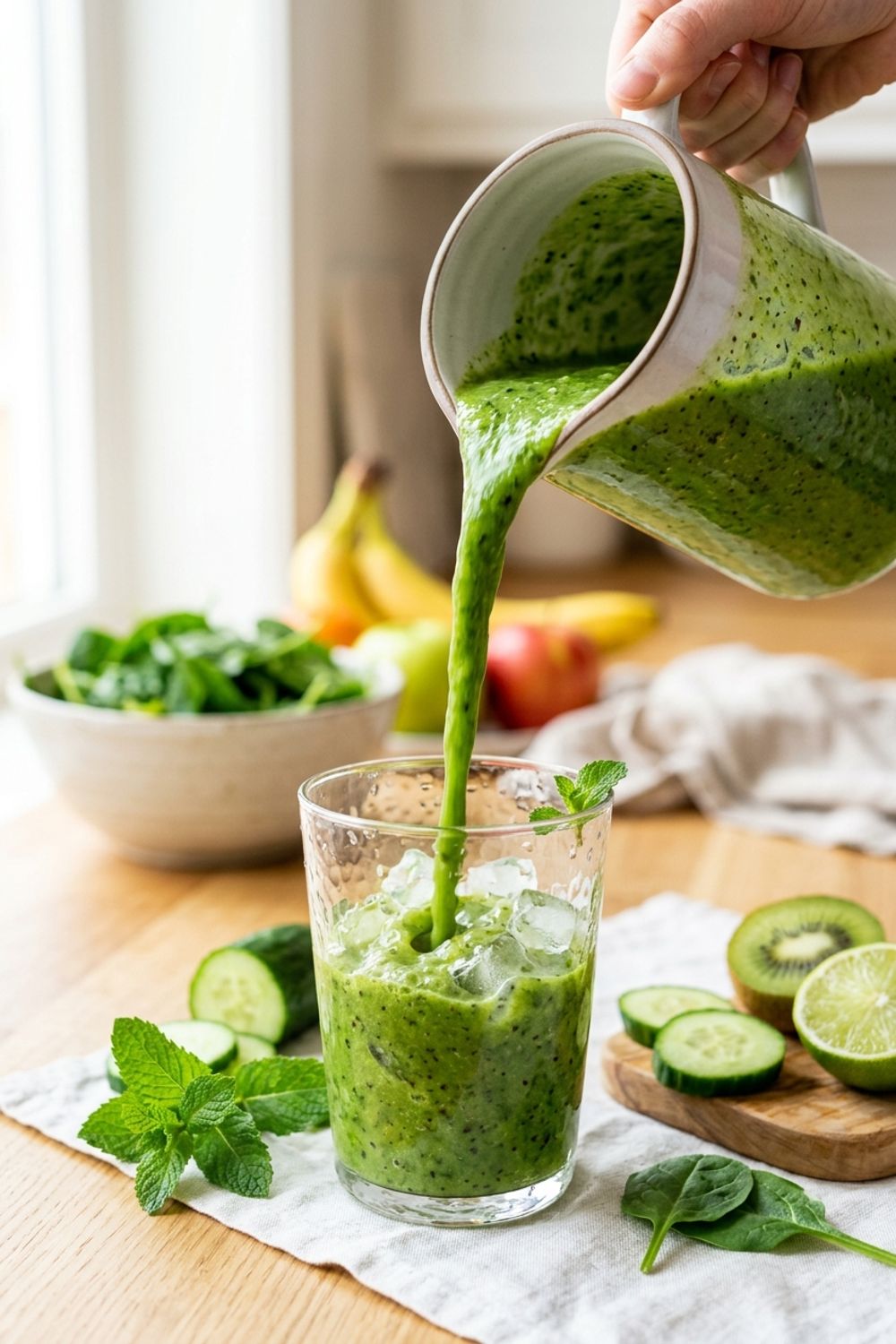
Pour into glasses over ice if desired. Drink within 15 minutes for maximum nutritional benefit — the vitamins begin to oxidize once the cell walls of the greens are broken down. Stir or shake before drinking if it has been sitting.
Nutrition Information
Per serving (serves 2). Values are approximate.
| Calories | 165 calories |
| Total Fat | 1g |
| Saturated Fat | 0g |
| Carbohydrates | 38g |
| Sugar | 22g |
| Protein | 4g |
| Sodium | 85mg |
| Fiber | 5g |
* Percent Daily Values are based on a 2,000 calorie diet. Your daily values may be higher or lower depending on your calorie needs. Nutritional information is an estimate and may vary.
Frequently Asked Questions
Will this smoothie taste like grass?
No. The banana, apple, honey, and lemon completely balance the flavor of the greens. Most people who try this are surprised at how fruity and refreshing it tastes. The cucumber adds a cool, clean note, and the ginger provides a pleasant zing. If you are new to green smoothies, start with extra banana and less kale, then gradually increase the greens as your palate adjusts.
Why add black pepper with turmeric?
Black pepper contains piperine, which increases the absorption of curcumin (the active compound in turmeric) by up to 2000 percent. Without pepper, most of the curcumin passes through your system without being absorbed. Just a small pinch is enough to make a dramatic difference in bioavailability.
Can I use frozen kale instead of fresh?
Absolutely. Frozen kale actually blends more smoothly and makes the drink colder without needing ice. It also keeps longer and is often more affordable. Use the same amount — 2 cups — and add it directly from the freezer.
How often should I drink green smoothies?
A daily green smoothie is a wonderful habit for most people. This recipe provides leafy greens, vitamin C, anti-inflammatory compounds, and hydration in an easy-to-digest form. However, listen to your body — if you experience digestive discomfort, start with 3-4 times per week and work up from there.

Hi, I'm Lisa!
I create simple, tested recipes from around the world that anyone can make at home.
Learn More →Reader Reviews
Based on 142 reviews