Quick & Easy
Maple Balsamic Roasted Cauliflower
Why This Recipe Is Special
I used to think cauliflower was boring. I grew up eating it steamed until limp, unseasoned and unexciting, and I spent most of my twenties avoiding it entirely. Then a friend roasted some cauliflower at a dinner party and drizzled it with a maple balsamic glaze, and I honest-to-goodness asked her what vegetable I was eating because I did not recognize it. That was the moment I realized cauliflower was never the problem — the cooking method was.
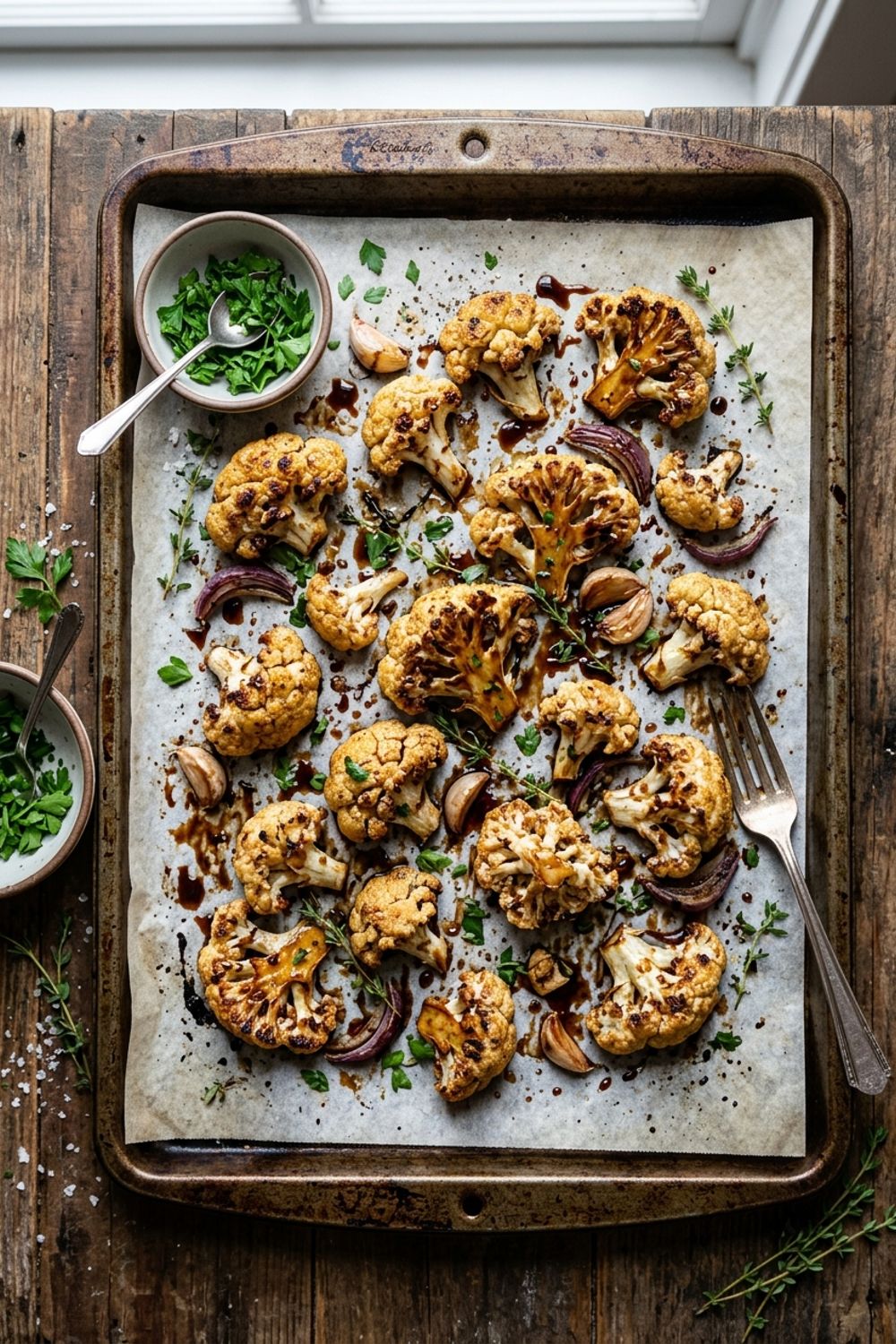
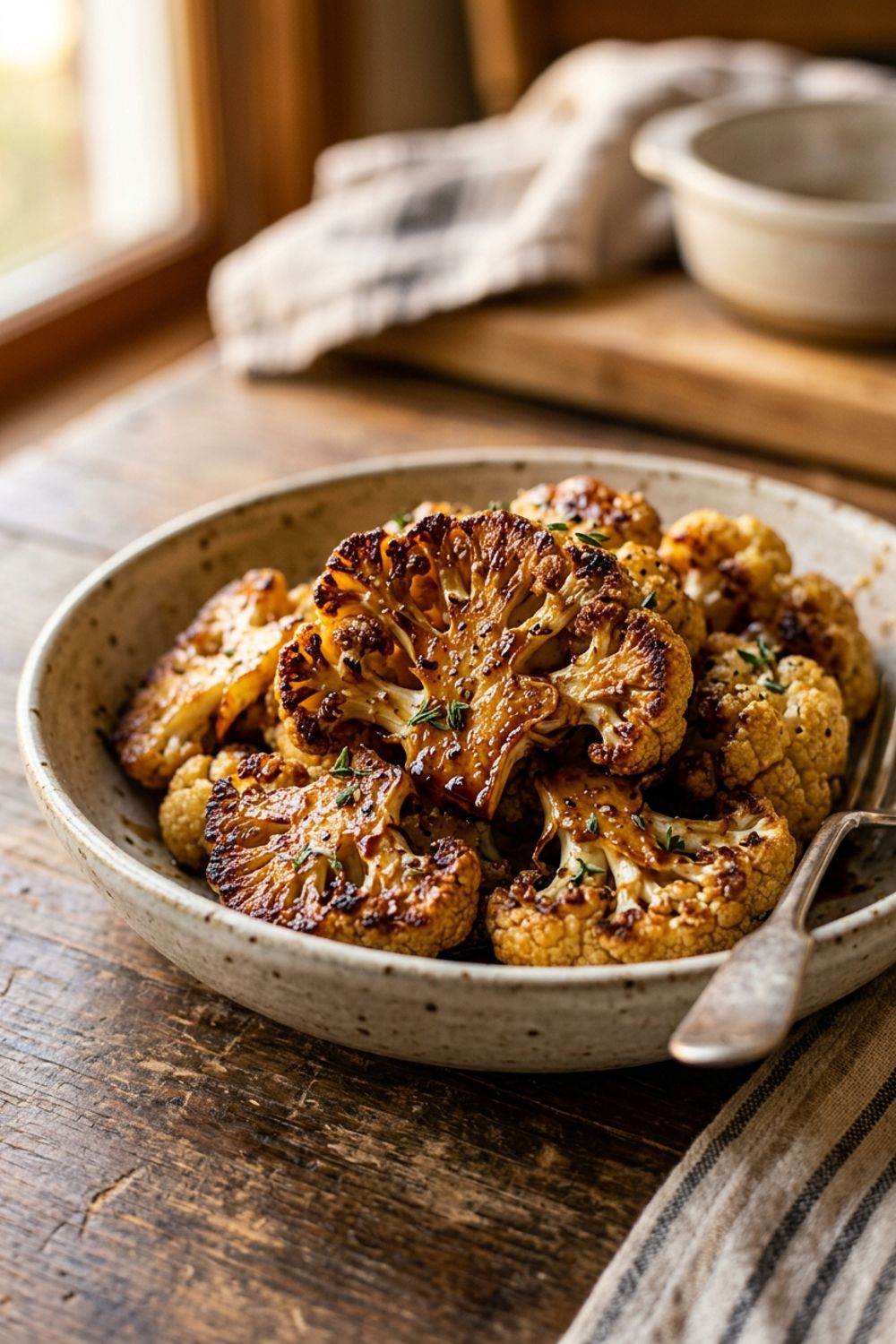
Roasting at high heat transforms cauliflower into something magical. The florets develop crispy, caramelized edges that shatter when you bite into them, giving way to a tender, almost creamy interior. The natural sugars in the cauliflower concentrate and brown, creating a nutty sweetness that is completely addictive. Add a glaze of maple syrup and balsamic vinegar — both of which caramelize beautifully at high temperatures — and you have a vegetable side dish that regularly upstages the main course.
This recipe has converted more cauliflower skeptics than I can count. I bring it to potlucks and people hover around the platter. I serve it at Thanksgiving and it disappears before the turkey. I make it on Tuesday nights because it is that easy and that satisfying, and leftovers are just as good straight from the fridge the next day.
The flavor profile hits every note — sweet from the maple, tangy from the balsamic, savory from the soy sauce, and a gentle heat from the red pepper flakes. The toasted pine nuts add a rich, buttery crunch, and the fresh parsley keeps everything bright. It is the kind of dish that makes you realize vegetables do not need to be an afterthought or an obligation. When cooked properly, they can be the most exciting thing on the table.
I genuinely believe this is one of the best vegetable recipes I know, and I have been cooking vegetables professionally and for fun for over a decade. It is that good.
The Science of Caramelizing Cauliflower
Understanding why roasted cauliflower tastes so dramatically different from steamed or boiled cauliflower comes down to two chemical reactions, and knowing them will help you nail this recipe every time.
The first is the Maillard reaction — the same process that gives seared steak its crust, bread its golden surface, and coffee its complex flavor. When the sugars and amino acids in cauliflower are exposed to high heat (above 300°F / 150°C), they undergo thousands of chemical transformations that produce entirely new flavor compounds. These compounds are what give roasted cauliflower its nutty, toasty, almost caramel-like depth. Steaming and boiling never reach these temperatures because water caps at 212°F (100°C), which is why those methods produce bland results.
The second is actual caramelization — the breakdown of sugars at high heat. Cauliflower contains natural sugars that, when roasted, darken and develop a complex sweetness. The maple syrup and balsamic vinegar amplify this process dramatically because they are both sugar-rich liquids. When the glaze hits the hot cauliflower and the hot baking sheet, those sugars caramelize rapidly, creating that gorgeous sticky, dark coating.
This is why oven temperature and the flat-side-down technique are so critical. At 425°F (220°C), you are well above the threshold for both the Maillard reaction and caramelization. Placing the florets flat-side-down maximizes the surface area in direct contact with the scorching baking sheet, concentrating these reactions where they matter most — on the surface of the cauliflower.
Crowding the pan sabotages the entire process. When florets are piled on top of each other, they trap steam and the temperature around them drops below the Maillard threshold. Instead of roasting, they essentially steam — which is exactly the bland result you are trying to avoid. A single layer with a little space between each floret ensures hot, dry air circulates around every piece.
Balancing the Maple Balsamic Glaze
The glaze is where this recipe goes from good to truly special, and getting the balance right is what creates that addictive flavor that people cannot stop talking about. Every ingredient in the glaze serves a specific purpose, and understanding the balance will let you adjust it to your personal taste.
Maple syrup is the sweetness base, and it brings more than just sugar. Pure maple syrup has over 60 distinct flavor compounds including vanillin, which gives it a warm, almost bourbon-like depth. This complexity is why pure maple syrup outperforms sugar, honey, or artificial syrup in this glaze — it adds character, not just sweetness.
Balsamic vinegar provides acidity that prevents the sweetness from becoming cloying. Good balsamic vinegar has its own sweetness too, which is why the maple and balsamic pairing works so harmoniously — they are different types of sweet that enhance rather than compete with each other. The acidity also helps the caramelization process, promoting browning at the surface of the cauliflower.
Soy sauce is the umami backbone. Just one tablespoon adds a savory depth that ties the sweet and sour elements together and makes the whole dish taste more complex and satisfying. It is the ingredient people cannot identify but would miss immediately if it were absent. Tamari is a great gluten-free alternative with a slightly deeper flavor.
The minced garlic adds a pungent, aromatic element that complements the sweetness without competing with it. Adding it to the glaze rather than roasting it on the cauliflower from the start means it does not burn during the long initial roast — it goes on during the final 10 minutes and caramelizes gently into something mellow and sweet.
Red pepper flakes provide just enough heat to keep your palate engaged without overpowering the other flavors. A quarter teaspoon is subtle — you feel a gentle warmth in the back of your throat, but it does not compete with the maple sweetness. Increase to half a teaspoon if you prefer a more noticeable kick.
Tips for Perfect Results
Cut your florets evenly. This sounds basic, but uneven florets mean some pieces burn while others are still pale and soft. Aim for pieces that are roughly 1.5 to 2 inches across. Cut through the stem at an angle to create flat surfaces — these become the crispy, caramelized faces that are the best part of the dish.
Do not skip the flat-side-down placement. When tossing the cauliflower on the baking sheet, take an extra minute to flip each floret so a flat, cut side is facing down against the hot pan. This single step doubles the amount of caramelization you get. The round, bumpy surfaces that face up will not brown as much, but the flat undersides will develop an incredible golden crust.
Use parchment paper, not foil. Parchment paper prevents sticking without adding fat, and it promotes better browning than foil. Foil can create hot spots that burn some pieces while leaving others pale. Parchment gives you even, consistent browning and makes cleanup effortless.
Resist the urge to stir. Leave the cauliflower completely undisturbed for the first 20 minutes. Every time you shake or stir the pan, you break the contact between the florets and the hot surface, interrupting the caramelization process. Trust the oven to do its work. When you finally remove the pan, you will see gorgeous golden-brown surfaces where the cauliflower was in contact with the parchment.
Apply the glaze at the right moment. Adding the glaze too early means it burns. Adding it too late means it does not caramelize. The 20-minute mark is the sweet spot — the cauliflower is already partially cooked and starting to brown, and the glaze has just enough time in the final 10-12 minutes to caramelize without burning.
Finish with flaky sea salt. Regular table salt dissolves and disappears. Flaky sea salt like Maldon sits on the surface, providing little pops of salinity that contrast beautifully with the sweet glaze. Add it at the very end, just before serving, so the flakes maintain their crunch and texture.
Variations to Try
Maple Balsamic Cauliflower Steaks. Cut the cauliflower through the core into 1-inch thick slabs instead of florets. Brush both sides with the glaze and roast on a sheet pan at 425°F (220°C) for 15 minutes per side. The steaks make a gorgeous vegetarian main course when served over a bed of arugula with a drizzle of tahini.
Sheet Pan Dinner. Add cubed sweet potatoes, red onion wedges, and chickpeas to the baking sheet with the cauliflower. Roast everything together with the glaze for a complete one-pan vegetarian meal. The sweet potatoes caramelize beautifully in the maple balsamic and the chickpeas get wonderfully crispy.
Spicy Version. Increase the red pepper flakes to a full teaspoon and add a diced chipotle pepper in adobo sauce to the glaze. The smoky heat of the chipotle pairs incredibly well with the sweet maple and tangy balsamic. Serve with a cooling dollop of crème fraîche or yogurt.
Parmesan Crusted. During the final 5 minutes of roasting, sprinkle a generous layer of grated Parmesan cheese over the glazed cauliflower. The cheese melts into a crispy, savory crust that adds another dimension of flavor and texture. The combination of salty Parmesan and sweet maple glaze is extraordinary.
Buffalo Maple Cauliflower. Add 2 tablespoons of your favorite hot sauce to the glaze for a sweet-spicy wing-style cauliflower that works perfectly as a game-day appetizer. Serve with celery sticks and a blue cheese or ranch dipping sauce on the side.
Serving Ideas for Every Occasion
The versatility of this cauliflower is one of its greatest strengths. As a side dish, it pairs beautifully with roasted chicken, grilled steak, pan-seared fish, or baked tofu. The sweet-tangy glaze complements both mild and bold main courses, and the golden color looks stunning next to almost anything on a plate.
For a complete vegetarian dinner, serve the cauliflower over a bed of creamy polenta with a handful of arugula and a drizzle of extra balsamic glaze. The creamy polenta against the crispy, glazed cauliflower creates a textural paradise, and the peppery arugula cuts through the sweetness perfectly. Add a fried egg on top for extra protein and you have a meal that feels like something from a farm-to-table restaurant.
As an appetizer, pile the roasted cauliflower on a platter with toothpicks and a small bowl of whipped goat cheese for dipping. Guests will cluster around this platter all night. For holiday dinners, it makes a gorgeous and unexpected alternative to traditional steamed vegetable sides that often go untouched.
How to Store
Leftover roasted cauliflower stores well in an airtight container in the refrigerator for up to 4 days. The texture changes slightly — the florets soften and lose their crispy edges — but the flavor actually deepens as the glaze continues to permeate the cauliflower overnight.
To reheat, spread the cauliflower on a baking sheet and warm in a 400°F (200°C) oven for 8-10 minutes. This method partially restores the crispy exterior. The microwave is faster but produces softer results. Either way, the flavor remains excellent.
Cold leftover cauliflower is surprisingly delicious chopped and tossed into grain bowls, salads, or wraps. The tangy maple balsamic flavor works as both a vegetable and a dressing component. I often make extra specifically to have leftovers for lunch the next day.
The glaze can be made up to a week in advance and stored in the refrigerator. Bring it to room temperature before using so it pours and coats evenly. You can also double the glaze recipe and keep it on hand for roasting other vegetables — it works beautifully on Brussels sprouts, carrots, and sweet potatoes.
Troubleshooting
Cauliflower is soft and pale, not crispy. The pan was too crowded, trapping steam. Use two baking sheets next time, or roast in batches. Also make sure your oven is fully preheated — an oven that has not reached 425°F (220°C) will steam rather than roast the vegetables.
Glaze burned and turned bitter. Your oven runs hot, or the cauliflower was too close to the top heating element. Move the rack to the center position and reduce the final roasting time to 8 minutes. If the glaze does burn, make a fresh batch and toss the cauliflower with it after removing from the oven — the residual heat will still caramelize it slightly.
Cauliflower is not cooked through. The florets were too large. Cut them smaller next time, or extend the initial roast (before adding the glaze) by 5 minutes. You can also cover the pan with foil for the first 10 minutes to trap steam and cook the interior, then uncover for the remaining time to develop the crust.
Flavor is too sweet. Reduce the maple syrup by one tablespoon and increase the balsamic vinegar by the same amount. You can also add an extra teaspoon of soy sauce for more savory balance. The sweetness level is personal, so adjust the ratio to match your preference.
Pine nuts taste stale or rancid. Pine nuts are high in fat and go rancid quickly if stored improperly. Always taste them before toasting — rancid pine nuts have a bitter, unpleasant flavor that no amount of toasting can fix. Store pine nuts in the freezer to extend their shelf life dramatically. Pepitas (pumpkin seeds) are an excellent, more affordable substitute with a similar buttery crunch.
This maple balsamic roasted cauliflower has permanently changed how I think about vegetable side dishes. It proves that vegetables can be the most exciting, most flavorful, most talked-about element of any meal when they are treated with respect and cooked with intention. If you make one new side dish this month, make it this one.
Never Miss a Recipe
Join 5,000+ home cooks and get new recipes straight to your inbox.
Ingredients
Roasted Cauliflower
Maple Balsamic Glaze
Garnish
Instructions
- 1
Prep the Cauliflower
Preheat your oven to 425°F (220°C) and line a large rimmed baking sheet with parchment paper. Cut the cauliflower into evenly-sized florets — about 1.5 to 2 inches across. Even sizing ensures they cook at the same rate. Remove the tough core but do not discard the smaller leaves near the base — they roast into delicious crispy chips.
- 2
Season and Roast
Toss the florets with olive oil, salt, pepper, and garlic powder in a large bowl. Spread them in a single layer on the baking sheet with the flat cut sides facing down — this maximizes the surface area in contact with the hot pan, creating the best caramelization. Do not overcrowd; use two sheets if needed. Roast for 20 minutes without touching them.
- 3
Make the Glaze
While the cauliflower roasts, whisk together the maple syrup, balsamic vinegar, soy sauce, olive oil, minced garlic, and red pepper flakes in a small bowl. The mixture should be well combined and pourable.
- 4
Apply the Glaze
After 20 minutes, remove the baking sheet from the oven. The cauliflower should be golden on the bottom and starting to caramelize. Drizzle the maple balsamic glaze evenly over the florets and toss gently with a spatula to coat. Return to the oven for an additional 10-12 minutes until the glaze is caramelized, sticky, and the cauliflower is deeply golden brown with crispy edges.
- 5
Toast the Nuts
While the cauliflower finishes, toast the pine nuts or pepitas in a small dry skillet over medium-low heat, shaking frequently for 2-3 minutes until golden and fragrant. Transfer to a plate immediately — they burn very quickly in the residual heat of the pan.
- 6
Serve
Transfer the glazed cauliflower to a serving platter. Scatter with toasted nuts and fresh parsley. Drizzle with extra balsamic glaze and finish with a pinch of flaky sea salt. Serve immediately while hot and crispy.
Nutrition Information
Per serving (serves 4). Values are approximate.
| Calories | 175 calories |
| Total Fat | 10g |
| Saturated Fat | 1g |
| Carbohydrates | 20g |
| Sugar | 12g |
| Protein | 4g |
| Sodium | 520mg |
| Fiber | 3g |
* Percent Daily Values are based on a 2,000 calorie diet. Your daily values may be higher or lower depending on your calorie needs. Nutritional information is an estimate and may vary.
Frequently Asked Questions
Can I use frozen cauliflower?
I strongly recommend fresh cauliflower for this recipe. Frozen cauliflower contains too much water and steams instead of roasting, so you will not get the crispy, caramelized edges that make this dish special. If you must use frozen, thaw completely and pat dry with paper towels, pressing firmly to remove as much moisture as possible.
What kind of maple syrup should I use?
Always use pure maple syrup, not pancake syrup. Pure maple syrup has a complex, slightly smoky flavor that pairs beautifully with balsamic vinegar. Grade A Dark Amber or Grade B have the strongest maple flavor and stand up best to the vinegar. Pancake syrup is mostly corn syrup with artificial flavoring and will not produce the same result.
Can I make this on the stovetop?
You can, but the result will be different. Heat a large skillet over medium-high heat with olive oil, add the cauliflower in a single layer, and cook without moving for 4-5 minutes to get a sear. Then add the glaze and toss for another 3-4 minutes. You will get good browning but not the same deep, all-over caramelization that the oven provides.
How do I reduce balsamic vinegar for the drizzle?
Simmer half a cup of balsamic vinegar in a small saucepan over medium-low heat for 10-15 minutes until it reduces by half and coats the back of a spoon. It will thicken further as it cools. Store in a squeeze bottle at room temperature. You can also buy pre-made balsamic glaze — it is the same thing.

Hi, I'm Lisa!
I create simple, tested recipes from around the world that anyone can make at home.
Learn More →Reader Reviews
Based on 234 reviews