Chicken & Poultry
Leftover Turkey Pot Pie
Why This Recipe Is Special
There is a particular kind of magic that happens the day after Thanksgiving. The fridge is packed with foil-wrapped containers, the house still smells faintly of roasted turkey and sage, and everyone is wondering what to do with all those leftovers. For years, I defaulted to turkey sandwiches — which are perfectly fine — but the moment I made my first turkey pot pie from Thanksgiving leftovers, I realized I had been severely underestimating what a second act those leftovers could have. Honestly, I look forward to this pot pie almost as much as the original Thanksgiving dinner itself.
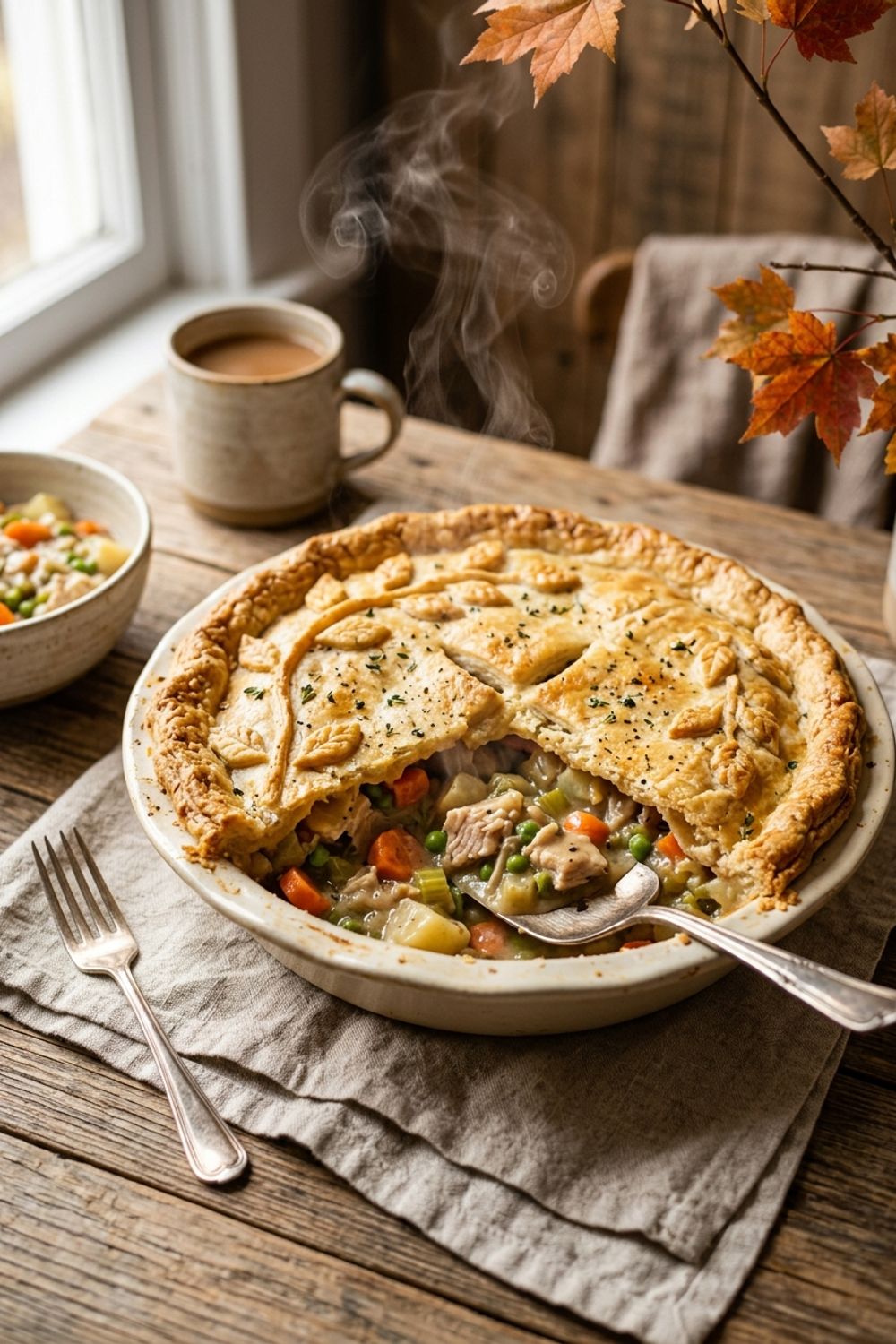
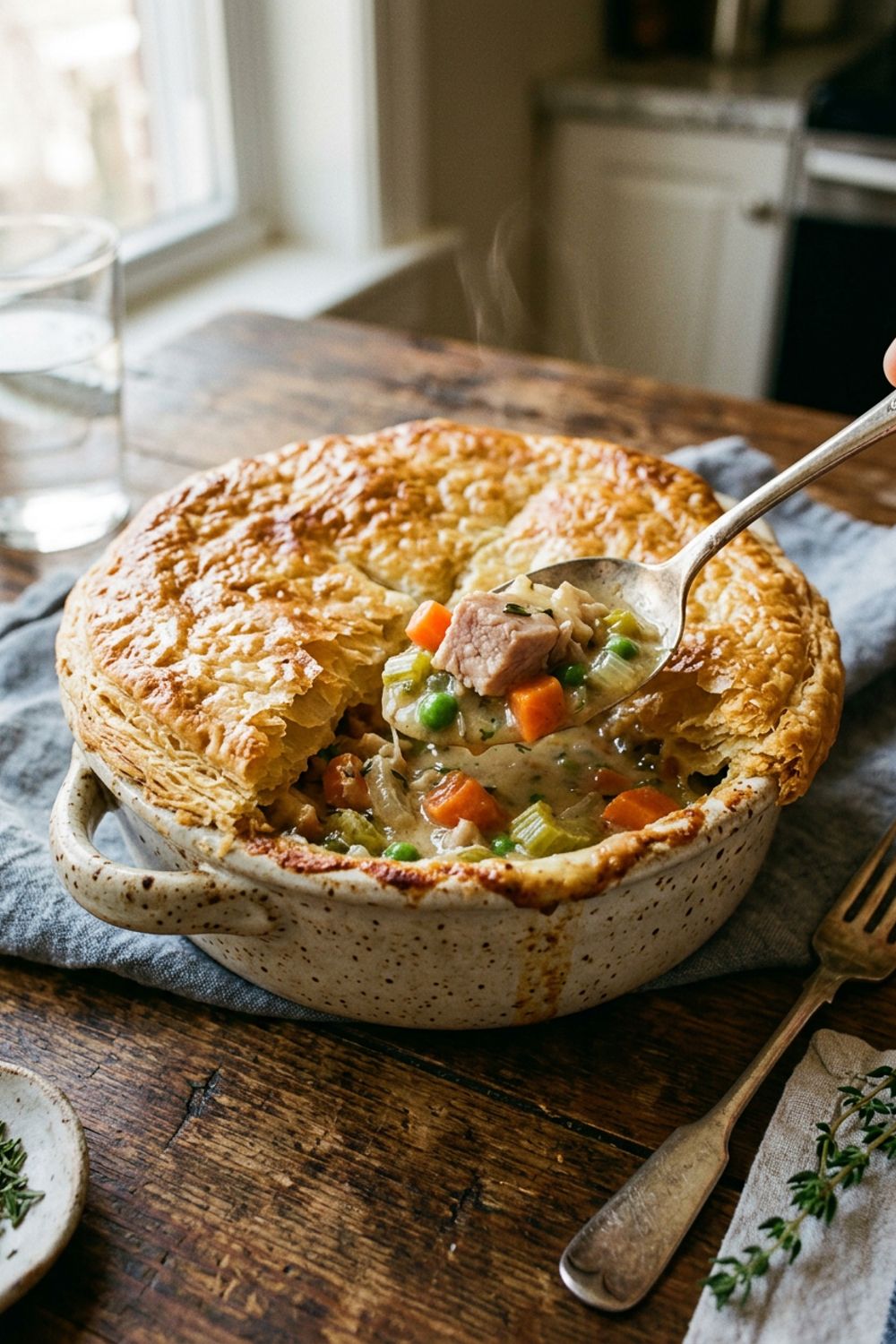
What makes this recipe special is how it transforms already-cooked turkey into something that tastes entirely new. The shredded meat simmers in a velvety from-scratch gravy loaded with carrots, celery, peas, and corn, all tucked under a shatteringly crisp layer of golden puff pastry. Every bite delivers that deep, warming comfort that pot pie is famous for, but with an added richness that comes from turkey that was already beautifully seasoned during its first roast. The Dijon mustard is my secret weapon — just one tablespoon adds a subtle sharpness that lifts the entire dish and keeps it from tasting one-dimensional.
I also love that this recipe is forgiving and adaptable. Have leftover mashed potatoes? Stir a spoonful into the gravy for extra body. A bit of cranberry sauce left? A swirl of it through the filling adds a gorgeous sweet-tart note. Leftover roasted vegetables? Chop them up and throw them in. This pot pie is a canvas for your Thanksgiving leftovers, and I genuinely believe it is the single best way to honor the effort you put into that holiday meal. Once you make this, it will become a non-negotiable part of your post-Thanksgiving tradition. I genuinely look forward to this pot pie every November as much as the turkey dinner itself — and I know that sounds like an exaggeration, but I mean it wholeheartedly. There is something deeply satisfying about transforming yesterday’s feast into today’s masterpiece, proving that great cooking is not always about starting fresh but about seeing potential where others see mere leftovers.
Building a Proper From-Scratch Gravy
I know it might be tempting to use canned cream of chicken soup as a shortcut — and I will never judge anyone who does — but making the gravy from scratch takes only a few extra minutes and the difference in flavor is staggering. A homemade roux-based gravy has a clean, buttery richness that no canned soup can replicate, and it gives you complete control over the seasoning and consistency.
The foundation is a classic roux: equal parts butter and flour cooked together until the raw flour taste disappears. This takes about two minutes of constant stirring over medium heat. You will know it is ready when the mixture smells faintly nutty and has turned a shade darker. From there, the liquid goes in slowly — broth first, then milk — while you whisk constantly. The key word here is slowly. If you dump all the liquid in at once, you will get lumps, and lumps in pot pie gravy are one of life’s minor tragedies.
As you whisk, the sauce will seem impossibly thin at first. Do not panic. Keep it at a gentle simmer and it will thicken over the next 4-5 minutes as the flour starches fully hydrate and swell. You are looking for a consistency that coats the back of a spoon — thick enough to be saucy and rich, but still pourable. Remember that the gravy will thicken further as the pot pie bakes, so err on the side of slightly thinner rather than gluey. If you are using leftover turkey gravy from Thanksgiving, you can absolutely incorporate it here — reduce the flour to 2 tablespoons and replace the broth with an equal amount of leftover gravy.
The Puff Pastry Advantage
I have made pot pies with every kind of topping imaginable — traditional pie dough, biscuits, even phyllo — and I keep coming back to puff pastry as my absolute favorite for this recipe. There is something almost theatrical about the way puff pastry rises in the oven, puffing up into dramatic golden layers that shatter at the touch of a fork. It transforms a humble leftover dish into something that looks like it came from a bakery.
The key to great puff pastry is keeping it cold until the moment it goes into the oven. Thaw it in the refrigerator overnight or on the counter for 20-30 minutes — just enough to unfold without cracking. If the pastry gets too warm and soft, the butter layers melt before baking and you lose all that beautiful lamination. Roll it out on a lightly floured surface to even out the thickness, and work quickly. If at any point the dough feels soft or sticky, slide it onto a baking sheet and pop it back in the fridge for 10 minutes.
The egg wash is not optional — it is what gives the pastry that deep, burnished golden color and a subtle sheen that screams homemade. Beat one whole egg with a tiny splash of water, then brush it over every inch of the pastry surface. Sprinkle flaky sea salt on top while the egg wash is still wet. Those little crystals of salt add a wonderful textural contrast and a flavor pop with every bite. And do not forget the steam vents — 4 or 5 slits in the center allow moisture to escape so the pastry stays crisp on top rather than turning soggy from the steam below.
Tips for Perfect Results
Use a mix of white and dark turkey meat. If you have both available from your Thanksgiving leftovers, use a combination. The dark meat (thighs and drumsticks) stays more moist during the second cook and adds richness, while the white meat (breast) provides a leaner texture and milder flavor. I usually aim for about two-thirds dark meat and one-third white meat, but any ratio works.
Do not skip the Dijon mustard. I know it seems like an odd addition to pot pie, but trust me on this. The mustard does not make the filling taste mustardy — it provides a subtle background sharpness that enhances all the other flavors and prevents the gravy from tasting flat. Think of it as the secret ingredient that makes people say “I cannot put my finger on it, but this is the best pot pie I have ever had.”
Season the filling aggressively. The puff pastry on top is essentially unseasoned bread, so the filling needs to be well-seasoned to compensate. Taste the filling before topping it — it should taste slightly more seasoned than you think is necessary. Once you eat it with a bite of pastry, the balance will be perfect.
Let it rest before cutting. This is the hardest part. The filling is essentially lava when it comes out of the oven, and cutting into it immediately means the gravy runs everywhere instead of staying thick and scoopable. Give it a full 10-15 minutes. Use this time to toss a simple green salad — the crispness of greens with a tangy vinaigrette is the ideal counterpoint to the richness of the pot pie.
Choose the right vessel. A 10-inch cast iron skillet is my preferred vessel because it goes from stovetop to oven seamlessly and retains heat beautifully. A deep-dish pie plate or 9x13 baking dish also works well. Avoid anything too shallow — you want enough depth for a generous amount of filling with room for the pastry to puff up without touching the filling.
Variations to Try
I always encourage experimentation with this recipe because the core technique — creamy filling, golden topping — is endlessly adaptable. Here are some of my favorite variations that I have tested and loved.
Turkey Pot Pie with Biscuit Topping: Instead of puff pastry, drop spoonfuls of buttermilk biscuit dough over the filling. Bake at 400°F (200°C) for 25-30 minutes until the biscuits are golden and cooked through. This gives a more rustic, homestyle presentation and the biscuits soak up the gravy beautifully.
Cheesy Turkey Pot Pie: Stir 1/2 cup (60g) of shredded sharp cheddar into the gravy while it is still hot, and sprinkle another 1/4 cup on top of the puff pastry before baking. The cheese adds a savory depth that pairs wonderfully with turkey and makes the already indulgent dish even more decadent.
Turkey Pot Pie Soup: If you want something lighter, skip the pastry entirely. Thin the filling with an extra cup of broth to reach soup consistency and serve in bowls with crispy croutons or oyster crackers. All the same flavors, but in a more approachable weeknight format.
Curried Turkey Pot Pie: Add 2 teaspoons of curry powder to the roux along with the flour. Replace the peas with diced sweet potato, and add 1/4 cup (60ml) of coconut milk to the gravy. Top with puff pastry as usual. The warm curry spices give the leftovers a completely new identity and are surprisingly good with turkey.
How to Store
This pot pie is best eaten the day it is made, while the pastry is at its crispiest. However, if you have leftovers, let the pot pie cool completely, then cover tightly with foil or plastic wrap and refrigerate for up to 3 days. Reheat individual portions in a 350°F (175°C) oven for 15-20 minutes. The pastry will not be as crisp as freshly baked, but the filling reheats beautifully.
To freeze, I recommend making the filling separately and freezing it in an airtight container for up to 3 months. When ready to eat, thaw the filling overnight in the refrigerator, transfer to a skillet or baking dish, top with a fresh sheet of puff pastry, and bake as directed. This way you get freshly baked pastry every time. You can also assemble the entire pot pie unbaked, wrap tightly, and freeze — just add 15-20 minutes to the baking time and bake from frozen.
Troubleshooting
The gravy is too thin. If the filling seems soupy after cooking, let it simmer for a few extra minutes uncovered to reduce. Alternatively, mix 1 tablespoon of cornstarch with 2 tablespoons of cold water and stir it in — it will thicken within a minute. Remember that the filling will also thicken as it bakes and as it rests.
The pastry did not puff up. The most common culprit is pastry that was too warm when it went into the oven. The butter between the layers needs to be cold so it creates steam pockets during baking. Another possibility is that the oven temperature was too low — make sure your oven is fully preheated to 400°F (200°C) before the pot pie goes in.
The filling tastes bland. Season more boldly next time. Start by adding more salt, then consider boosting the aromatics — an extra clove of garlic, a splash of Worcestershire sauce, or a pinch of smoked paprika can all add dimension. The Dijon mustard is also critical for rounding out the flavor, so make sure you included it.
The pastry is browned but the filling is not hot. This happens when the filling was cold when you topped it with pastry. The solution is to make sure the filling is still warm when you add the puff pastry — the oven then needs to heat through less filling and the baking time is more predictable. If the pastry is browning too fast, tent with foil and continue baking until the filling bubbles.
The filling has too many vegetables and not enough gravy. The ratio of filling to sauce matters more than you might think. If you feel like your pot pie is more stew than creamy pie, use fewer vegetables next time or increase the sauce by adding an extra tablespoon of butter and flour along with another half cup each of broth and milk. The filling should look saucy and loose before baking — remember, it thickens considerably in the oven as the flour continues to absorb liquid and the steam escapes through the pastry vents. I find that the sweet spot is about equal parts sauce and solid filling by volume.
This turkey pot pie is honestly the best argument I know for cooking a bigger turkey than you think you need. Those leftovers are not a problem to solve — they are an opportunity to make something that might just outshine the original meal. Take your time, build that gravy with care, and let the oven do the rest. If you are hosting guests after Thanksgiving, this pot pie is an effortless crowd-pleaser that uses what you already have. I have served this at post-holiday gatherings and watched people go back for seconds and thirds, marveling that something made from leftovers could taste this good. That is the power of a well-made pot pie — it takes humble ingredients and transforms them into something truly extraordinary.
Never Miss a Recipe
Join 5,000+ home cooks and get new recipes straight to your inbox.
Ingredients
Filling
Crust
Optional Add-ins
Instructions
- 1
Cook the Vegetables
Preheat your oven to 400°F (200°C). In a large oven-safe skillet or Dutch oven, melt the butter over medium heat. Add the diced onion, carrots, and celery. Cook, stirring occasionally, for 6-7 minutes until the vegetables are softened and the onion is translucent. Add the garlic and cook for another 30 seconds until fragrant.
- 2
Build the Gravy
Sprinkle the flour over the vegetables and stir continuously for 2 minutes to cook out the raw flour taste. Slowly pour in the broth while whisking to prevent lumps, then add the milk in a steady stream. Continue stirring over medium heat for 4-5 minutes until the sauce thickens enough to coat the back of a spoon. The mixture will seem thin at first but will thicken considerably as it simmers.
- 3
Add the Turkey and Seasonings
Remove the skillet from heat. Stir in the shredded turkey, frozen peas, frozen corn, thyme, sage, salt, pepper, and Dijon mustard. Mix until everything is evenly distributed in the creamy gravy. Taste and adjust seasoning — the filling should be well-seasoned since the puff pastry on top is relatively bland. If using leftover diced potatoes, fold them in gently now.
- 4
Top with Puff Pastry
On a lightly floured surface, roll the puff pastry sheet to about 1/8-inch thickness, large enough to cover your skillet with a 1-inch overhang. Drape the pastry over the filling, tucking the edges under or pressing them against the inside rim of the skillet. Cut 4-5 small slits in the center to allow steam to escape. Brush the entire surface generously with beaten egg and sprinkle with flaky sea salt.
- 5
Bake Until Golden
Place the skillet on a baking sheet (to catch any drips) and bake at 400°F (200°C) for 30-35 minutes until the puff pastry is deeply golden brown and puffed, and you can see the filling bubbling through the steam vents. If the pastry browns too quickly, tent loosely with foil for the last 10 minutes.
- 6
Cool and Serve
Remove from the oven and let the pot pie rest for 10-15 minutes before serving. This rest period allows the filling to thicken further and prevents scalding burns from the piping hot gravy. Serve generous scoops with the crispy pastry on top. A side of leftover cranberry sauce is the perfect accompaniment.
Nutrition Information
Per serving (serves 6). Values are approximate.
| Calories | 480 calories |
| Total Fat | 24g |
| Saturated Fat | 11g |
| Carbohydrates | 38g |
| Sugar | 5g |
| Protein | 28g |
| Sodium | 780mg |
| Fiber | 3g |
* Percent Daily Values are based on a 2,000 calorie diet. Your daily values may be higher or lower depending on your calorie needs. Nutritional information is an estimate and may vary.
Frequently Asked Questions
Can I use homemade pie crust instead of puff pastry?
Absolutely. A traditional double-crust pie dough works beautifully — line the bottom of a pie dish with one round, add the filling, and top with the second round. Crimp the edges to seal. Bake at the same temperature but check doneness at 35 minutes. The crust should be golden and the filling bubbling.
Can I use rotisserie chicken instead of turkey?
Yes, this recipe works perfectly with any cooked poultry. Two rotisserie chicken breasts, shredded, yield about the same amount. The cooking method and timing remain exactly the same.
How do I prevent a soggy bottom pastry?
Since this recipe uses a top-crust only approach, soggy bottoms are not an issue. If you want a bottom crust, blind-bake it with pie weights at 375°F for 15 minutes before adding the filling. Make sure the filling has cooled slightly before pouring it in.
Can I make individual pot pies instead?
Yes! Divide the filling among 6 oven-safe ramekins or small bowls. Cut the puff pastry into rounds slightly larger than the ramekins and drape over each one. Reduce baking time to 20-25 minutes since the smaller portions heat through faster.

Hi, I'm Lisa!
I create simple, tested recipes from around the world that anyone can make at home.
Learn More →Reader Reviews
Based on 167 reviews