World Cuisine
Japanese-Inspired Balanced Meal Bowl
Why This Recipe Is Special
I have always been fascinated by the Japanese approach to eating. On a trip to Tokyo a few years ago, I noticed something that stuck with me — the meals were not about huge portions of one thing, but beautiful arrangements of small, varied dishes. A little rice here, a piece of perfectly prepared fish there, some pickled vegetables, a handful of greens. Everything was portioned thoughtfully, and every element had its own flavor and purpose. I left every meal feeling satisfied but never stuffed, and I had more energy than I had felt in years.
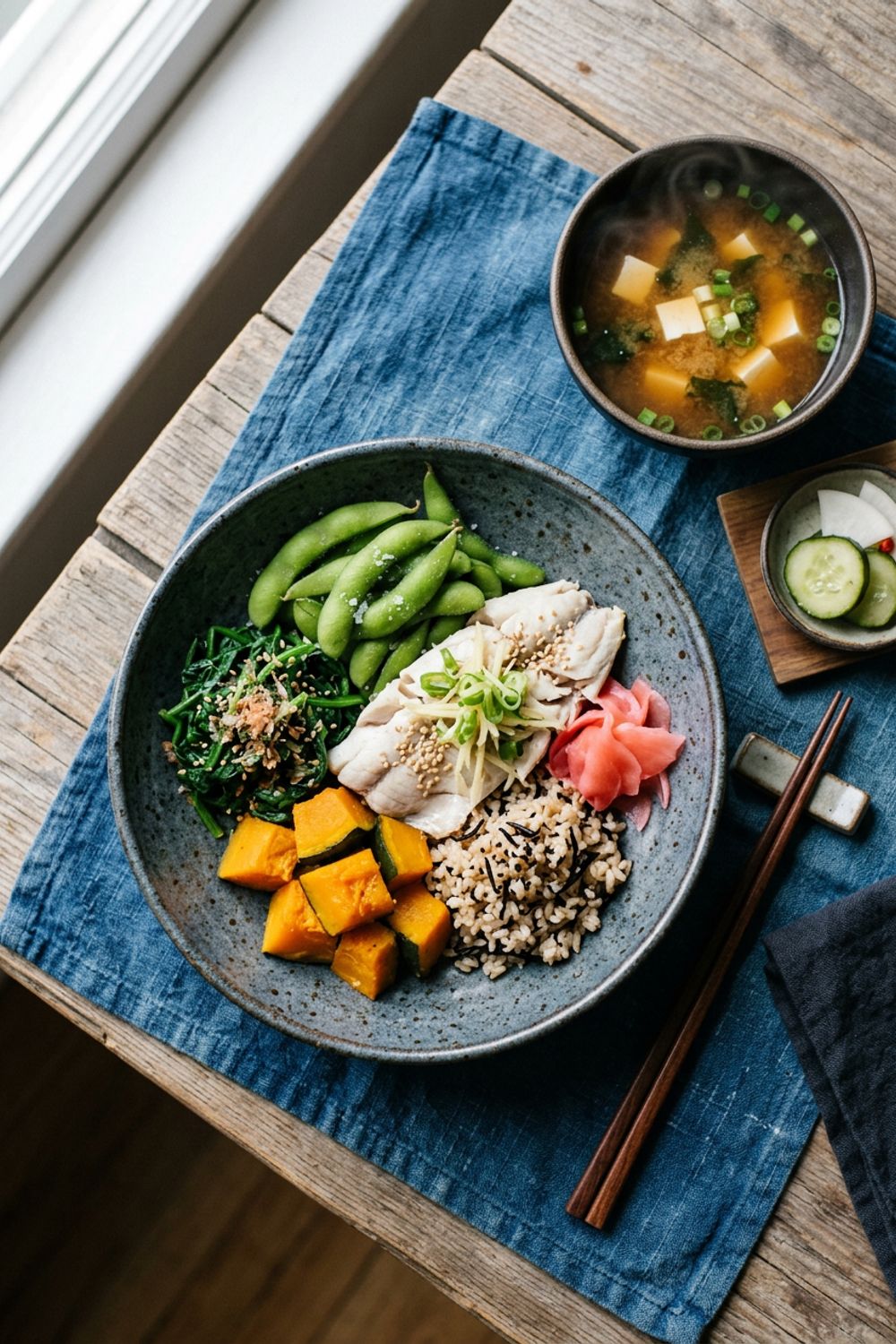
This meal bowl is my attempt to bring that philosophy home. It is inspired by washoku — the traditional Japanese approach to balanced eating that UNESCO recognized as an Intangible Cultural Heritage. The idea is simple: each meal should include five colors, five flavors, and five cooking methods. This bowl delivers on that beautifully. The golden miso-glazed salmon provides rich umami. The seasoned rice offers subtle sweetness and a neutral base. The quick-pickled vegetables bring bright acidity and crunch. The edamame adds protein and a fresh green color. The greens provide a raw, crisp element.
What I love most is that this meal genuinely supports healthy eating without feeling restrictive. There is no deprivation here — the salmon is rich and satisfying, the rice is comforting, and the pickled vegetables are addictive. You finish the bowl feeling nourished and energized, not deprived or counting calories. The natural portion control comes from the variety itself — when you have so many different flavors and textures to enjoy, you slow down and eat more mindfully.
I make some version of this bowl at least twice a week. The components are flexible, the technique is straightforward, and the results are consistently beautiful. It is the kind of meal that makes you feel like you have your life together, even on a hectic weeknight.
Mastering the Miso Glaze
The miso glaze on this salmon is where the magic happens, and understanding how it works will elevate not just this recipe but your entire cooking repertoire. Miso is fermented soybean paste, and it is one of the most powerful flavor-building ingredients in any kitchen. It brings umami — that deep, savory, mouth-coating quality that makes food taste profoundly satisfying.
White miso (shiro miso) is the variety I use here because it has a milder, sweeter flavor that complements fish without overpowering it. It is fermented for a shorter period than red or brown miso, which keeps the flavor gentle and approachable. Red miso works too but produces a saltier, more intense result — reduce the soy sauce if you go that route.
The supporting ingredients in the glaze each play a specific role. Mirin adds sweetness and creates that gorgeous caramelized surface under the broiler. Sake contributes depth and helps the other flavors meld together. The rice vinegar adds a touch of acidity that prevents the glaze from tasting cloying, and the sesame oil brings a nutty undertone that is quintessentially Japanese.
Fresh ginger is the secret ingredient that elevates the glaze from good to exceptional. It adds brightness and a subtle heat that cuts through the richness of the salmon and the sweetness of the miso. I grate it on a microplane so it completely dissolves into the marinade — you should not encounter any ginger pieces in the finished dish.
The marination process is where patience pays off. During those 30 minutes (or overnight), the miso enzymes gently break down the surface proteins of the fish, tenderizing it and allowing the flavors to penetrate deeply. This is the same principle behind traditional Japanese misozuke, where fish is cured in miso for days. Our version is a shortened adaptation that still delivers remarkable depth of flavor.
When broiling, the sugars in the miso and mirin caramelize under the intense heat, creating those beautiful dark golden spots on the surface. This Maillard reaction produces hundreds of new flavor compounds that you simply cannot achieve through any other cooking method. Watch carefully though — the line between perfectly caramelized and burnt is razor thin with miso.
The Art of Japanese Quick Pickling
Quick pickles — called tsukemono in Japanese — are one of the most underrated components of Japanese cuisine, and once you start making them, you will put them on everything. They serve a crucial purpose in this meal bowl: their bright acidity and crisp texture cut through the richness of the miso salmon and the starchiness of the rice, keeping every bite fresh and balanced.
The basic technique is incredibly simple — vegetables plus seasoned vinegar plus time. Rice vinegar is the foundation because it has a milder, slightly sweet acidity compared to white or apple cider vinegar. The sugar and salt in the pickling liquid balance the acidity and draw moisture out of the vegetables through osmosis, concentrating their flavor while maintaining their crunch.
Cucumber should be sliced thin — about an eighth of an inch — so the pickling liquid can penetrate quickly. I use an English cucumber or Japanese cucumber because they have fewer seeds and a crisper texture. Regular cucumbers work but should be seeded first by cutting them in half lengthwise and scooping out the center with a spoon.
Carrots are julienned into thin matchsticks, which gives them an elegant appearance and allows them to pickle evenly. A mandoline makes quick work of this, but a sharp knife and steady hand produce perfectly good results. The natural sweetness of carrots becomes even more pronounced after pickling, creating a lovely contrast with the tangy vinegar.
Daikon radish is the traditional Japanese pickling vegetable and it adds a subtle peppery bite that is distinctive and refreshing. If you cannot find daikon, substitute with regular radishes sliced paper-thin. The pink color of red radishes can be a beautiful addition to the bowl.
Twenty minutes is the minimum for these quick pickles, but they improve significantly with an hour or more. The vegetables soften just enough to be pleasantly pliable while retaining their core crunch. Unlike long-fermented pickles, these maintain a clean, fresh flavor that does not overpower the other components.
Tips for Perfect Results
Rinse your rice thoroughly. This is the single most important step in Japanese rice preparation. Rinsing removes excess surface starch that causes gummy, sticky rice. Fill a bowl with cold water, swirl the rice gently with your hand, then drain. Repeat 4-5 times until the water runs mostly clear. The first rinse will be cloudy white — that is the starch you are removing.
Use the right rice. Short-grain Japanese rice (sold as sushi rice or Calrose) is essential. Long-grain rice like basmati or jasmine does not have the same starch content and will not produce the slightly sticky, individual grains that characterize good Japanese rice. Koshihikari and Akitakomachi are premium varieties worth seeking out for the best results.
Let the rice rest after cooking. The 10-minute rest after removing from heat is not optional. During this time, the remaining steam redistributes evenly through the rice, firming up the grains and perfecting the texture. Lifting the lid during this rest releases steam and ruins the result. Set a timer and walk away.
Watch the broiler like a hawk. Miso glaze goes from perfectly caramelized to burnt in about 60 seconds. Position yourself near the oven during the final minutes and check every 30 seconds once you see browning begin. The ideal result is deep golden brown with scattered dark spots — not uniform darkness, which indicates burning.
Season the rice gently. When folding in the vinegar mixture, use a cutting and folding motion with a flat spatula rather than circular stirring. Stirring crushes the grains and releases starch, making the rice gummy. Cutting through and folding over preserves the individual grain structure while distributing the seasoning evenly.
Make extra pickled vegetables. They keep beautifully in the refrigerator for up to a week and get better each day. I always make a double batch because they are wonderful on sandwiches, alongside grilled meats, tossed into salads, or eaten straight from the jar as a snack. They also make a gorgeous, colorful addition to any lunch box.
The Philosophy of Balanced Eating
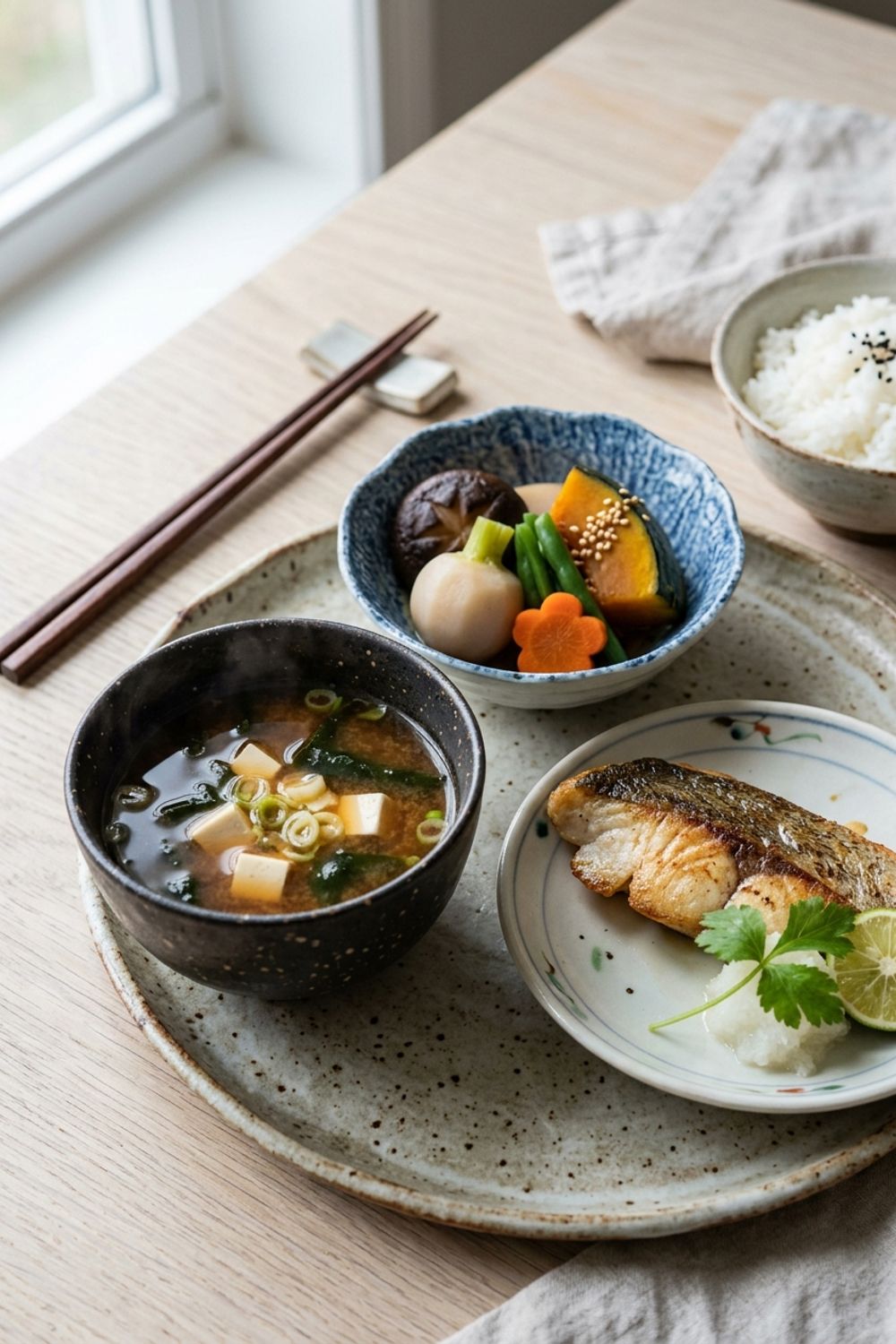
What continues to inspire me about this meal is the underlying philosophy. Japanese cuisine follows the principle of ichiju sansai — one soup, three sides — a framework that naturally creates nutritional balance without counting calories or tracking macros. Every meal includes a protein source, a starch, vegetables in various preparations, and something fermented or pickled.
This meal bowl adapts that framework into a single-bowl format that works for modern, busy life. The salmon provides high-quality protein and omega-3 fatty acids. The rice offers complex carbohydrates for sustained energy. The pickled vegetables contribute probiotics and enzymes that support digestion. The edamame adds plant protein and fiber. The greens provide vitamins and minerals. Together, they create a naturally balanced meal that leaves you feeling satisfied, energized, and genuinely nourished.
I find this approach far more sustainable and enjoyable than any restrictive eating plan I have ever tried. There is no deprivation, no guilt, no complicated rules — just thoughtful variety and beautiful presentation that naturally leads to eating well.
Variations to Try
Tofu Version. Replace the salmon with extra-firm tofu, pressed for 30 minutes and sliced into thick planks. Marinate in the miso glaze and bake at 400°F (200°C) for 25 minutes, flipping once. The tofu absorbs the miso flavor beautifully and develops crispy edges that are incredibly satisfying. This makes the entire bowl vegan if you skip the honey variations.
Chicken Miso Bowl. Boneless, skinless chicken thighs work wonderfully with the miso glaze. Marinate for at least 2 hours (thighs can handle longer marination than fish) and broil for 12-15 minutes until the internal temperature reaches 165°F (74°C). Slice against the grain before arranging in the bowl.
Breakfast Bowl. Swap the salmon for a soft-boiled egg (6 minutes in boiling water, then ice bath) and add kimchi instead of the quick pickles. The runny yolk over warm rice with the tangy kimchi is a spectacular morning meal that provides sustained energy without any sugar crash.
Poke-Style Raw Bowl. Use sushi-grade salmon cut into cubes instead of cooking it. Toss the raw fish with soy sauce, sesame oil, and a touch of rice vinegar for an even quicker version that tastes incredibly fresh. Add sliced avocado and a drizzle of sriracha mayo for a Hawaiian-Japanese fusion bowl.
Grain Bowl Variation. Replace the white rice with brown rice, quinoa, or a mix of farro and wild rice for more fiber and a nuttier flavor. The heartier grains pair well with the miso salmon and add additional textural interest to the bowl. Cook the grains in dashi stock instead of water for extra umami depth.
How to Store
Each component of this bowl stores differently, and keeping them separate is the key to maintaining quality. The miso-glazed salmon is best eaten fresh from the oven but can be refrigerated in an airtight container for up to 2 days. Reheat gently in a 300°F (150°C) oven for 8-10 minutes — the microwave tends to dry out fish and make it rubbery.
The seasoned rice keeps well in the refrigerator for 3-4 days. To reheat, sprinkle a tablespoon of water over the rice, cover, and microwave in 30-second intervals until steaming. The water rehydrates the grains and prevents them from becoming hard and crunchy. Alternatively, you can freeze portions of rice for up to one month.
The pickled vegetables are the champion of longevity — they keep for a full week in the refrigerator in their pickling liquid and actually improve in flavor each day. Store them in a glass jar for the best results, as plastic can absorb the vinegar smell.
The edamame can be stored for up to 3 days refrigerated and reheated briefly or eaten cold. The greens should always be added fresh at serving time.
Troubleshooting
Salmon sticks to the foil. Make sure you oil the foil well before placing the fish down. You can also use a silicone baking mat or parchment paper instead. Starting with the salmon skin-side down also helps because the skin acts as a natural barrier. If the salmon does stick, slide a thin spatula between the skin and foil — the flesh will separate cleanly from the skin.
Miso glaze burned instead of caramelized. Your broiler rack was too close to the element. Move it down to 6-8 inches from the heat source. You can also start the salmon in a 400°F (200°C) oven for 6-7 minutes, then switch to the broiler for just the final 2-3 minutes of caramelization. This gives you more control over the process.
Rice is mushy or gummy. You likely used too much water or stirred too aggressively. Stick to the exact 1:1.17 ratio of rice to water (1.5 cups rice to 1.75 cups water) and use the cutting-and-folding technique for seasoning. Also check that you rinsed the rice enough — under-rinsed rice has excess surface starch that causes gumminess.
Pickled vegetables are too sour. Add another teaspoon of sugar to the pickling liquid. You can also reduce the vinegar by a tablespoon and add a tablespoon of water instead. Different brands of rice vinegar vary in acidity, so you may need to adjust. The vegetables should taste bright and tangy, not puckering.
This Japanese-inspired meal bowl has taught me that healthy eating does not have to mean sacrifice. It is about thoughtful balance — honoring each ingredient, preparing it with care, and arranging it beautifully. Every time I sit down with one of these bowls, I am reminded that nourishing your body and delighting your senses are not opposing goals. They are the same thing.
Never Miss a Recipe
Join 5,000+ home cooks and get new recipes straight to your inbox.
Ingredients
Miso-Glazed Salmon
Steamed Rice
Quick-Pickled Vegetables
Sides and Garnishes
Instructions
- 1
Marinate the Salmon
In a small bowl, whisk together the miso paste, mirin, sake, soy sauce, rice vinegar, sesame oil, and grated ginger until smooth. Place the salmon fillets in a shallow dish and spread the miso mixture evenly over the top and sides of each fillet. Cover with plastic wrap and refrigerate for at least 30 minutes, or up to 24 hours for deeper flavor.
- 2
Quick-Pickle the Vegetables
In a medium bowl, combine the rice vinegar, sugar, salt, and soy sauce. Stir until dissolved. Add the sliced cucumber, julienned carrot, and daikon radish. Toss to coat and refrigerate for at least 20 minutes while you prepare the other components. The vegetables will soften slightly and develop a tangy, refreshing flavor.
- 3
Cook the Rice
Rinse the rice in a fine-mesh strainer under cold water until the water runs clear — about 4-5 rinses. Combine the rinsed rice and water in a medium saucepan. Bring to a boil, then reduce heat to the lowest setting, cover tightly, and cook for 15 minutes. Remove from heat and let stand, covered, for 10 minutes. Gently fold in the rice vinegar, sugar, and salt with a rice paddle or spatula using cutting motions — do not stir or the rice becomes sticky and gummy.
- 4
Cook the Salmon
Preheat your oven broiler to high and position the rack 6 inches from the element. Line a baking sheet with foil and lightly oil it. Place the salmon fillets skin-side down, leaving excess marinade on the fish. Broil for 8-10 minutes until the miso glaze is caramelized and bubbly with dark golden spots, and the fish flakes easily with a fork. Watch carefully — miso burns quickly under a broiler.
- 5
Prepare the Sides
While the salmon broils, steam the edamame for 3-4 minutes until bright green and tender. Prepare the mixed greens or shredded cabbage. Toast the sesame seeds in a dry pan for 1-2 minutes until golden and fragrant.
- 6
Assemble the Bowls
Divide the seasoned rice among four shallow bowls, placing it to one side. Arrange the miso-glazed salmon alongside the rice. Drain the pickled vegetables and mound them next to the salmon. Add a small pile of edamame and a handful of greens. Garnish with sesame seeds, sliced green onions, and pickled ginger. Serve with soy sauce and wasabi on the side.
Nutrition Information
Per serving (serves 4). Values are approximate.
| Calories | 420 calories |
| Total Fat | 14g |
| Saturated Fat | 2g |
| Carbohydrates | 42g |
| Sugar | 8g |
| Protein | 32g |
| Sodium | 720mg |
| Fiber | 4g |
* Percent Daily Values are based on a 2,000 calorie diet. Your daily values may be higher or lower depending on your calorie needs. Nutritional information is an estimate and may vary.
Frequently Asked Questions
Can I use a different fish instead of salmon?
Yes. Black cod (sablefish) is the traditional choice for miso-glazed fish and has a buttery, melt-in-your-mouth texture that is extraordinary. Sea bass, mahi-mahi, and Arctic char also work beautifully. White fish needs slightly less broiling time since it is thinner — check at 6 minutes. The miso glaze complements virtually any fish.
What is mirin and where can I find it?
Mirin is a sweet Japanese rice wine used in cooking. It adds a subtle sweetness and sheen to glazes and sauces. Find it in the Asian foods aisle of most supermarkets or at Asian grocery stores. Hon mirin (true mirin) is preferred over aji-mirin, which is a cheaper imitation with added corn syrup. If you cannot find mirin, substitute with 1 tablespoon of dry sherry plus half a teaspoon of sugar.
How long can I marinate the salmon?
The miso marinade works in as little as 30 minutes but develops much deeper flavor with overnight marination. The enzymes in miso gently tenderize the fish while infusing it with umami. Do not marinate longer than 48 hours, as the fish can become overly soft. For a weeknight dinner, even 30 minutes produces excellent results.
Is this recipe good for meal prep?
The pickled vegetables keep for up to a week in the fridge and actually improve with time. The rice can be made ahead and reheated with a sprinkle of water. However, the salmon is best cooked fresh — it dries out when reheated. For meal prep, marinate the salmon in individual portions so you can broil one or two fillets at a time throughout the week.

Hi, I'm Lisa!
I create simple, tested recipes from around the world that anyone can make at home.
Learn More →Reader Reviews
Based on 127 reviews