World Cuisine
Harissa Chickpeas with Herbed Couscous
Why This Recipe Is Special
I fell in love with harissa on my very first trip to Marrakech. I was wandering through the spice souks, overwhelmed by the colors and aromas, when a vendor handed me a small spoonful of deep red paste. The heat hit me first, then the smokiness, then something sweeter and more complex underneath. I was completely hooked, and I have been putting harissa on everything since.
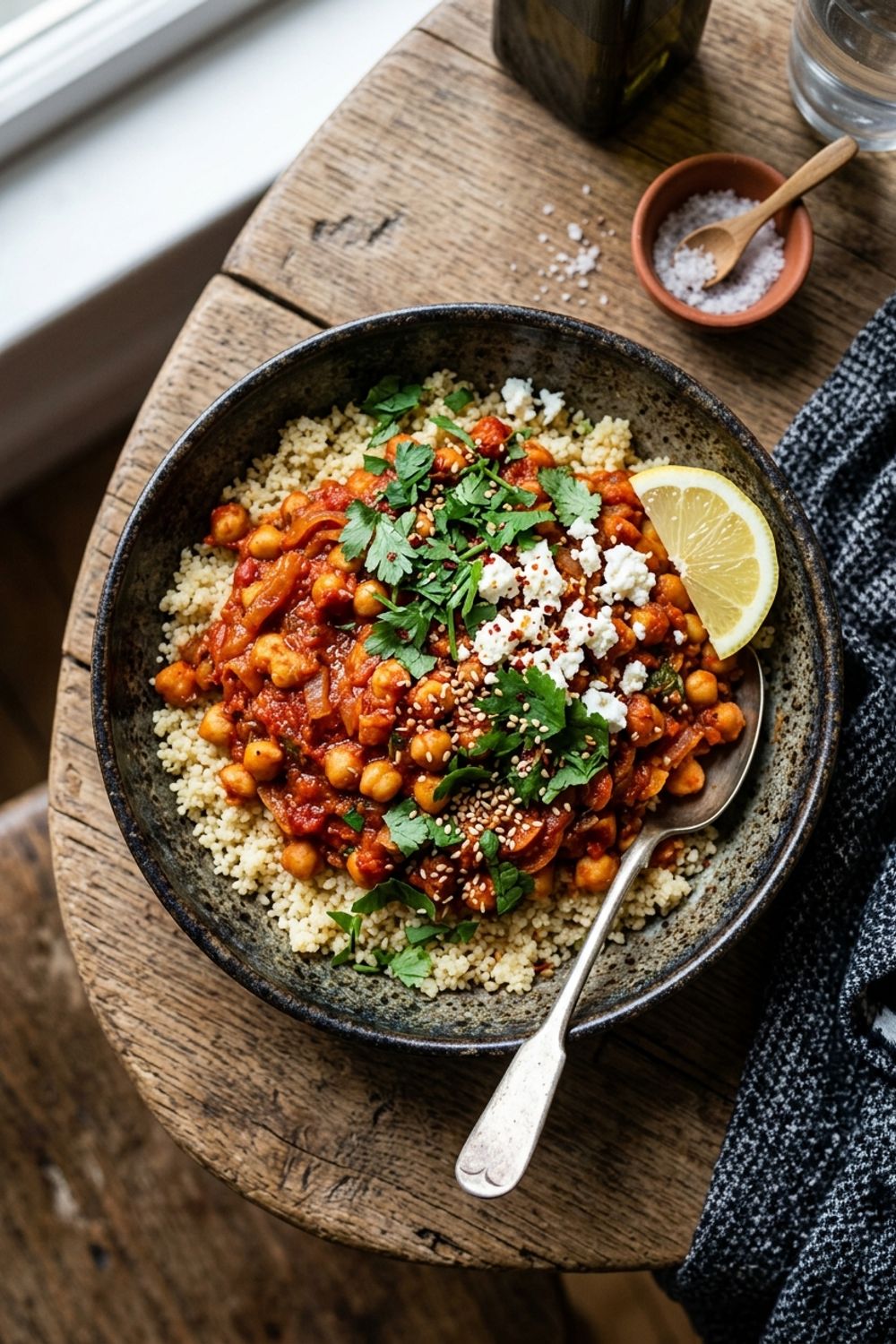
This recipe is my tribute to that moment. Harissa chickpeas over herbed couscous is one of those dishes that looks and tastes like you spent hours in the kitchen, but it comes together in about 35 minutes. The chickpeas soak up that incredible smoky, spicy sauce, and the herbed couscous provides a fluffy, fragrant base that balances all that bold flavor beautifully.
What I love most about this dish is how satisfying it is without any meat. The chickpeas give you that hearty, filling quality, and the combination of spices — cumin, smoked paprika, coriander, and a whisper of cinnamon — creates layers of warmth that keep you coming back for another bite. The honey and lemon juice at the end bring everything into perfect harmony, rounding out the heat with just enough sweetness and acidity.
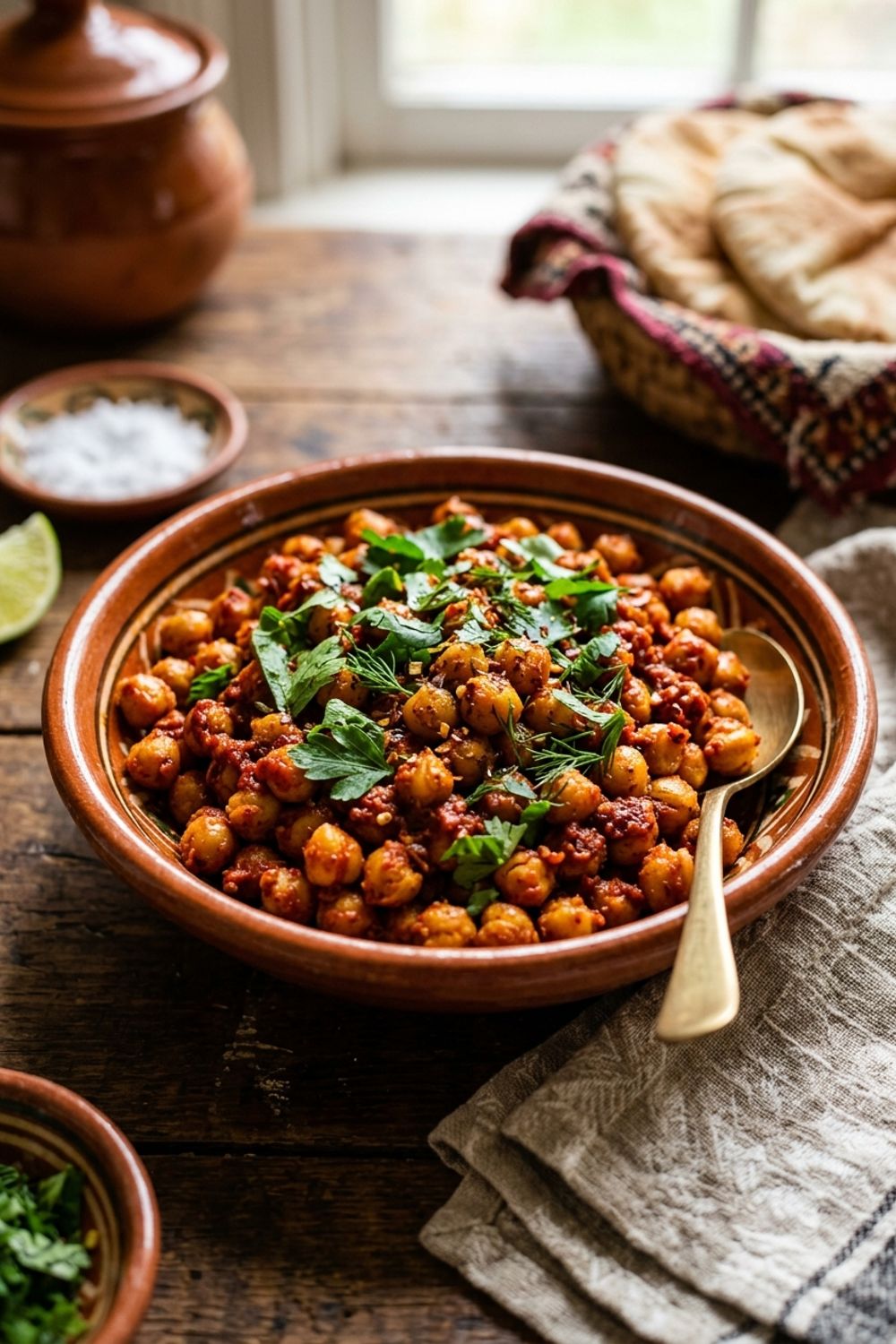
I have made this recipe for dinner parties, weeknight meals, and meal prep Sundays. It never fails to impress, whether I am serving it to devoted meat-eaters or lifelong vegetarians. The colors alone are stunning — that deep red sauce against the golden couscous with bright green herbs scattered on top. It is the kind of meal that makes you feel like you have traveled somewhere special without leaving your kitchen.
North African cuisine has this incredible ability to transform simple, affordable ingredients into something extraordinary, and this recipe captures that spirit perfectly. A can of chickpeas, a jar of harissa, some basic pantry spices, and a box of couscous — that is all it takes to create a meal that feels truly special.
Building Layers of Flavor with Harissa
The secret to making extraordinary harissa chickpeas lies in understanding how to build layers of flavor rather than dumping everything in at once. I learned this technique from watching home cooks in Morocco, and it changed the way I approach almost every dish I make.
The first layer starts with the onions. Cooking them slowly for a full 5-6 minutes until they are completely soft and translucent creates a sweet, mellow base. Rush this step and you get harsh, crunchy bits of onion that never properly integrate into the sauce. Patience here pays off enormously.
The second layer comes from blooming the dry spices. When you add the cumin, paprika, coriander, and cinnamon to the cooked onions and stir for that crucial minute, the heat activates their essential oils. You will actually smell the difference — the kitchen fills with this warm, toasty aroma that raw spices simply cannot produce. This blooming technique is fundamental to Moroccan cooking and makes a dramatic difference in the final dish.
The third layer is the harissa itself. Adding it to the hot pan before the tomatoes lets it fry briefly, which concentrates its flavor and deepens the smokiness. If you just stir harissa into a wet sauce, it dilutes and you lose that punchy intensity.
The fourth and final layer happens at the very end — the honey and lemon juice added off the heat. These are not afterthoughts. The honey tempers the spice without making the dish sweet, and the lemon juice lifts everything, adding brightness that prevents the rich sauce from feeling heavy. Together, they create that addictive quality where you cannot quite identify what makes the dish taste so good, but you cannot stop eating it.
Each of these layers takes only a minute or two, but the cumulative effect is a sauce with genuine depth and complexity.
Mastering Fluffy Herbed Couscous
Couscous seems like the simplest thing in the world to make, and in a way it is — but there are a few techniques that separate bland, clumpy couscous from the light, fluffy, fragrant bed this dish deserves. I ruined more batches than I care to admit before I figured out what actually matters.
The ratio is everything. For standard Moroccan-style couscous, I use a 1:1.15 ratio of couscous to liquid by volume. Too much liquid and you get mush. Too little and you get dry, hard grains that never fully hydrate. Using hot vegetable broth instead of water adds an immediate layer of savory flavor that plain water cannot match.
The technique is straightforward but requires discipline. Bring the broth to a rolling boil, stir in the couscous and olive oil, then immediately remove the pot from the heat and clamp the lid on tight. Do not peek. Do not stir. Let it sit for exactly 5 minutes. The steam does all the work, and every time you lift the lid, you release the steam that is hydrating those tiny pasta granules.
After 5 minutes, remove the lid and fluff aggressively with a fork. I mean really get in there, breaking up any clumps and separating every grain. This is the step most people skip or do halfheartedly, and it is the difference between light, individual grains and a dense, sticky mass.
The herbs go in right after fluffing, while the couscous is still hot. The residual heat gently wilts the parsley and mint, releasing their oils into the grains without cooking them into dull green mush. The toasted almonds add a subtle crunch that contrasts beautifully with the soft couscous, and the lemon zest provides aromatic brightness that ties everything together.
One more tip that I swear by: a tablespoon of olive oil stirred in before steaming coats each grain and prevents clumping. It is a small addition that makes a noticeable difference in texture.
Tips for Perfect Results
Choose the right harissa. Not all harissa pastes are created equal. Look for harissa in a jar or tube rather than a dry powder — the paste has a smoother texture and richer flavor. Rose harissa, which contains dried rose petals, adds a subtle floral note that is gorgeous in this dish. Brands like Le Phare du Cap Bon and Mina are excellent choices. If you can only find harissa powder, reconstitute it with a little olive oil and tomato paste before using.
Do not skip the cinnamon. I know it sounds strange in a savory dish, but that quarter teaspoon of cinnamon is a classic Moroccan touch that adds an almost imperceptible warmth and complexity. You should not taste cinnamon directly — it just rounds out the other spices and makes the whole dish taste more layered. Trust me on this one.
Toast the almonds properly. Spread the slivered almonds on a dry skillet over medium-low heat and shake the pan frequently for 3-4 minutes until they turn golden and fragrant. Watch them like a hawk — almonds go from perfectly toasted to burnt in about 30 seconds. The toasty, nutty flavor they add to the couscous is worth the attention.
Let the sauce reduce. Resist the urge to add liquid if the sauce looks thick. You want a concentrated, clingy sauce that coats the chickpeas rather than a thin, soupy liquid. The chickpeas will release some moisture as they cook, so the consistency usually balances out. If anything, a thicker sauce means more flavor in every bite.
Warm your serving bowls. This might sound fussy, but running your bowls under hot water for a minute before plating keeps everything warm longer. Couscous cools down quickly, and cold couscous is not nearly as pleasant as warm couscous. This simple step means your last bite is as enjoyable as your first.
Adjust the heat level gradually. I call for 3 tablespoons of harissa, which gives a moderate heat that most people enjoy. If you want it spicier, add more harissa at the end when you can taste the full picture. It is much easier to add heat than to take it away, so start conservative and build up.
Variations to Try
Harissa Chickpeas with Roasted Vegetables. Toss chunks of sweet potato, eggplant, and bell pepper with a little olive oil and roast at 425°F (220°C) for 25 minutes. Add them to the finished chickpeas for an even heartier meal. The caramelized vegetables add natural sweetness that complements the spicy sauce beautifully.
Baked Harissa Chickpeas. Transfer the simmered chickpeas to a baking dish, top with crumbled feta cheese, and bake at 400°F (200°C) for 15 minutes until the feta is golden and the edges are bubbling. The salty, tangy feta against the spicy chickpeas is an incredible combination. Serve with crusty bread for scooping.
Harissa Chickpea Stuffed Peppers. Hollow out bell peppers, fill them with the harissa chickpea mixture, top with a little cheese or breadcrumbs, and bake for 30 minutes. It turns this into a gorgeous presentation-worthy dish that works perfectly for dinner parties.
Coconut Harissa Chickpeas. Replace half the crushed tomatoes with coconut milk for a creamy, milder version that still has plenty of flavor. The coconut tempers the heat and creates a luxurious, silky sauce. Serve over rice instead of couscous for a fusion twist.
Meal Prep Bowls. This recipe scales up effortlessly. Double the batch, portion into containers with the couscous, and refrigerate for up to 4 days. The flavors actually deepen overnight as the spices meld together. Just reheat with a splash of water to loosen the sauce.
Serving Suggestions and Pairings
This dish is a complete meal on its own, but it also pairs beautifully with a variety of sides and accompaniments that can elevate it for different occasions. For a casual weeknight dinner, a simple green salad dressed with lemon vinaigrette and a few slices of warm pita bread round out the meal perfectly. The crisp, cool salad provides a refreshing contrast to the warm, spicy chickpeas.
For a more elaborate spread, serve the harissa chickpeas as part of a North African-inspired mezze table. Add hummus, baba ganoush, marinated olives, and warm flatbread. This sharing-style presentation is wonderful for dinner parties because guests can build their own plates and try everything at their own pace. I have done this for groups of eight and it always feels festive and generous without requiring hours of preparation.
The chickpeas also work brilliantly as a filling for wraps and pitas. Stuff a warm pita pocket with couscous, spoon in the chickpeas, add a drizzle of yogurt and some fresh herbs, and you have one of the best handheld lunches I have ever eaten. The portability makes it perfect for packed lunches, and the flavors hold up beautifully even at room temperature.
How to Store
Harissa chickpeas store beautifully and actually taste even better the next day. Let the chickpeas and couscous cool completely to room temperature before storing. Keep them in separate airtight containers in the refrigerator — the couscous stays fluffier when stored on its own rather than soaking in the sauce overnight.
The chickpeas will keep in the refrigerator for up to 5 days and in the freezer for up to 3 months. The couscous is best within 3 days and does not freeze as well, so I recommend making fresh couscous when you reheat frozen chickpeas. To reheat, warm the chickpeas in a saucepan over medium heat with a splash of water or broth to loosen the sauce. Microwave works too — cover the bowl and heat in 90-second intervals, stirring between each.
The yogurt, fresh herbs, and lemon wedges should always be added fresh at serving time. They lose their brightness and texture if stored with the hot components.
Troubleshooting
Sauce is too thin. Continue simmering uncovered for another 5-10 minutes. The liquid will evaporate and the sauce will thicken. You can also mash a few chickpeas against the side of the pan with a fork — the starch they release acts as a natural thickener.
Not enough heat. Add more harissa paste one teaspoon at a time. You can also add a pinch of cayenne pepper or a few dashes of hot sauce for immediate heat. A finely diced fresh chili stirred in at the end adds both heat and a fresh, bright flavor.
Couscous is clumpy. This usually means it was not fluffed enough or sat too long before fluffing. Break up clumps with a fork and drizzle a teaspoon of olive oil over the top while fluffing. For future batches, set a timer for exactly 5 minutes and fluff immediately when it goes off.
Flavors taste flat. This almost always means it needs more salt or acid. Add salt a pinch at a time, tasting between additions. Then squeeze in more lemon juice — acidity has a remarkable ability to make all the other flavors pop. A tiny drizzle of honey can also help if the tomatoes are particularly acidic.
Chickpeas are too firm. If using canned chickpeas that still feel slightly hard after simmering, they may have been undercooked at the cannery. Extend the simmer time by 10 minutes with the lid partially on. Adding a pinch of baking soda to the simmering liquid can also help soften them more quickly by breaking down the pectin in their skins.
This harissa chickpeas recipe has become one of my most-requested dishes, and I think it will become one of yours too. The combination of smoky heat, warm spices, and fresh herbs creates something that is far more than the sum of its parts. Whether you are feeding a crowd or just treating yourself to a cozy weeknight dinner, this is a meal that delivers big flavor with minimal effort.
Never Miss a Recipe
Join 5,000+ home cooks and get new recipes straight to your inbox.
Ingredients
Harissa Chickpeas
Herbed Couscous
For Serving
Instructions
- 1
Sauté the Aromatics
Heat 2 tablespoons olive oil in a large deep skillet or Dutch oven over medium heat. Add the diced onion and cook for 5-6 minutes until softened and translucent. Add the minced garlic, cumin, smoked paprika, coriander, and cinnamon. Stir constantly for 1 minute until fragrant.
- 2
Add Harissa and Tomatoes
Stir in the harissa paste and cook for 30 seconds, coating the onions. Pour in the crushed tomatoes and stir well to combine. Bring the mixture to a gentle simmer.
- 3
Simmer the Chickpeas
Add the drained chickpeas to the skillet. Stir to coat them in the harissa-tomato sauce. Season with salt and pepper. Reduce heat to medium-low and simmer uncovered for 15-18 minutes, stirring occasionally, until the sauce has thickened and the chickpeas are tender and infused with flavor.
- 4
Prepare the Couscous
While the chickpeas simmer, bring the vegetable broth to a boil in a medium saucepan. Stir in the olive oil and couscous. Remove from heat, cover tightly, and let stand for 5 minutes. Fluff with a fork and stir in the parsley, mint, toasted almonds, and lemon zest.
- 5
Finish and Season
Remove the chickpeas from heat. Stir in the honey and lemon juice. Taste and adjust seasoning — add more harissa for extra heat, more honey for sweetness, or more lemon for brightness.
- 6
Serve
Divide the herbed couscous among bowls. Spoon the harissa chickpeas over the top. Dollop with Greek yogurt, scatter with fresh cilantro, and serve with lemon wedges and extra harissa on the side.
Nutrition Information
Per serving (serves 4). Values are approximate.
| Calories | 385 calories |
| Total Fat | 14g |
| Saturated Fat | 2g |
| Carbohydrates | 52g |
| Sugar | 9g |
| Protein | 15g |
| Sodium | 680mg |
| Fiber | 10g |
* Percent Daily Values are based on a 2,000 calorie diet. Your daily values may be higher or lower depending on your calorie needs. Nutritional information is an estimate and may vary.
Frequently Asked Questions
How spicy is harissa paste?
Harissa heat levels vary by brand. Most store-bought harissa is moderately spicy — similar to a medium salsa. Start with 2 tablespoons if you are sensitive to heat, then taste and add more. Rose harissa is milder and slightly floral, while some Tunisian brands can be quite fiery.
Can I use dried chickpeas instead of canned?
Yes. Soak 1 cup (200g) dried chickpeas overnight, then boil for 45-60 minutes until tender before using them in this recipe. Dried chickpeas have a firmer, creamier texture that holds up beautifully in the sauce.
What can I substitute for couscous?
Quinoa, rice, or bulgur wheat all work well. For a lower-carb option, serve the chickpeas over cauliflower rice or with warm flatbread on the side. Israeli (pearl) couscous is another great option — it has a chewier, more substantial texture.
Is this recipe vegan?
The chickpeas themselves are vegan. To make the entire dish vegan, skip the Greek yogurt or replace it with coconut yogurt, and check that your harissa paste does not contain honey.

Hi, I'm Lisa!
I create simple, tested recipes from around the world that anyone can make at home.
Learn More →Reader Reviews
Based on 215 reviews