Chicken & Poultry
Gai Yang (Thai Grilled Chicken)
Why This Recipe Is Special
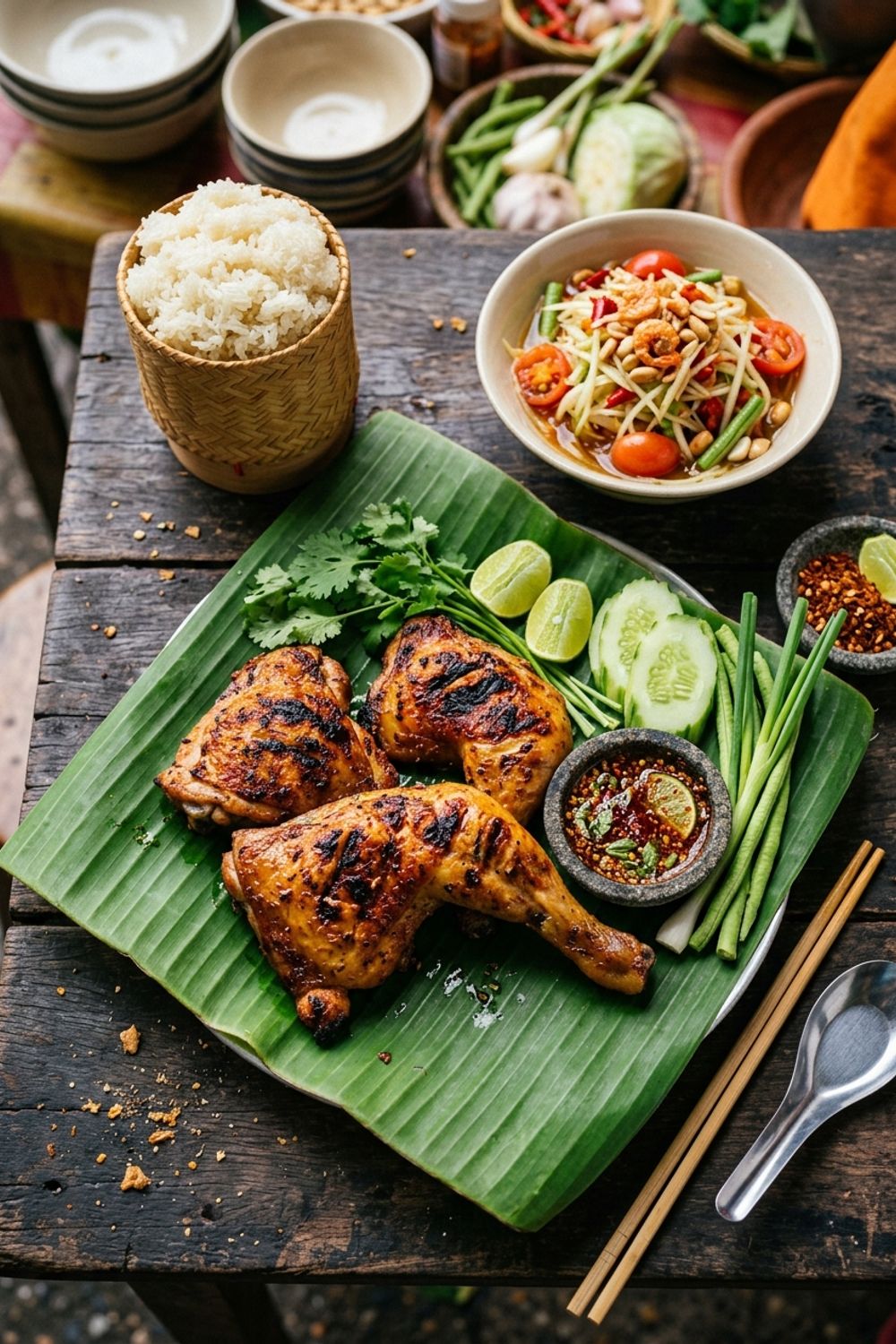
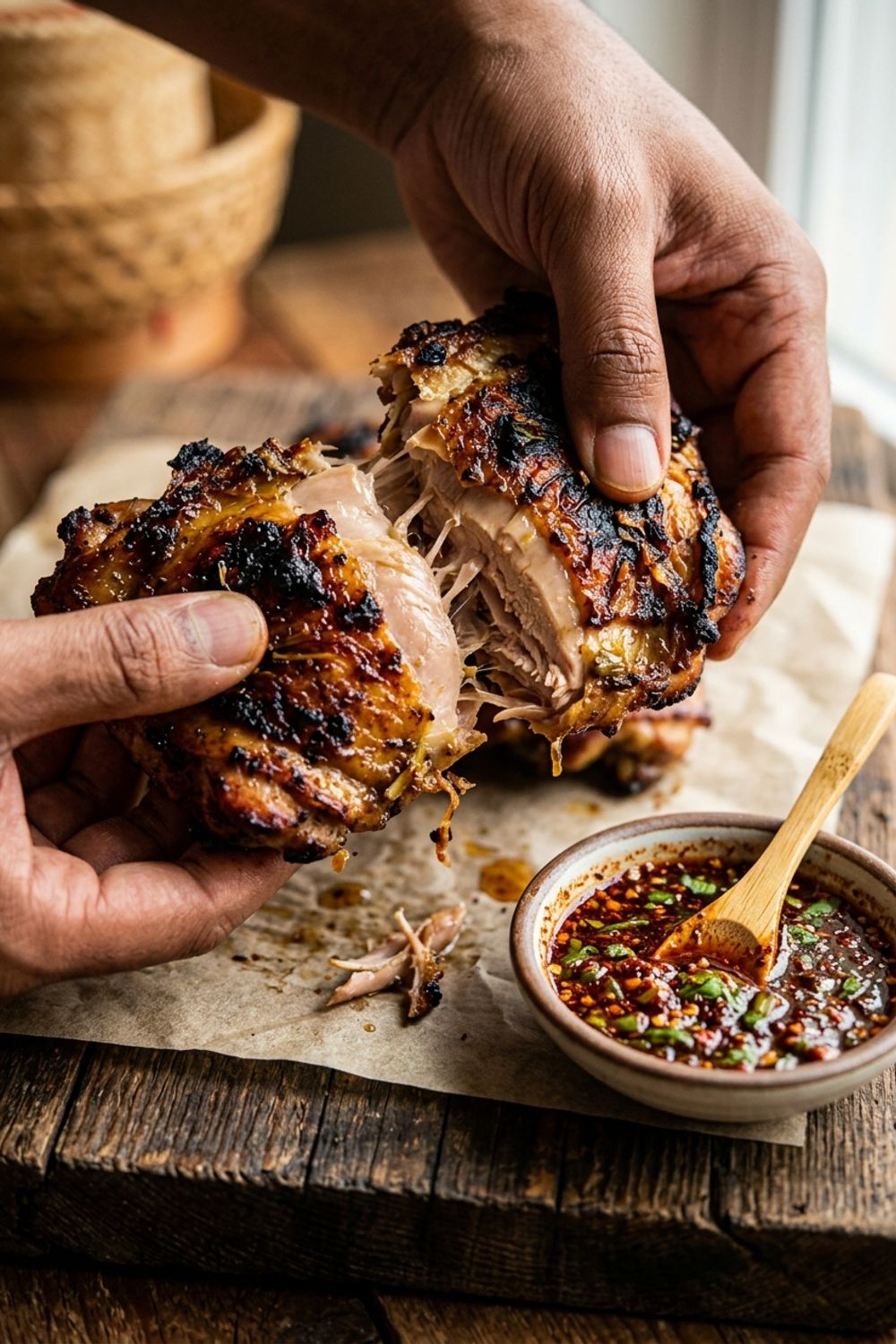
I still remember the first time I tasted real gai yang at a roadside stall in Chiang Mai. The vendor had a row of butterflied chickens clamped between bamboo sticks, slowly turning over smoldering charcoal. The aroma — lemongrass, garlic, white pepper, and that unmistakable smoky char — drifted through the night market for what felt like an entire block. When I finally bit into that first piece, the skin crackled and the meat underneath was impossibly juicy, fragrant, and layered with flavor. I knew right then that I had to learn how to recreate it at home.
Gai yang, which literally translates to “grilled chicken” in Thai, is one of the most beloved street foods in Thailand, particularly in the Isan (northeastern) region. It’s deceptively simple — the magic lies entirely in the quality of the marinade and the patience of the grilling process. Unlike Western grilled chicken that often relies on barbecue sauce or dry rubs applied at the last minute, gai yang builds flavor from the inside out. The marinade paste, pounded by hand in a mortar, releases essential oils from lemongrass and garlic that slowly penetrate the meat over hours of marinating.
What makes my version of this recipe truly special is the balance I’ve worked out after dozens of attempts. The fish sauce provides deep umami, the palm sugar caramelizes on the grill to create that sticky lacquered exterior, and the turmeric gives the chicken its characteristic golden hue. Combined with the jaew dipping sauce — a fiery, tangy condiment that cuts through the richness of the grilled meat — this is a complete Thai street food experience that you can absolutely pull off in your backyard. I promise you, once you taste this homemade version, rotisserie chicken from the grocery store will never quite satisfy you the same way again.
The Art of the Marinade Paste
The heart and soul of gai yang is the marinade paste, and I cannot stress enough how much better it turns out when you use a mortar and pestle instead of a food processor. I know it takes a bit more effort, but the bruising action of the pestle releases the volatile oils from the lemongrass and garlic in a way that blades simply cannot replicate. The result is a coarser, more aromatic paste that clings to the chicken rather than sliding off.
Start with the hardest ingredients first. Drop the white peppercorns into the mortar and crush them to a rough powder. White pepper, not black, is traditional in Thai cooking and has a sharper, more floral heat that complements the other aromatics. Next, add the garlic cloves and cilantro roots and pound until you have a rough paste. Cilantro roots are a staple in Thai cooking — they have an intense, earthy cilantro flavor that the leaves simply cannot match. If you cannot find them, cilantro stems work as a reasonable substitute, but try to seek out the roots at your local Asian market.
Finally, add the lemongrass. Since lemongrass is quite fibrous, make sure you are using only the tender inner core of the bottom 3-4 inches of the stalk. Peel away the tough outer layers until you reach the softer, more pliable interior. Slice it thinly before adding to the mortar — this makes pounding much easier and ensures no stringy bits end up in your paste. Once everything is pounded together, stir in the liquid ingredients. The paste should look rough and fragrant, not smooth like a puree. This texture is what creates those incredible pockets of concentrated flavor throughout the finished chicken.
Mastering Indirect Grilling
The biggest mistake I see people make with gai yang is grilling the chicken entirely over direct heat. Yes, you want that beautiful char, but a whole spatchcocked chicken cooked only over direct flame will have a burnt exterior and raw interior before you know it. The secret is a two-zone fire, and understanding when to use each zone changed my grilling game completely.
If you’re using a charcoal grill, bank all of your coals to one side, leaving the other side empty. For a gas grill, light only one or two burners on one side. Place the marinated chicken skin-side up on the cool side of the grill with the legs facing toward the heat source, since dark meat takes longer to cook. Close the lid and let the chicken cook in this gentle, oven-like environment for the first 20 minutes. The temperature inside the grill should hover around 350°F (175°C).
After 20 minutes, flip the chicken so the skin side is down, still over indirect heat, and cook for another 10 minutes. The skin will begin to render its fat and tighten up during this phase. Only in the final step do you move the chicken over the direct heat — and even then, you are watching it like a hawk. The palm sugar in the marinade can go from beautifully caramelized to acrid and burnt in under a minute. Give it 3-5 minutes per side directly over the coals, just enough to get those gorgeous char marks and blistered skin. The chicken is done when the thigh reads 165°F (74°C) on an instant-read thermometer.
Tips for Perfect Results
Spatchcocking is non-negotiable. I have tried gai yang with whole un-flattened chickens and the cooking is wildly uneven. The breast overcooks while the thighs remain underdone. Spatchcocking ensures the entire bird lies flat against the grill grate, cooking evenly and maximizing the surface area that gets that coveted smoky char. If you have never spatchcocked a chicken before, it takes about two minutes with good kitchen shears and gets easier every time you do it.
Marinate overnight for the best results. Two hours is the minimum, but overnight is where the magic really happens. The fish sauce acts as a brine, seasoning the meat all the way to the bone, while the aromatics slowly perfuse the flesh. I usually prep the chicken and marinade on a Saturday evening and grill it for Sunday lunch. The difference between a 2-hour marinate and an overnight marinate is genuinely dramatic — the flavor goes from “on the surface” to “all the way through.”
Use a meat thermometer and do not guess. Every grill has hot spots, every chicken is a slightly different size, and ambient temperature and wind affect cooking times. I have been grilling for years and I still use a thermometer every single time. Pull the chicken at 165°F (74°C) in the thickest part of the thigh. If you are using a leave-in probe thermometer, even better — set an alert and relax while the grill does the work.
Rest the chicken before chopping. I know it is tempting to cut into it right away, especially when it smells this incredible, but give it a full 10 minutes. Resting allows the juices to redistribute throughout the meat. If you chop immediately, all those flavorful juices end up on the cutting board instead of in each bite. Cover loosely with foil — not tightly, as that will steam the crispy skin.
Make extra jaew sauce. This dipping sauce is addictive and keeps well in the fridge for up to a week. I always make a double batch because it goes on everything — grilled vegetables, fried rice, even scrambled eggs the next morning. The toasted rice powder thickens slightly over time, so add a splash of lime juice when reheating to brighten it back up.
Variations to Try
Gai Yang with Coconut Milk: This is my go-to variation during summer months when I want something a touch richer. For an even more succulent version, add 1/4 cup (60ml) of coconut milk to the marinade. The fat in the coconut milk helps keep the breast meat moist and adds a subtle sweetness that pairs beautifully with the lemongrass. This variation is common in southern Thailand and produces a slightly richer flavor profile.
Spicy Gai Yang: If you want more heat, add 3-4 fresh Thai bird’s eye chilies to the mortar when pounding the marinade paste. You can also mix 1 tablespoon of Sriracha or Thai chili paste (nam prik pao) into the marinade for a different kind of warmth — more smoky and complex rather than the fresh punch of raw chilies.
Air Fryer Gai Yang: Cut the marinated chicken into individual pieces (thighs, drumsticks, wings) and cook in the air fryer at 380°F (193°C) for 25-30 minutes, flipping halfway. The skin gets surprisingly crispy and the cooking time is significantly reduced. You won’t get the smokiness, but the flavor from the marinade still shines through beautifully.
Gai Yang Tacos: This is my favorite fusion twist. Shred the grilled chicken and pile it into warm corn tortillas with quick-pickled cucumbers, fresh cilantro, sliced Thai chilies, and a drizzle of the jaew sauce thinned with a little lime juice. It sounds unconventional, but the Thai and Mexican flavor profiles overlap more than you might think.
How to Store
Leftover gai yang keeps exceptionally well. Store the grilled chicken pieces in an airtight container in the refrigerator for up to 4 days. The marinade flavors actually continue to develop in the fridge, so day-two leftovers can taste even more complex than freshly grilled. Reheat in a 375°F (190°C) oven for 10-12 minutes to re-crisp the skin, or slice and use cold in salads and rice bowls.
You can also use leftover gai yang in a Thai-style fried rice — chop the chicken into small pieces and stir-fry with day-old jasmine rice, a splash of fish sauce, an egg, and whatever vegetables you have on hand. The pre-seasoned chicken adds so much flavor that you barely need any additional seasoning.
For longer storage, the grilled chicken freezes well for up to 3 months. Wrap individual portions tightly in plastic wrap, then place in a freezer-safe bag with as much air removed as possible. Thaw overnight in the refrigerator before reheating. The jaew dipping sauce can be stored separately in a small jar in the fridge for up to one week — the flavors actually improve after a day or two as everything melds together.
Troubleshooting
The skin is burnt but the inside is raw. Your fire was too hot or the chicken was entirely over direct heat. Always start with indirect heat and only move to direct heat for the final char. If using charcoal, let the coals ash over completely before grilling — bright red, flaming coals are too hot.
The chicken is dry. This usually means it was overcooked. Dark meat (thighs and drumsticks) is more forgiving than breast meat, which is why spatchcocking helps — the thighs sit closer to the heat and shield the breast somewhat. Also make sure you marinated for at least 2 hours; the fish sauce brine is essential for moisture retention.
The marinade tastes too salty. Fish sauce varies dramatically between brands. I recommend starting with 1.5 tablespoons instead of 2 and tasting the paste before applying it to the chicken. You can always add more, but you cannot take it away. Tiparos and Squid brand are my go-to fish sauces — they are well-balanced and not overpoweringly salty.
The lemongrass is stringy in the paste. You used too much of the tough outer stalk. Next time, peel away more layers and use only the very tender inner core. Slicing the lemongrass paper-thin before pounding also helps break down the fibers. If you find stringy bits, pass the paste through a coarse sieve before mixing with the liquid ingredients.
The chicken has no flavor deep inside. This is a marinating issue. If you only marinated for 30 minutes to an hour, the flavor stays entirely on the surface. For gai yang specifically, the minimum is 2 hours, and I genuinely recommend overnight. The fish sauce and salt in the marinade need time to penetrate through the muscle fibers, and the aromatic oils from the lemongrass and garlic need time to perfuse into the meat. Scoring the thighs and drumsticks with shallow cuts helps enormously — those cuts create channels for the marinade to seep deeper into the flesh. If you are really short on time, inject the marinade directly into the thickest parts of the thigh using a marinade injector — it is not traditional, but it works.
Gai yang is one of those recipes that rewards practice and patience. Every time I make it, I learn something new — a slightly different ratio, a longer marinate, a better charcoal arrangement. That is the beauty of cooking food that has been perfected over generations of Thai street vendors. Take your time, trust the process, and enjoy the incredible aromas that will fill your backyard. I firmly believe that learning to cook a dish like this — a dish with deep cultural roots and a history stretching back generations — makes us better, more curious cooks. It connects us to traditions far beyond our own kitchens, and every bite carries a story worth telling.
Never Miss a Recipe
Join 5,000+ home cooks and get new recipes straight to your inbox.
Ingredients
Chicken
Marinade
Jaew Dipping Sauce
Serving
Instructions
- 1
Spatchcock the Chicken
Place the chicken breast-side down on a cutting board. Using sharp kitchen shears, cut along both sides of the backbone and remove it. Flip the chicken over and press firmly on the breastbone until it cracks flat. This ensures even cooking on the grill and maximum surface area for the marinade to penetrate.
- 2
Prepare the Marinade
Using a mortar and pestle, pound the garlic, lemongrass, cilantro roots, and white peppercorns into a coarse paste. Transfer to a bowl and mix in the fish sauce, soy sauce, oyster sauce, palm sugar, vegetable oil, and turmeric. Stir until the sugar dissolves. Alternatively, pulse everything in a food processor, but the mortar gives a more authentic texture.
- 3
Marinate the Chicken
Score the chicken thighs and drumsticks with 2-3 shallow cuts to help the marinade penetrate. Rub the marinade paste all over the chicken, working it into every cut and under the skin where possible. Place in a large zip-top bag or covered dish and refrigerate for at least 2 hours, or ideally overnight for the deepest flavor.
- 4
Grill the Chicken
Set up your grill for indirect heat — coals on one side, chicken on the other. Place the chicken skin-side up over indirect heat, close the lid, and grill at 350°F (175°C) for 20 minutes. Flip the chicken skin-side down over indirect heat for another 10 minutes. Finally, move the chicken directly over the coals for 3-5 minutes per side to char the skin, watching carefully to prevent burning.
- 5
Make the Jaew Sauce
While the chicken grills, stir together the fish sauce, lime juice, and palm sugar until dissolved. Add the toasted rice powder, chili flakes, cilantro, and green onion. Taste and adjust — it should be a vibrant balance of salty, sour, sweet, and spicy. Let it sit for 10 minutes so the flavors meld.
- 6
Rest, Chop, and Serve
Transfer the grilled chicken to a cutting board and rest for 10 minutes. The internal temperature should read 165°F (74°C) at the thickest part of the thigh. Chop into pieces through the bone using a heavy cleaver, Thai-style. Serve on a platter alongside sticky rice, the jaew dipping sauce, and green papaya salad if desired.
Nutrition Information
Per serving (serves 4). Values are approximate.
| Calories | 385 calories |
| Total Fat | 18g |
| Saturated Fat | 4g |
| Carbohydrates | 22g |
| Sugar | 6g |
| Protein | 35g |
| Sodium | 920mg |
| Fiber | 1g |
* Percent Daily Values are based on a 2,000 calorie diet. Your daily values may be higher or lower depending on your calorie needs. Nutritional information is an estimate and may vary.
Frequently Asked Questions
Can I make gai yang in the oven instead of a grill?
Yes. Roast the spatchcocked chicken on a wire rack set over a sheet pan at 425°F (220°C) for 35-40 minutes, then broil on high for 3-4 minutes to char the skin. It won't have the same smokiness, but a pinch of smoked paprika in the marinade helps bridge the gap.
What is toasted rice powder and where can I find it?
Toasted rice powder (khao khua) is made by dry-toasting raw sticky rice in a skillet until golden, then grinding it to a powder. It adds a nutty, smoky flavor and slight texture to dipping sauces. You can buy it at Asian grocery stores or make it in five minutes at home.
Can I use chicken pieces instead of a whole chicken?
Absolutely. Bone-in, skin-on thighs and drumsticks work best. Reduce the grilling time to about 25-30 minutes total over indirect heat, then char over direct heat for 2-3 minutes per side.
How important is the lemongrass in the marinade?
Lemongrass is the signature flavor of gai yang and really cannot be substituted. If fresh lemongrass is unavailable, look for frozen lemongrass at Asian markets. As a last resort, use 1 tablespoon of lemongrass paste from a tube, though fresh is always preferred.

Hi, I'm Lisa!
I create simple, tested recipes from around the world that anyone can make at home.
Learn More →Reader Reviews
Based on 214 reviews