Holiday & Christmas
Christmas Charcuterie Board
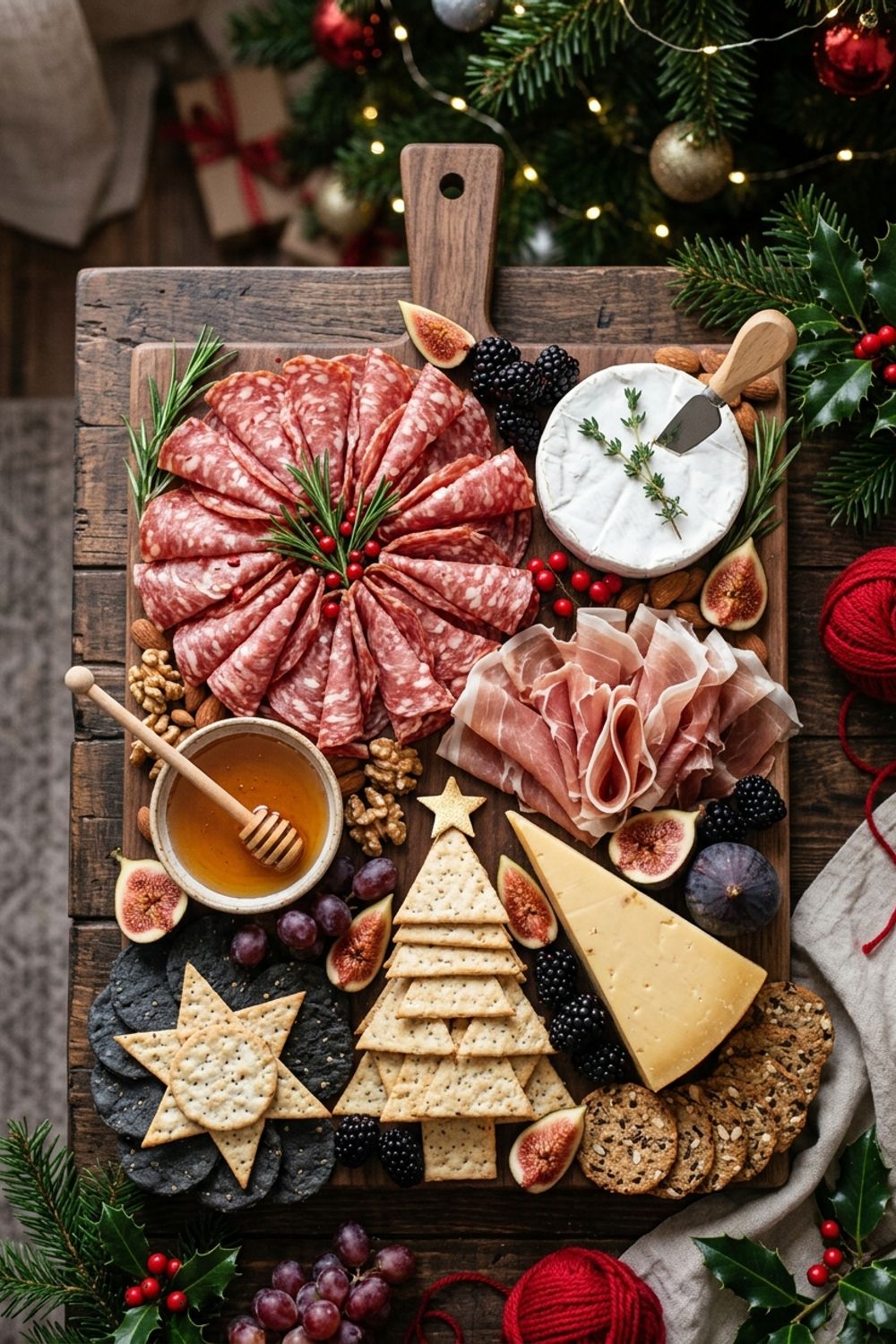
Why This Christmas Charcuterie Board Is Special
I have been building charcuterie boards for holiday parties for the better part of a decade now, and every single year someone asks me how I make them look so beautiful. The truth is, it is less about artistic talent and more about understanding a simple system — one that I am going to walk you through in this recipe. Once you know the method, you can build a board that looks like it belongs on the cover of a food magazine in under thirty minutes.
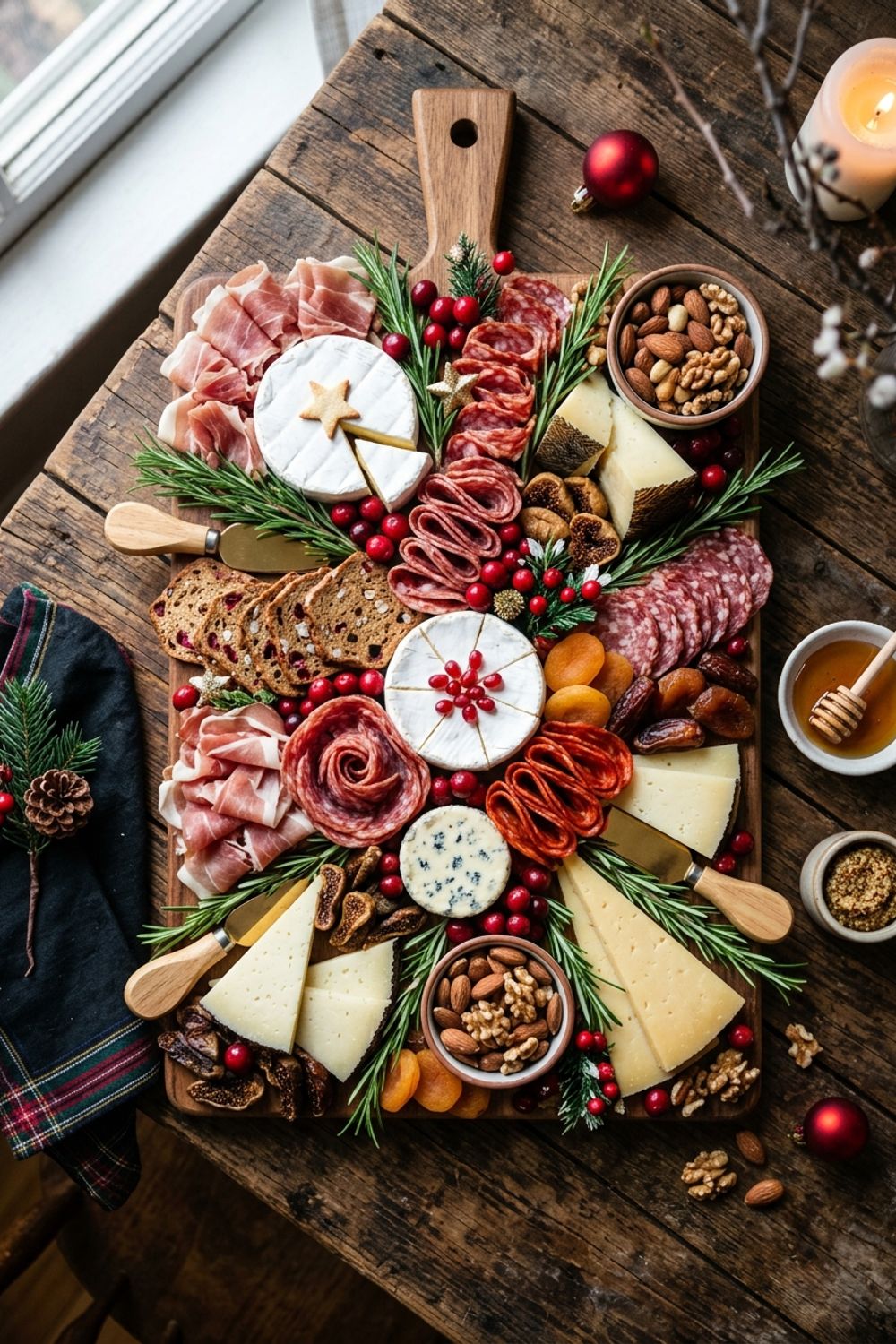
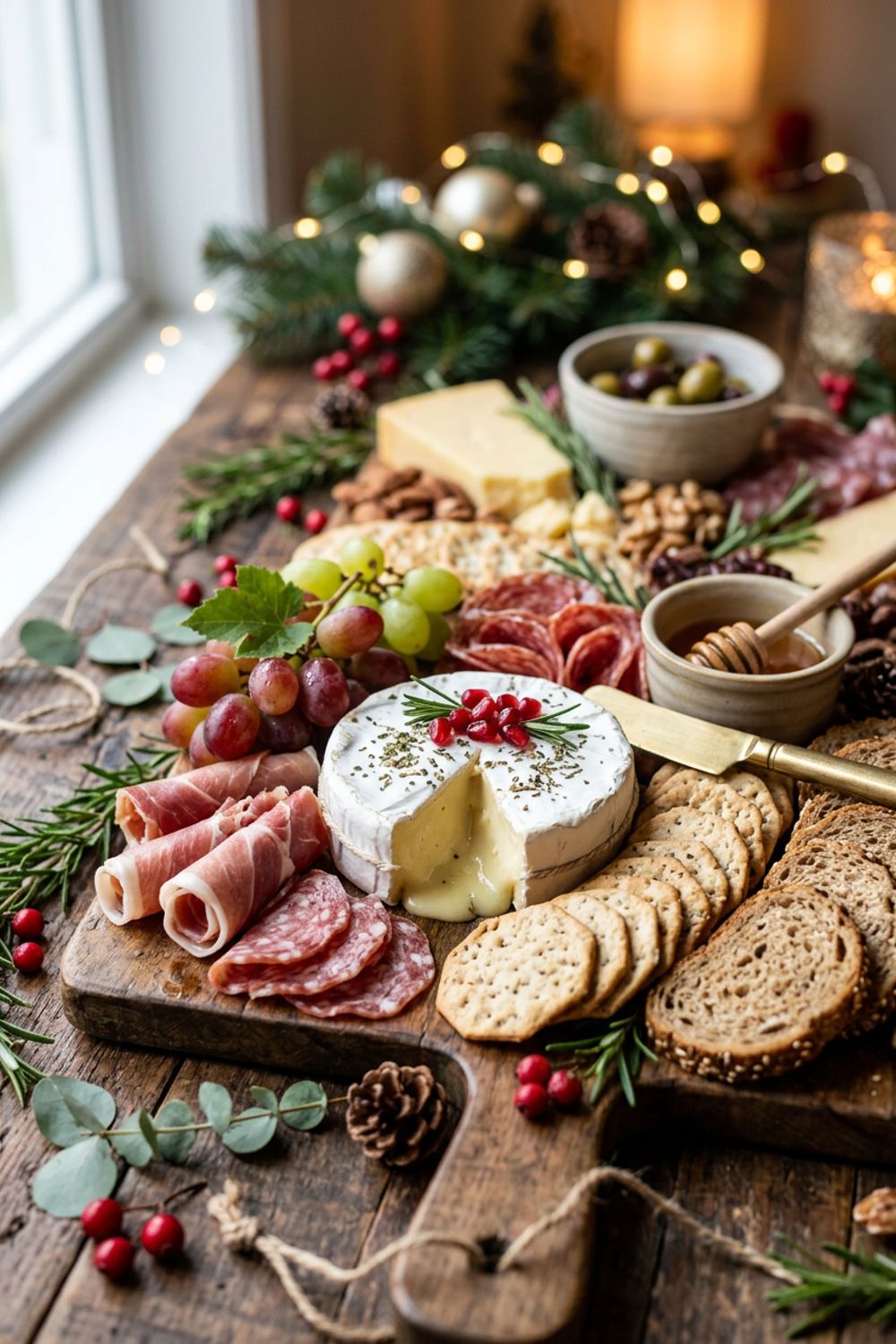
What sets this Christmas charcuterie board apart from a regular meat and cheese plate is the intentional layering of colors, textures, and flavors that echo the holiday season. I use deep red cranberries and pomegranate seeds alongside green rosemary and thyme sprigs to create a natural Christmas color palette without a single piece of tacky holiday decor in sight. The result is elegant, festive, and completely edible from edge to edge. Every element on this board earns its place because it tastes incredible, not just because it looks pretty.
I have also carefully selected the combination of meats and cheeses to give your guests a complete flavor journey. The prosciutto is silky and mild, the soppressata brings a gentle spice, the coppa adds a peppery richness, and the Genoa salami is that familiar crowd-pleaser everyone reaches for. On the cheese side, you get creamy brie, tangy goat cheese, sharp white cheddar, nutty gouda, and bold blue cheese. Pair any meat with any cheese and a smear of fig jam or a drizzle of honey, and you have a perfect bite. I designed this board so that no matter what combination your guests grab, it works. That is the magic of a well-thought-out charcuterie spread — it is effortlessly delicious in every direction.
The Art of Meat Folding and Presentation
The single biggest difference between a charcuterie board that looks homemade and one that looks professional is how you handle the cured meats. Most people just lay flat slices on the board, which is perfectly fine for flavor but misses an opportunity for visual drama. I am going to teach you three folding techniques that will instantly elevate your presentation.
The first technique is the prosciutto rosette. Take a single slice of prosciutto and lay it flat on your cutting board. Starting from one short end, loosely gather and scrunch the meat as you roll it, creating a ruffled, flower-like shape. Stand it up on the board so the ruffled edges face upward. The thin, translucent quality of prosciutto makes these rosettes look absolutely stunning — like delicate pink peonies scattered across the board. I usually make six to eight rosettes and cluster them in groups of two or three.
The second technique is the salami river. Take your Genoa salami slices and fold each one in half to create a semicircle. Then overlap them in a long, winding line across the board, each slice covering about a third of the one before it. This creates a flowing ribbon of meat that guides the eye across the entire spread and makes the board feel cohesive rather than like a random pile of ingredients.
The third technique is the simple coppa fold. Take each slice and fold it in half once, then tuck it between cheese groupings or along the edges of the board. The fold creates a bit of height and dimension without requiring any fancy skill. These tucked folds are your workhorses — they fill gaps beautifully and add that layered, abundant look that makes people say “wow” when they first see the board.
Building a Balanced Flavor Profile
A truly great charcuterie board is not just a collection of expensive ingredients thrown together — it is a carefully balanced experience of salt, sweet, acid, fat, and crunch. I think about each of these elements when I am selecting what goes on the board, and I want to walk you through my thought process so you can adapt this approach for any occasion.
Salt comes from the cured meats and the olives. Prosciutto, soppressata, coppa, and salami all bring a satisfying salinity that makes you reach for another bite. The Castelvetrano olives add a buttery, briny note that pairs particularly well with the gouda and the white cheddar. I always include at least two types of salty elements on every board.
Sweet is covered by the fruits, honey, and fig jam. The grapes and pomegranate seeds provide fresh, juicy sweetness, while the dried cranberries and apricots offer a more concentrated, chewy sweetness. The honey drizzled over the brie is one of my favorite combinations on this entire board — that salty, funky cheese with the floral sweetness of good honey is absolutely heavenly. The fig jam adds a jammy depth that works beautifully spread on a cracker with a fold of prosciutto.
Acid comes from the cornichons and the whole grain mustard. These tangy, sharp elements cut through the richness of the meats and cheeses and keep your palate refreshed between bites. Without acid, a charcuterie board can start to feel heavy and monotonous after a few minutes of grazing. The cornichons are my secret weapon — they are small, easy to eat, and incredibly effective at resetting your taste buds.
Fat is the backbone of any charcuterie board, provided by the cheeses and the marbling in the meats. The brie and goat cheese are the richest, creamiest elements, while the blue cheese adds a pungent, fatty punch. The marcona almonds, which are fried in oil, contribute an additional layer of richness that rounds out each bite.
Crunch comes from the crackers, baguette rounds, and nuts. Without textural contrast, a charcuterie board would be entirely soft and mushy. The water crackers provide a neutral, crispy base, the baguette adds a chewy artisan texture, and the candied pecans and marcona almonds deliver a satisfying snap that keeps things interesting.
Tips for a Perfect Christmas Charcuterie Board
Start with the largest items first. Always place your bowls, cheese wheels, and cheese wedges before anything else. These are your anchor points that define the structure of the entire board. I position them in a roughly triangular pattern so that the eye naturally moves between them. Everything else — meats, fruits, crackers — gets tucked into the spaces around these anchors. If you try to place small items first, you will end up rearranging everything when the big pieces do not fit.
Let cheese come to room temperature. This is probably the most important tip I can give you. Cold cheese is firm, muted in flavor, and does not spread well. Pull your cheeses out of the refrigerator 30 to 45 minutes before you plan to assemble the board. At room temperature, the brie becomes oozy and luscious, the goat cheese turns creamy and spreadable, and the cheddar and gouda develop their full, complex flavors. The difference is night and day.
Think in odd numbers. When you are arranging items in groups, odd numbers are more visually appealing than even numbers. Three rosettes of prosciutto look better than four. Five clusters of grapes are more interesting than six. This is a principle from visual design called the “rule of odds,” and it works beautifully for food styling. I do not obsess over it, but keeping it loosely in mind helps the board look more natural and less rigid.
Fill every gap. A professional-looking charcuterie board has no visible wood or marble peeking through. After you have placed all your main elements, go back and fill any remaining gaps with dried cranberries, pomegranate seeds, small clusters of almonds, or extra rosemary sprigs. These finishing touches take only a minute or two but make the board look incredibly abundant and generous — exactly the vibe you want for a Christmas gathering.
Provide the right tools. Nothing kills the flow of a charcuterie board like guests awkwardly tearing at a brie wheel with their fingers. Set out a small cheese knife for the harder cheeses, a spreader for the brie and goat cheese, and cocktail picks or small tongs for the meats and olives. I usually place these tools directly on the board, tucked between groupings, so they are easy to find.
Variations to Try
Mediterranean Charcuterie Board. Swap the traditional meats for spicy chorizo, bresaola, and nduja (a spreadable Calabrian salami). Replace the cheddar and gouda with manchego, halloumi cubes, and burrata. Add roasted red peppers, marinated artichoke hearts, sun-dried tomatoes, and kalamata olives. Drizzle everything with good extra-virgin olive oil and scatter fresh basil leaves. Serve with warm pita triangles instead of crackers.
Sweet Dessert Charcuterie Board. For a holiday twist, build a board around sweets instead of savory items. Use chocolate truffles, shortbread cookies, biscotti, candied ginger, dark chocolate bark, and white chocolate-dipped strawberries. Include small bowls of caramel sauce, Nutella, and raspberry jam for dipping. Add fresh berries, dried mango, and crystallized orange peel. This makes a spectacular Christmas dessert that guests can graze on all evening.
Kid-Friendly Christmas Board. If you have little ones at the party, build a separate board with milder flavors. Use turkey roll-ups, mild cheddar cubes, string cheese, pretzel sticks, apple slices, clementine segments, mini peanut butter cups, and animal crackers. Add a small bowl of ranch dressing for dipping. Arrange everything in the shape of a Christmas tree using a triangular board or just shaping the items into a tree formation on a rectangular board.
Budget-Friendly Holiday Board. You do not need imported Italian meats to make a gorgeous board. Use good-quality deli ham, peppered turkey, and summer sausage from the grocery store deli counter. Swap artisan cheeses for cream cheese with everything bagel seasoning, mild cheddar, and pepper jack. Add carrot sticks, celery, cherry tomatoes, and ranch dip. The presentation techniques I described above work just as well with budget ingredients — it is the arrangement that makes it impressive.
How to Store Your Christmas Charcuterie Board
If you have leftovers after your holiday gathering, do not leave the board sitting out for more than 2 hours at room temperature. Bacteria can grow rapidly on cured meats and soft cheeses when left unrefrigerated. Transfer all the remaining items into separate airtight containers — keep the meats, cheeses, fruits, and crackers in their own containers. The meats and cheeses will keep in the refrigerator for 3 to 5 days. Crackers and bread should be stored at room temperature in a sealed bag to maintain their crispness.
For make-ahead prep, you can slice and portion all your meats and cheeses up to 24 hours in advance. Store them layered between sheets of parchment paper in airtight containers in the fridge. The fruits can be washed and prepped the day before as well. When party time arrives, all you need to do is arrange everything on the board, which cuts your assembly time down to about 15 minutes. I do this for every holiday party and it makes the day so much less stressful.
Troubleshooting Common Issues
The board looks sparse and empty. You either have too large a board for the amount of food, or you need more filler items. Add extra crackers, more dried fruits, another handful of nuts, or additional small garnishes like cherry tomatoes or sugar snap peas. You can also switch to a slightly smaller board — it is always better to have a board that looks overflowing than one that looks underfilled.
The cheeses are sweating and look greasy. This happens when cheese goes from cold to warm too quickly. Let your cheeses warm up gradually by taking them out of the fridge 30 minutes before assembly. If they are already sweating, gently blot them with a paper towel before placing them on the board. A light dusting of cornstarch on the cut surfaces of harder cheeses can also help.
Guests are not sure what pairs with what. Place small label cards or simply arrange complementary items next to each other. Put the fig jam near the brie, the mustard near the cured meats, and the honey near the blue cheese. When people see items grouped together, they naturally pair them without needing instructions.
The bread is getting stale during the party. Only put out half the baguette slices at the start. Keep the rest wrapped in a clean kitchen towel and replenish as needed. If the slices do dry out, pop them in a 350°F oven for 3 minutes to crisp them into crostini — they will actually taste even better with a little crunch.
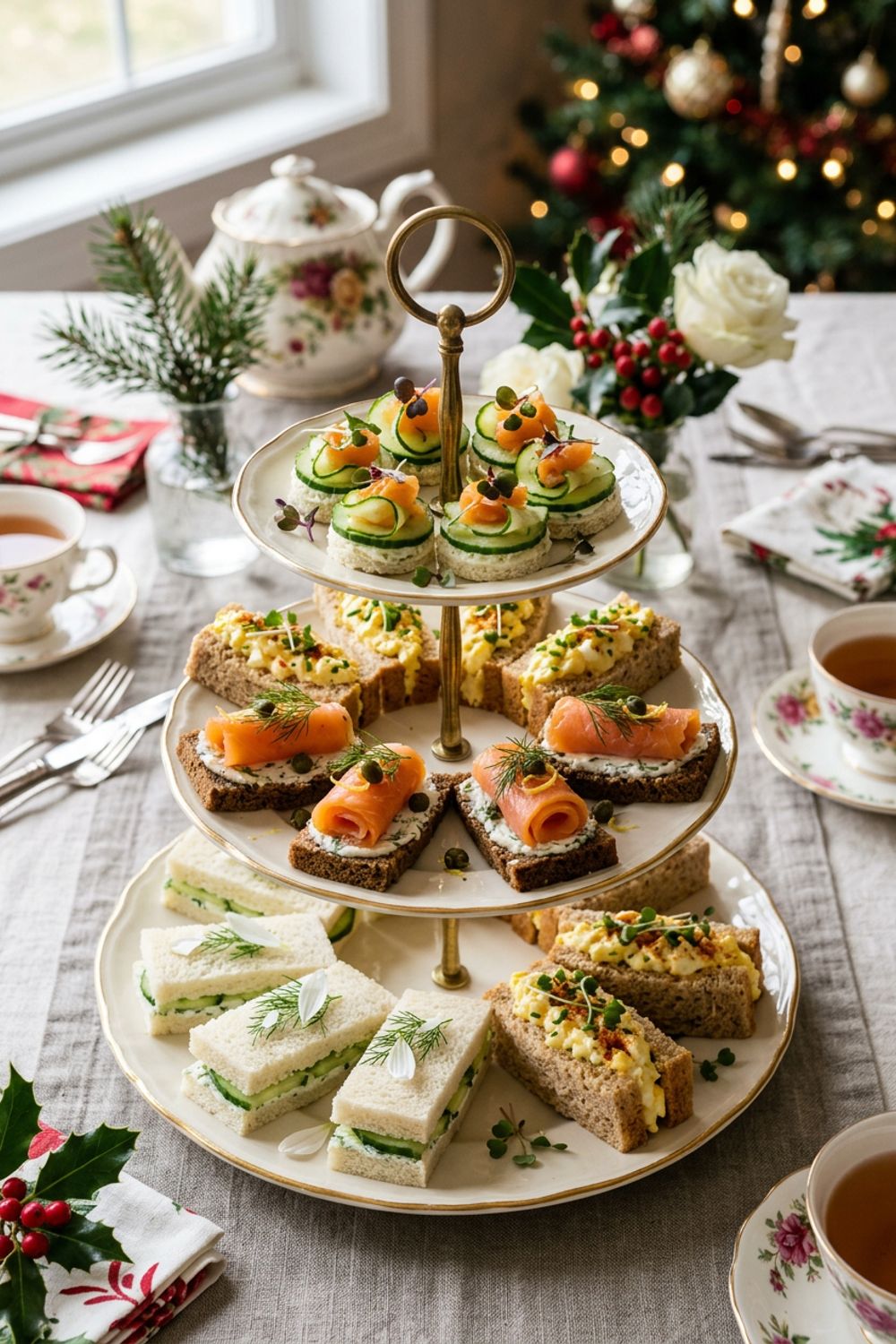
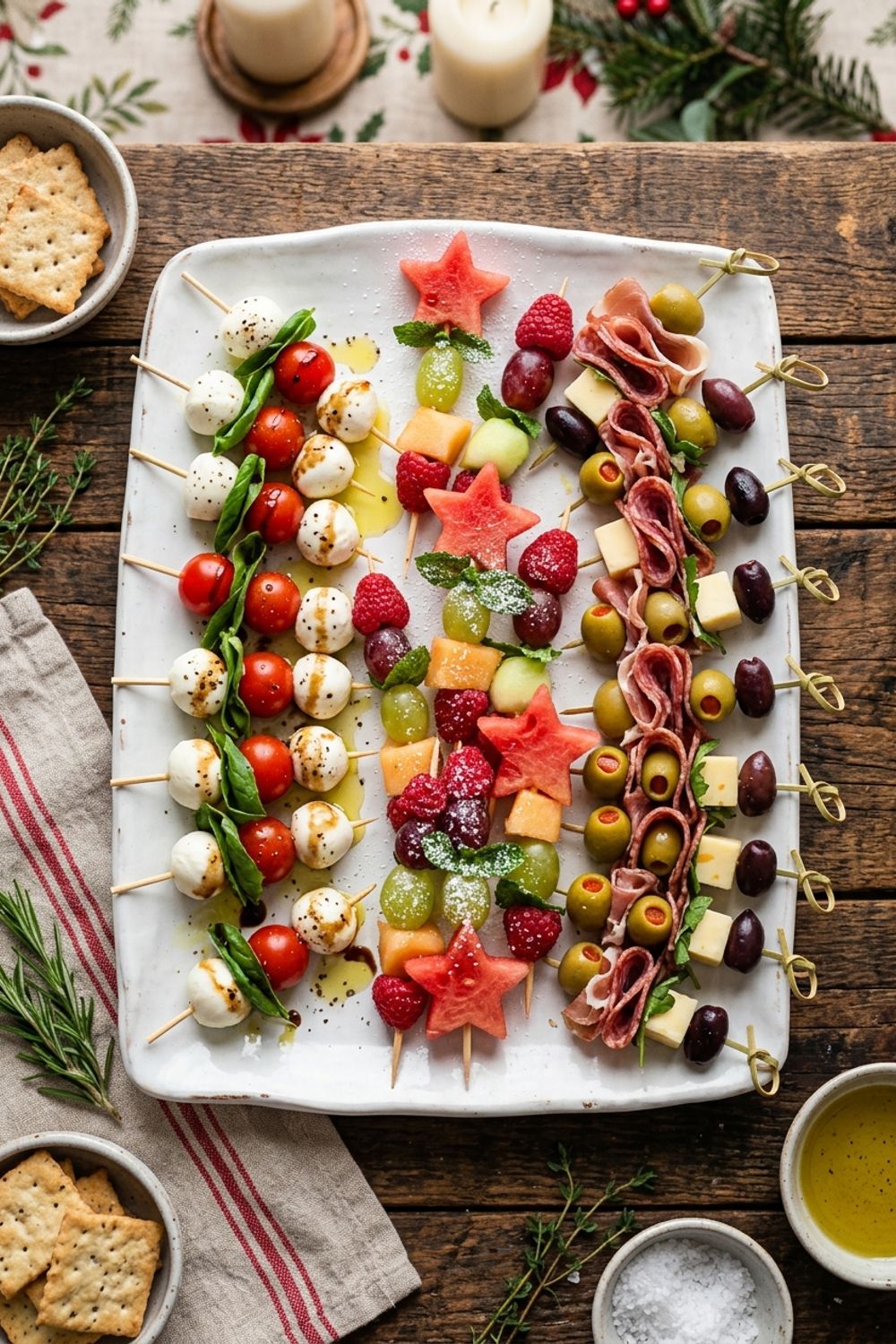
I truly believe that a beautiful charcuterie board is one of the best gifts you can give your guests during the holidays. It sets the tone for the entire evening, brings people together around a shared table, and starts every conversation with “this looks amazing.” For more holiday appetizer inspiration, check out my christmas finger sandwiches for elegant tea-party bites, my christmas appetizer skewers for easy grab-and-go snacks, or my christmas meat and cheese board for another take on the classic holiday spread. If you want to end the night on a sweet note, my coconut cheesecake is always a crowd favorite.
Never Miss a Recipe
Join 5,000+ home cooks and get new recipes straight to your inbox.
Ingredients
Cured Meats
Cheeses
Fruits and Nuts
Accompaniments
Garnish
Instructions
- 1
Choose and Prepare Your Board
Select a large wooden cutting board, marble slab, or serving platter at least 18 by 24 inches. Wipe it clean with a damp cloth. Set out three small bowls or ramekins for the honey, whole grain mustard, and fig jam. Position these bowls on the board first, spacing them evenly apart — this creates anchor points that guide the rest of your arrangement.
- 2
Place the Cheeses
Arrange the cheeses next, spacing them around the board between the bowls. Place the brie wheel whole, the goat cheese log intact, and the blue cheese as a wedge. Cut the white cheddar into bite-sized cubes and fan the gouda triangles in a row. Varying shapes and sizes creates visual interest. Leave space between each cheese for the meats and accompaniments.
- 3
Arrange the Cured Meats
Fold the prosciutto into loose rosettes by gathering each slice into a ruffled flower shape. Fan the soppressata slices in overlapping rows. Fold the coppa slices in half and tuck them between cheese groupings. Arrange the Genoa salami in a river pattern — slightly overlapping slices in a winding line across the board. The meats should fill the larger gaps between cheeses.
- 4
Add Crackers and Bread
Tuck water crackers in fans or stacks along the edges of the board. Place baguette rounds in clusters near the softer cheeses like brie and goat cheese. Do not overcrowd — you want guests to easily grab a cracker without disturbing the arrangement. If you run out of board space, set extra crackers in a separate basket nearby.
- 5
Fill with Fruits, Nuts, and Pickles
Scatter grapes in small clusters to add pops of color. Tuck dried cranberries and apricots into any remaining gaps. Place the quartered figs near the blue cheese. Sprinkle pomegranate seeds in small groupings for a festive red sparkle. Add marcona almonds and candied pecans in small piles. Nestle cornichons and olives near the cured meats.
- 6
Garnish and Serve
Tuck fresh rosemary sprigs and thyme around the board to add greenery reminiscent of a Christmas wreath. Scatter a few fresh cranberries across the surface for additional red accents. Drizzle honey over the brie just before serving. Set out small cheese knives, cocktail picks, and spreaders so guests can serve themselves easily.
Nutrition Information
Per serving (serves 12). Values are approximate.
| Calories | 385 calories |
| Total Fat | 26g |
| Saturated Fat | 11g |
| Carbohydrates | 22g |
| Sugar | 12g |
| Protein | 18g |
| Sodium | 820mg |
| Fiber | 2g |
* Percent Daily Values are based on a 2,000 calorie diet. Your daily values may be higher or lower depending on your calorie needs. Nutritional information is an estimate and may vary.
Frequently Asked Questions
How far in advance can I make a Christmas charcuterie board?
You can assemble the board up to 2 hours before serving. Cover tightly with plastic wrap and refrigerate. Remove it 20 to 30 minutes before guests arrive so the cheeses come to room temperature, which brings out their best flavors and textures.
How much charcuterie do I need per person?
For a cocktail party where the board is the main focus, plan for about 3 to 4 ounces of meat and cheese combined per person. If the board is served alongside a full dinner, 2 ounces per person is plenty. This recipe serves about 12 people as an appetizer.
What can I substitute for blue cheese?
If your guests are not fans of blue cheese, swap it for a creamy Havarti or a mild fontina. Both melt beautifully on crackers and pair well with the fruits and honey on the board without the strong tang of blue cheese.
Can I make a charcuterie board nut-free?
Absolutely. Replace the marcona almonds and candied pecans with extra olives, roasted red pepper strips, or marinated artichoke hearts. You still get the salty, savory bites without any nut allergens.

Hi, I'm Lisa!
I create simple, tested recipes from around the world that anyone can make at home.
Learn More →Reader Reviews
Based on 287 reviews