Holiday & Christmas
Christmas Appetizer Skewers
Why These Christmas Appetizer Skewers Are Special
I am a firm believer that the best party food is food you can eat with one hand. When you are at a holiday gathering, you are holding a drink, hugging arriving guests, picking up wrapping paper, chasing kids around the living room — the last thing you want is a plate and a fork to juggle. That is why skewer appetizers are my go-to for every single Christmas party I host. Everything is self-contained on a single stick, ready to grab, easy to eat, and zero dishes required.
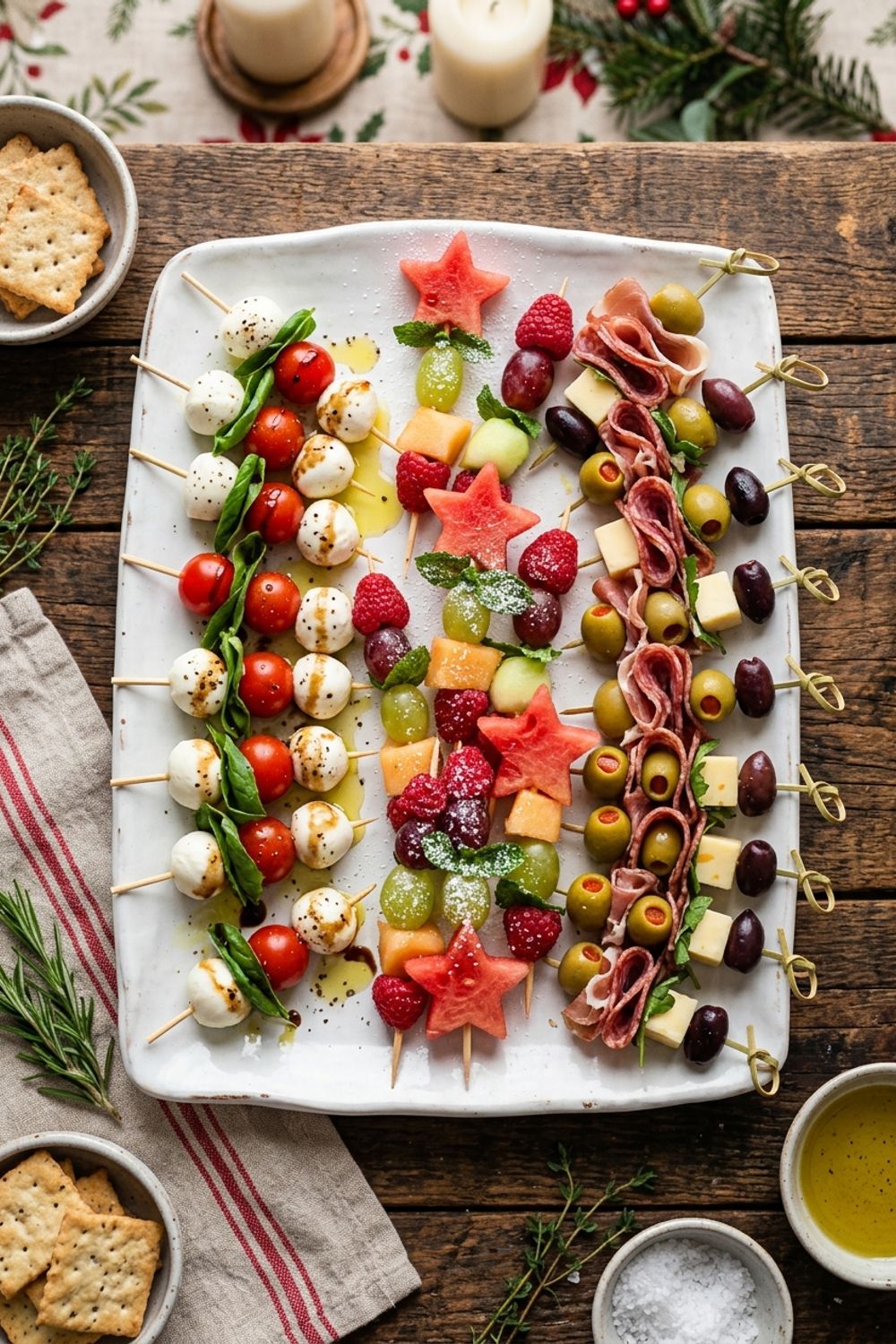
What makes this particular recipe stand out is that I give you three completely different skewer varieties — caprese, antipasto, and fruit-and-cheese — which means your platter has incredible flavor diversity without requiring three separate recipes. The caprese skewers are fresh, bright, and light with creamy mozzarella, fragrant basil, and sweet-tart tomatoes. The antipasto skewers are bold and savory with spicy salami, briny olives, tangy artichokes, and sharp provolone. The fruit-and-cheese skewers are sweet and elegant with juicy strawberries, crisp grapes, and nutty aged cheeses. Together, they cover every possible craving your guests might have, and the color palette is naturally festive — reds, greens, and whites dominate without any artificial decoration needed.
I also designed these skewers to be incredibly efficient for the cook. There is no cooking involved, no marinating, no complicated assembly. You are threading pre-made ingredients onto sticks, which means your total hands-on time is about 25 minutes for 36 skewers that serve 12 people. That is less than a minute per skewer. In my world of holiday cooking, where every minute of prep time counts, that kind of efficiency is golden. These skewers give you maximum visual impact and flavor for minimum effort, and that is exactly the kind of recipe I reach for when December arrives.
Building the Perfect Caprese Skewer
The caprese skewer is the crown jewel of this platter, and it deserves a few words about how to make it shine. A classic Caprese salad is one of the simplest dishes in Italian cuisine — just mozzarella, tomato, basil, olive oil, and salt — which means every single ingredient needs to be the best quality you can find. There is nowhere for a subpar ingredient to hide.
The mozzarella should be fresh ciliegine (small cherry-sized balls) rather than the pre-shredded or block mozzarella you use for pizza. Fresh mozzarella has a soft, milky, slightly springy texture that is completely different from aged mozzarella. It pairs with the tomato and basil in a way that no other cheese can replicate. I buy mine from the deli section, where they are packed in brine or water. Drain them well and pat dry before skewering — excess brine will drip down the skewer and make the platter watery.
The basil leaves should be fresh, bright green, and aromatic. Give them a sniff at the store — they should smell distinctly herby and slightly peppery. I fold each leaf in half before threading it onto the skewer, which concentrates the basil flavor and creates a thicker green layer that is visible between the white mozzarella and red tomato. If your basil leaves are very large, tear them in half first and then fold.
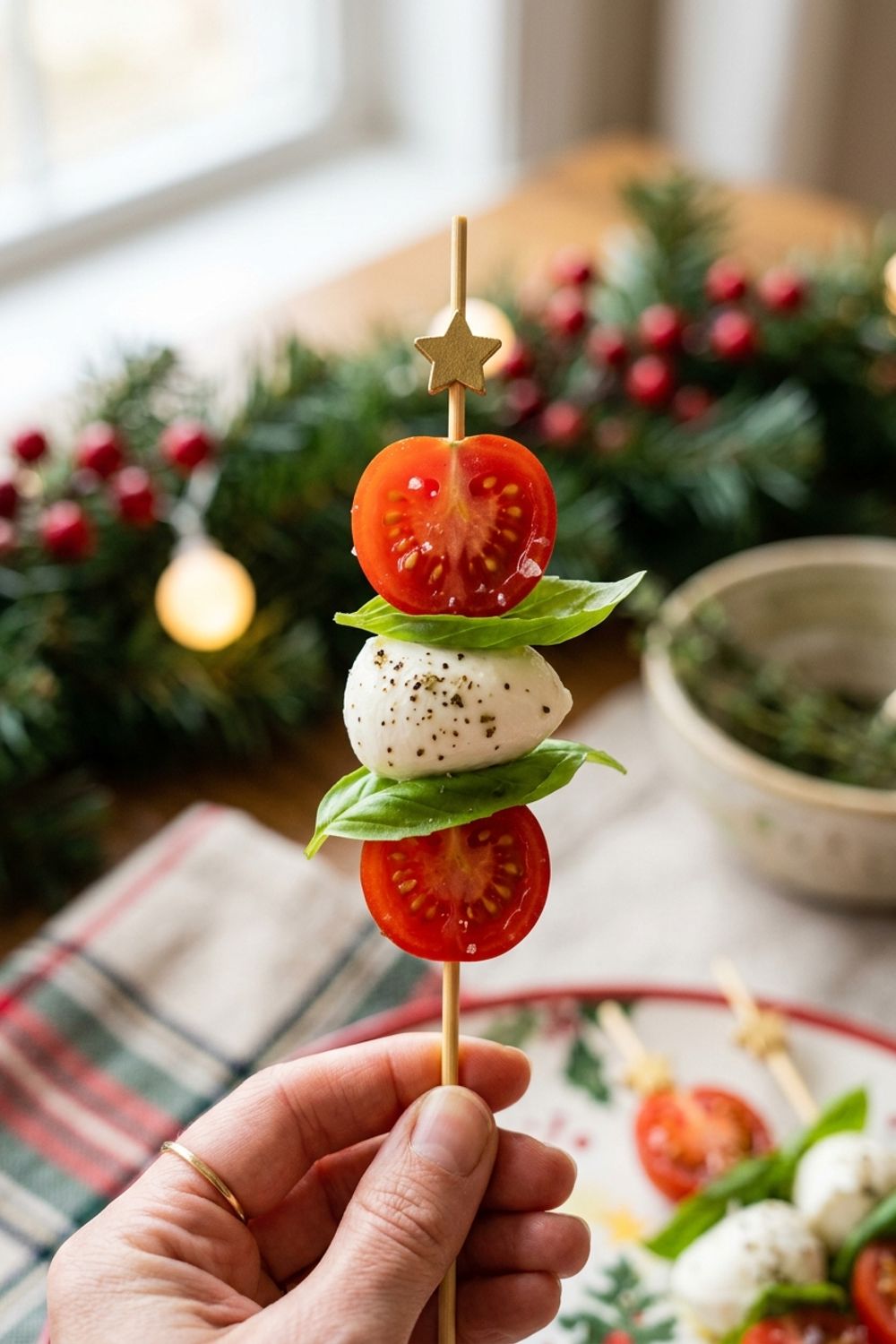
The cherry tomatoes need to be ripe and sweet, not mealy or bland. I cut them in half rather than leaving them whole because halved tomatoes sit flat on the skewer without rolling, expose more of their juicy interior, and are easier to bite through. Plus, the cut side creates a visual contrast of glossy red that catches the light beautifully.
The balsamic glaze is the finishing touch that ties everything together. A drizzle of thick, sweet balsamic glaze adds an acidic counterpoint to the rich mozzarella and creates beautiful dark streaks across the white and red ingredients. Buy a good-quality balsamic glaze or reduce regular balsamic vinegar by simmering 1/2 cup over low heat for 10 minutes until it coats the back of a spoon.
The Art of Skewer Assembly
Threading ingredients onto skewers sounds straightforward, but there is a real technique to getting it right. I have made thousands of skewers over the years, and the difference between an amateur-looking skewer and a professional one comes down to a few simple principles.
First, the order of ingredients matters. I always place the sturdiest, most anchoring items at the ends and the softest, most delicate items in the middle. This prevents the soft items from sliding off the skewer when guests pick it up. On the caprese skewer, the tomato halves (firm and sticky with their cut surfaces) sit at the ends, while the delicate mozzarella and basil are protected in the center. On the fruit skewers, the grapes serve as firm bookends holding the softer cheese and strawberry in place.
Second, spacing affects both appearance and eating experience. I push all ingredients snugly together with no gaps between them. A tightly packed skewer looks generous, holds together when picked up, and ensures every bite includes multiple flavors. A loosely packed skewer with gaps looks sparse, allows ingredients to slide and spin, and often means guests get a bite of just one ingredient at a time.
Third, the direction items face matters for presentation. On the caprese skewers, I always thread the tomato halves with their cut side facing outward. This shows off the beautiful, glossy interior rather than the matte skin. The basil leaves are folded with the smooth, darker green side facing out. These tiny details add up to a more polished, intentional presentation.
Fourth, consider the number of skewers you are making and streamline your workflow. Instead of assembling one complete skewer at a time, I set up an assembly line. I lay out 12 skewers in a row, thread all the first ingredients on each, then go back and add the second ingredient to all 12, and so on. This assembly line approach is significantly faster than completing one skewer at a time and ensures consistency across the batch.
Tips for Perfect Christmas Appetizer Skewers
Soak wooden skewers before use. This is a step many people skip, but it prevents the wood from absorbing moisture from the food, which can cause the ingredients to stick uncomfortably to the skewer. Soak bamboo or wooden skewers in water for 10 minutes before threading. Pat them dry with a paper towel so the wet surface does not make the ingredients slide during assembly.
Cut cheese cubes to a consistent size. Nothing makes a skewer platter look amateurish faster than unevenly sized cheese cubes. Cut your provolone, cheddar, and Gouda into uniform 3/4-inch cubes using a sharp knife and a ruler or steady eye. Consistent sizing means the skewers look balanced and each guest gets the same amount of cheese in every bite. I usually cut all my cheese cubes first and set them aside before starting assembly.
Serve the platter at room temperature. Cheese and mozzarella taste significantly better at room temperature than straight from the fridge. The flavors are more pronounced and the textures are softer and more pleasant. Take the finished platter out of the refrigerator 15 to 20 minutes before guests arrive. The salami, olives, and artichokes also taste better with a bit of warmth — their flavors open up as they lose their refrigerator chill.
Create a visual focal point on the platter. Instead of scattering the three skewer types randomly across the platter, arrange them in deliberate groupings that create visual flow. I often fan the caprese skewers in one direction from the left side of the platter, the antipasto skewers from the right side, and the fruit skewers down the center. Where they meet, I place the dipping bowls of balsamic glaze and honey. This creates a dynamic, professional layout.
Double-skewer for stability. If your skewers are on the shorter side (4 inches or less), the ingredients can tip and spin. Using two parallel skewers side by side — like a mini ladder — prevents this completely. Thread both skewers through each ingredient about half an inch apart. This technique is especially useful for the antipasto skewers, where the rounded olives and artichoke hearts tend to rotate on a single skewer.
Variations to Try
Prosciutto Melon Skewers. Wrap thin strips of prosciutto around cubes of ripe cantaloupe and thread them onto skewers with fresh mint leaves. Drizzle with a light honey-lime dressing made from 2 tablespoons honey, 1 tablespoon lime juice, and a pinch of chili flakes. The sweet melon with salty prosciutto is a classic Italian combination that works beautifully at holiday parties. Add a fresh mozzarella ball between each wrapped melon cube for extra substance.
Shrimp Cocktail Skewers. Thread cooked, chilled jumbo shrimp onto skewers with lemon wedges and cherry tomatoes. Serve with a small bowl of cocktail sauce for dipping. These elevate the skewer platter into something more substantial and pair wonderfully with the lighter caprese skewers. Cook the shrimp with Old Bay seasoning for a flavor boost.
Tortellini and Pesto Skewers. Cook cheese tortellini according to the package directions, cool completely, and thread onto skewers alternating with cherry tomatoes and small fresh mozzarella balls. Drizzle with store-bought or homemade pesto. These heartier skewers add a pasta element that satisfies guests who are looking for something more filling. Toss the cooled tortellini in a tablespoon of olive oil before skewering to prevent sticking.
Dessert Skewers. Thread brownies cut into cubes, fresh strawberries, marshmallows, and banana slices onto skewers. Drizzle with melted dark chocolate and a sprinkle of crushed candy canes. These sweet skewers make a wonderful addition to the savory platter and give guests a grab-and-go dessert option. Serve with a small bowl of whipped cream for dipping.
How to Store Christmas Appetizer Skewers
The three varieties have different storage timelines because of their different ingredients. Antipasto skewers are the most durable — all the ingredients are cured, marinated, or aged, so they hold up well for up to 24 hours in the refrigerator. The flavors actually improve slightly as the ingredients mingle on the skewer.
Caprese skewers are best within 4 hours of assembly. After that, the basil starts to wilt and darken, and the mozzarella dries out on the surface. If you need to make them ahead, assemble and store in an airtight container with a damp paper towel draped over the top. Add the balsamic glaze and olive oil drizzle just before serving.
Fruit and cheese skewers should be assembled within 2 hours of serving. Strawberries release juice over time, which can make the cheese cubes wet and the skewers messy. If assembling ahead, keep the strawberries separate and add them to the skewers last.
For any leftover skewers, remove the ingredients from the sticks and store them in separate airtight containers. The cheese and meats keep for 3 to 5 days. The fresh vegetables and fruit should be used within 1 to 2 days.
Troubleshooting Common Issues
The mozzarella balls keep cracking when I thread them. Your skewer point is too blunt or you are pushing too forcefully. Use skewers with a sharp, tapered point, and push gently with a slight twisting motion. If the mozzarella is still cracking, poke a small hole first with a toothpick and then thread the skewer through the pre-made hole. Also make sure the mozzarella is at room temperature — cold mozzarella is firmer and cracks more easily.
The skewers look messy and uneven. Trim all skewers to the same length before assembling — I cut them with kitchen shears to about 5 to 6 inches. Use the same number of ingredients per skewer within each variety. Line them up side by side as you assemble to check that they look uniform. Small inconsistencies are fine and add a handmade charm, but wildly different sizes will make the platter look disorganized.
Guests are not sure which skewer is which. Use different colored cocktail picks or ribbons tied around the top of each skewer type to differentiate them. You can also place small label cards or tent cards next to each grouping on the platter. If you have guests with allergies, this labeling is especially important so they can identify safe options.
The balsamic glaze is dripping everywhere. The glaze may be too thin. A good balsamic glaze should be thick enough to cling to the skewer without running off. If yours is too thin, simmer it in a small saucepan over low heat for 3 to 5 minutes until it thickens and coats the back of a spoon. Let it cool slightly before drizzling — it thickens further as it cools.
The ingredients are sliding off the skewers when guests pick them up. This is usually caused by too much space between the items, or the ingredients being too slippery. Push everything snugly together so each piece touches the next, creating friction that holds things in place. For particularly slippery items like olives or grapes, thread them slightly off-center so the skewer passes through more of the flesh rather than just the thin skin. You can also lightly pat any oily or wet ingredients with a paper towel before threading to reduce slipperiness.
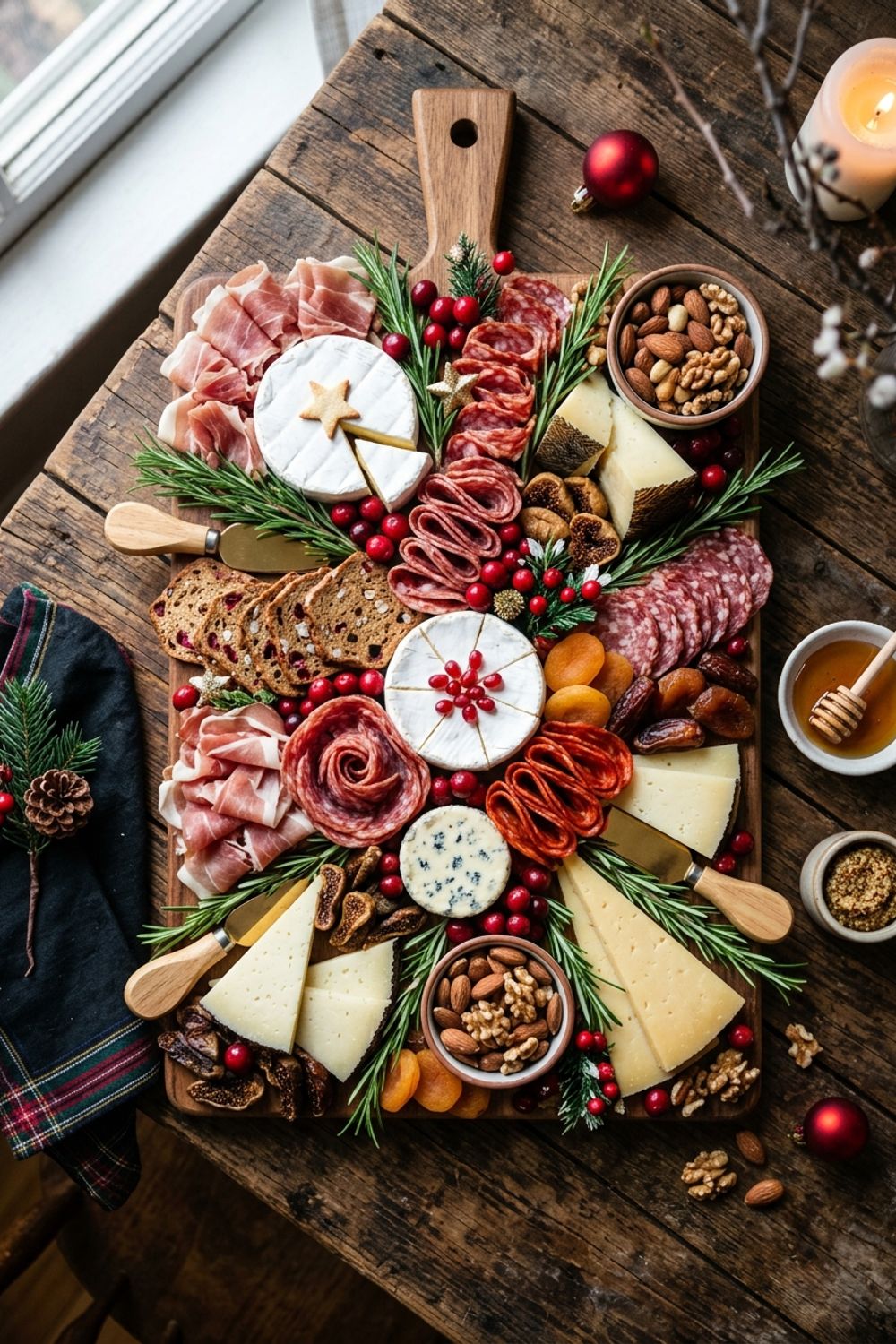
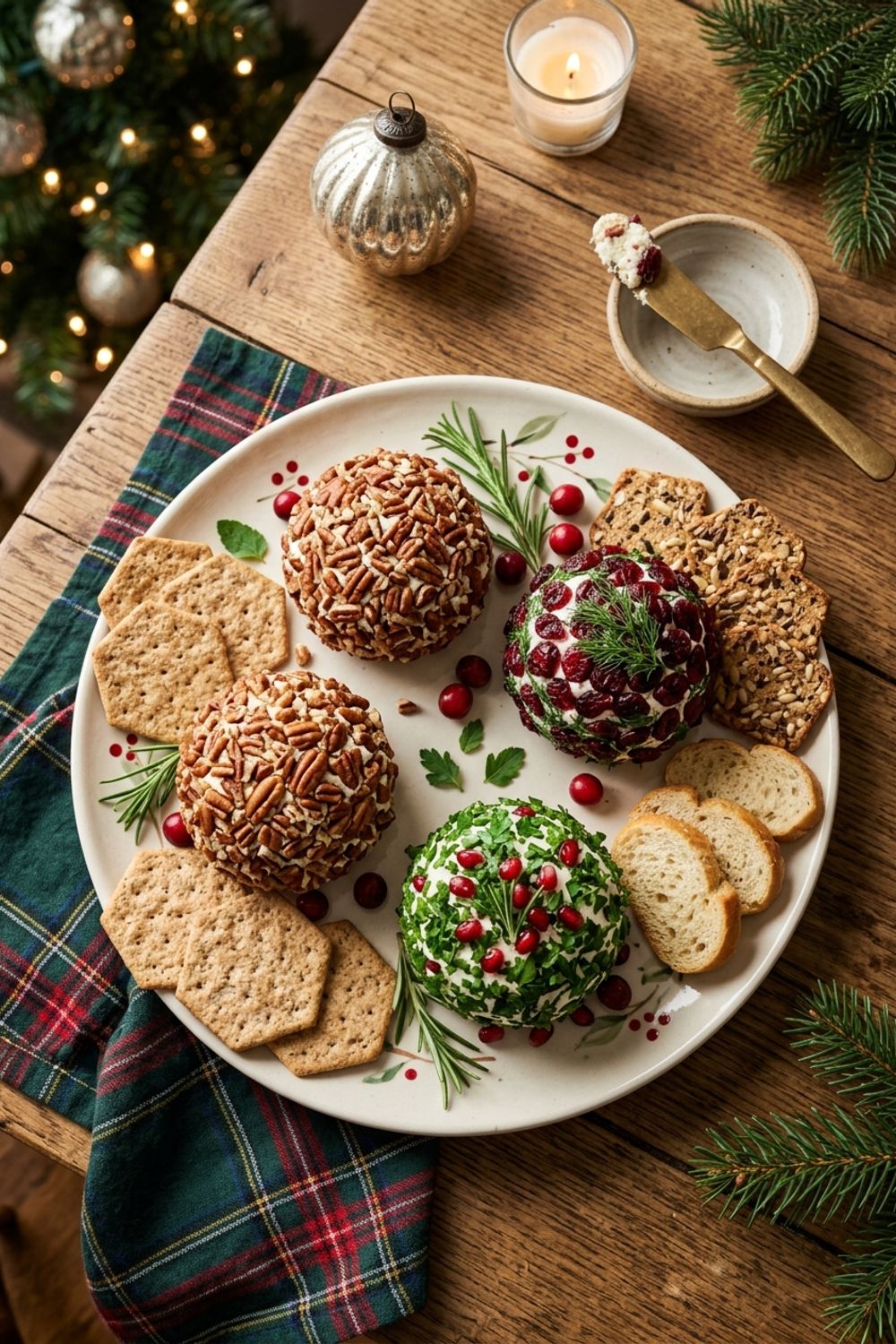
For a complete holiday appetizer spread, pair these skewers with my christmas charcuterie board and my christmas cheese balls. For dessert, my chocolate lava cake or my coconut cheesecake will end the meal on a spectacular note.
Never Miss a Recipe
Join 5,000+ home cooks and get new recipes straight to your inbox.
Ingredients
Caprese Skewers (12 skewers)
Antipasto Skewers (12 skewers)
Fruit and Cheese Skewers (12 skewers)
Instructions
- 1
Prepare the Caprese Skewers
Thread each 6-inch wooden or bamboo skewer in this order: one cherry tomato half (cut side facing out), one fresh basil leaf folded in half, one mozzarella ball, another basil leaf folded in half, and a second cherry tomato half. The green basil between the white mozzarella and red tomato creates the classic Italian tricolor that also reads as Christmas colors. Arrange on a platter and drizzle with olive oil and balsamic glaze. Sprinkle with flaky sea salt and pepper.
- 2
Prepare the Antipasto Skewers
Thread each skewer in this order: one folded salami quarter, one provolone cube, one marinated artichoke heart quarter, one Castelvetrano olive, and one pepperoncini. The salami should be folded into a compact bundle — fold the round slice in half, then fold in half again to create a thick quarter that holds firmly on the skewer. Push each ingredient snugly against the next so nothing slides around.
- 3
Prepare the Fruit and Cheese Skewers
Thread each skewer in this order: one green grape, one white cheddar cube, one strawberry, one Gouda cube, and a second green grape. The alternating red, white, and green creates a festive color pattern. The grapes act as bookends that hold the cheese and strawberry firmly in place. Arrange on a platter and drizzle lightly with honey just before serving.
- 4
Arrange the Platter
Choose a large rectangular or oval platter. Arrange the three types of skewers in separate sections, fanning them out from a central point or lining them up in parallel rows. Group each variety together so guests can easily identify and choose their preferred flavor. Leave a small gap between each section for visual breathing room.
- 5
Add Finishing Touches
Place a small bowl of extra balsamic glaze and a small bowl of honey on the platter for guests who want additional drizzling. Scatter a few loose basil leaves, cherry tomatoes, and grapes around the base of the skewers for color. Tuck small sprigs of fresh rosemary between the skewer groupings for a festive evergreen touch. Serve immediately or cover and refrigerate for up to 1 hour.
Nutrition Information
Per serving (serves 12). Values are approximate.
| Calories | 165 calories |
| Total Fat | 11g |
| Saturated Fat | 5g |
| Carbohydrates | 8g |
| Sugar | 5g |
| Protein | 9g |
| Sodium | 420mg |
| Fiber | 1g |
* Percent Daily Values are based on a 2,000 calorie diet. Your daily values may be higher or lower depending on your calorie needs. Nutritional information is an estimate and may vary.
Frequently Asked Questions
Can I make these skewers the night before?
The antipasto skewers can be assembled up to 24 hours ahead since all the ingredients are cured or marinated. The caprese skewers are best assembled within 4 hours of serving — the basil wilts and the mozzarella dries out after too long. The fruit skewers should be assembled within 2 hours since the strawberries release juice. Cover all assembled skewers tightly with plastic wrap and refrigerate.
What can I use instead of wooden skewers?
Cocktail picks, decorative toothpicks, or reusable metal skewers all work. For a more festive look, use red and green cocktail picks. Rosemary sprigs can also serve as edible skewers — strip the leaves from the bottom two-thirds of a sturdy sprig and use it to pierce the ingredients. This adds a beautiful herby aroma.
How do I prevent the ingredients from spinning on the skewer?
Push each ingredient firmly against the next so they are snug and touching. The friction between items keeps everything stable. Using flat-sided skewers rather than round ones also helps because the flat edges grip the food better. If using round skewers, threading softer items like cheese cubes slightly off-center creates a tighter fit.
Can I serve these skewers warm?
The antipasto skewers can be briefly warmed in a 300°F oven for 5 minutes to slightly melt the provolone, which is delicious. Do not warm the caprese or fruit skewers — the mozzarella will melt off the skewer and the fruit will become mushy.

Hi, I'm Lisa!
I create simple, tested recipes from around the world that anyone can make at home.
Learn More →Reader Reviews
Based on 127 reviews