Desserts & Baking
Chocolate Lava Cake
Why This Chocolate Lava Cake Recipe Is Special
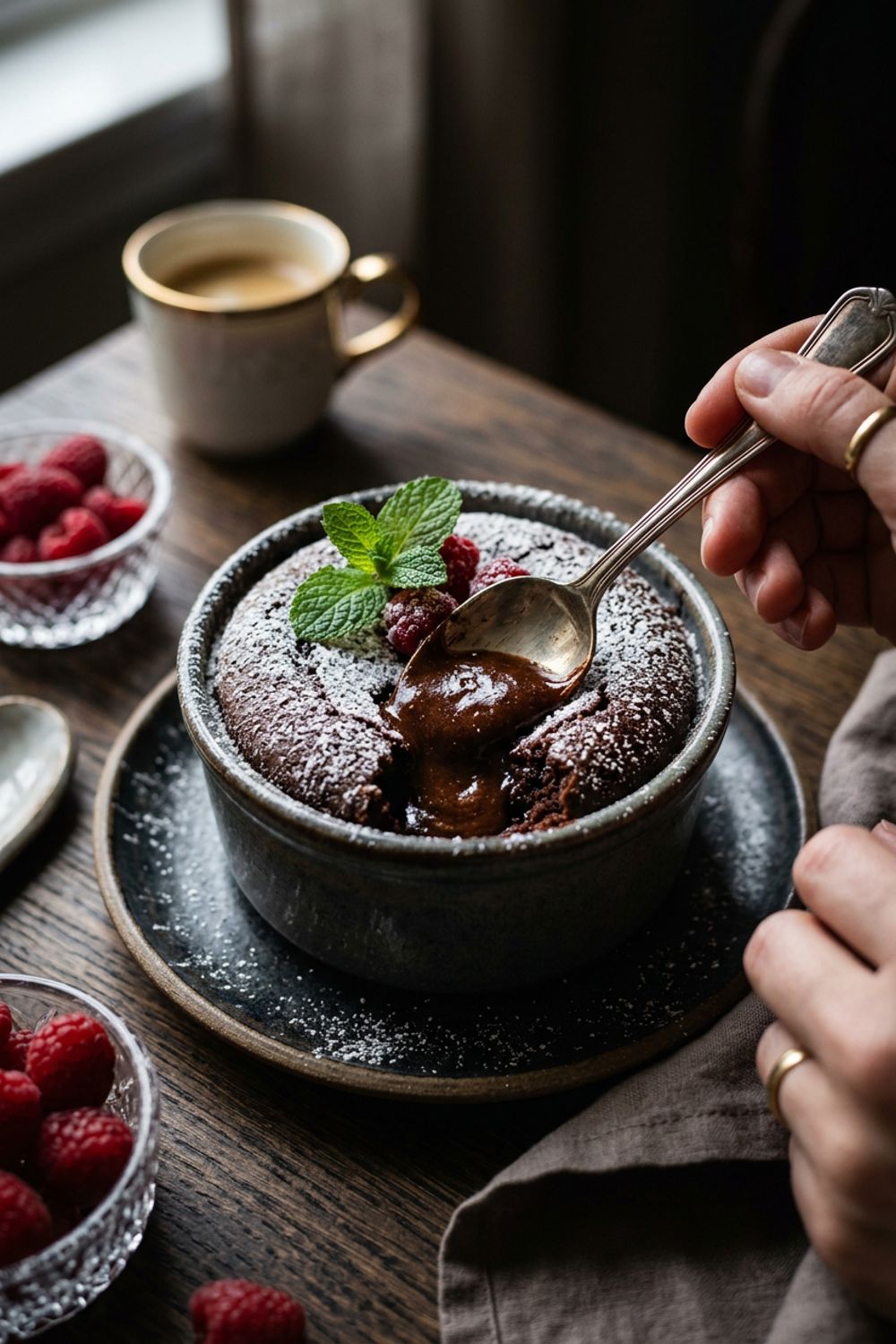
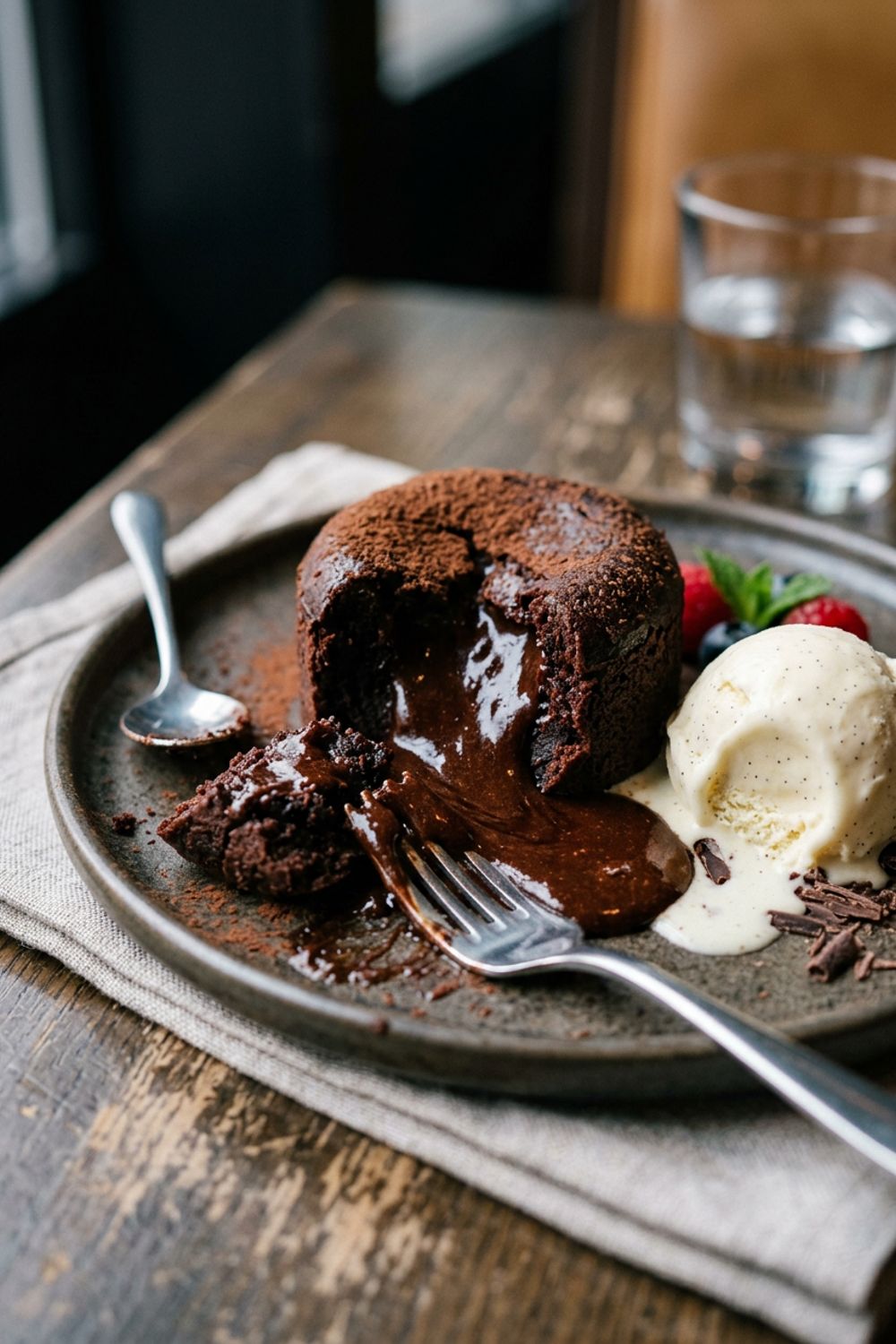
I still remember the first time I cracked open a chocolate lava cake at a tiny bistro in Paris. The spoon broke through the delicate chocolate shell and this river of molten, glossy chocolate came pouring out. I was absolutely mesmerized. From that moment on, I was determined to recreate that magic at home, and after years of testing, I finally nailed it.
What makes this recipe different from the dozens of lava cake recipes floating around the internet is the ratio. I use more chocolate and less flour than most recipes call for, which gives you a cake that is intensely chocolatey with a shell that is barely set — just enough structure to hold its shape when you unmold it, but thin enough that one tap of a spoon sends warm chocolate flowing across your plate. The extra egg yolks add richness without making the batter heavy, and the powdered sugar (instead of granulated) dissolves instantly for a smoother texture throughout.
I have made this recipe for dinner parties, date nights, random Tuesday cravings, and every holiday in between. It never fails to impress, and the best part is that it only takes about 25 minutes from start to finish. No mixer required, no complicated techniques, no pastry school degree needed. If you can melt chocolate and crack eggs, you can make a restaurant-quality lava cake that will have your guests convinced you secretly trained under a French pastry chef. Trust me on this one — this is the kind of dessert that earns you a reputation.
The Science Behind the Perfect Molten Center
Understanding what is happening inside the oven is the key to mastering lava cakes. Unlike a traditional cake where you want the entire batter to cook through, a lava cake relies on a temperature gradient. The outer edges of the batter, closest to the hot ramekin walls, cook and set into a firm cake structure. Meanwhile, the center remains below the temperature needed for the eggs and flour to fully set, staying liquid and molten.
This is why oven temperature matters so much. I bake at 425°F (220°C), which is higher than most cake recipes. That high heat rapidly sets the outside of the cake while leaving the inside underdone in the most delicious way possible. If you bake at a lower temperature, the heat has time to penetrate all the way through, and you end up with a very good chocolate cake — but not a lava cake.
The flour plays a critical role too. I use only 2 tablespoons for the entire recipe. It is just enough to give the outer shell structure and help the cake hold its dome shape after unmolding. Any more flour and the center starts to set too firmly. Any less and the cake can collapse when you flip it out of the ramekin. I have tested this with everything from 1 tablespoon to 1/4 cup, and 2 tablespoons is the sweet spot for that perfect balance of structure and flow.
The eggs and egg yolks serve double duty. They provide structure for the outer shell through protein coagulation, and they add richness and emulsification to the molten center. The yolks in particular contribute a velvety, custard-like quality to the flowing chocolate that straight melted chocolate alone cannot achieve.
Choosing the Right Chocolate
I cannot stress this enough: the chocolate you use will determine 80% of the flavor of your lava cake. Since there are only six ingredients in this recipe, every single one needs to pull its weight, and the chocolate is doing the heavy lifting.
For this recipe, I recommend a good-quality semi-sweet chocolate with about 55-60% cacao content. This gives you a balanced flavor that is rich and chocolatey without being overly bitter. My go-to brands are Ghirardelli, Guittard, and Lindt. Avoid chocolate chips if you can — they contain stabilizers that prevent them from melting smoothly, and that can affect both the texture of your batter and the flow of your molten center.
If you prefer a darker, more intense lava cake, step up to a 70% dark chocolate. You might want to add an extra tablespoon of powdered sugar to offset the bitterness. For a sweeter, more crowd-pleasing version, milk chocolate works beautifully — just reduce the sugar slightly and expect a lighter brown color.
One trick I learned from a pastry chef friend is to chop the chocolate very finely before melting. Smaller pieces melt more evenly, which means fewer hot spots and a smoother final batter. I usually spend an extra minute with my knife making sure no chunks are larger than a pea. It sounds fussy, but it makes a real difference in the finished texture.
Tips for Perfect Chocolate Lava Cakes Every Time
Master the timing with a test cake. The first time you make this recipe, I highly recommend making one test cake. Bake it for 12 minutes, unmold it, and cut it open. If the center is still liquid, that timing is perfect for your oven. If it is set, reduce the time by a minute for the remaining cakes. Every oven runs slightly differently, and a one-minute difference can mean the difference between a lava cake and a brownie. Write down the exact time that works for your oven — you will use it every time after that.
Bring your eggs to room temperature. Cold eggs from the fridge will cause the melted chocolate and butter mixture to seize up and form small lumps. Set your eggs on the counter 30 minutes before you start baking, or place them in a bowl of warm water for 5 minutes. Room temperature eggs also whip up lighter and airier, which helps create that delicate outer shell.
Do not skip the butter and cocoa coating. I know it seems like an extra step, but buttering and cocoa-dusting the ramekins is what allows the cake to release cleanly. Regular flour works in a pinch, but cocoa powder is better because it does not leave a white residue on the outside of your beautiful chocolate cake. Make sure you coat every surface, including the bottom and the rim.
Use a kitchen scale for consistency. Chocolate can vary a lot depending on how you measure it. Six ounces by weight is precise and repeatable. If you measure by cups, you might get different amounts depending on how finely you chop the chocolate. A kitchen scale removes the guesswork and ensures your lava cakes turn out identically every single time.
Serve immediately — these do not wait. A lava cake is best within 60 seconds of coming out of the oven. The molten center begins to set as it cools, so have your plates ready, your garnishes prepared, and your guests seated before you even open the oven door. I like to set a timer and announce “lava cakes in 15 minutes!” so everyone is ready at the table.
Variations to Try
White Chocolate Lava Cake. Replace the semi-sweet chocolate with 6 ounces of white chocolate and reduce the powdered sugar to 2 tablespoons. Add 1 teaspoon of vanilla extract. The result is a creamy, vanilla-scented cake with a flowing white chocolate center that looks stunning on a dark plate. Pair it with a raspberry coulis for a beautiful color contrast.
Peanut Butter Lava Cake. Before filling the ramekins, spoon the batter halfway, then add a frozen ball of peanut butter (about 1 tablespoon, frozen for at least 2 hours) in the center. Cover with more batter and bake as directed. When you cut in, you get a chocolate shell with a warm, gooey peanut butter center. This is my husband’s absolute favorite version.
Salted Caramel Lava Cake. Follow the recipe as written but tuck a frozen cube of salted caramel (about 2 teaspoons) into the center of each ramekin before the final layer of batter. The caramel melts during baking and creates a dual lava effect — chocolate and caramel flowing together. Add a pinch of flaky sea salt on top after unmolding.
Espresso Lava Cake. Add 2 teaspoons of instant espresso powder to the melted chocolate and butter mixture. The coffee does not make the cake taste like coffee — it amplifies the chocolate flavor and adds a sophisticated depth. Serve with a dollop of lightly sweetened whipped cream and a dusting of cocoa powder.
Mexican Hot Chocolate Lava Cake. Stir 1/2 teaspoon of ground cinnamon and a pinch of cayenne pepper into the batter. The cinnamon adds warmth and the cayenne gives a subtle heat that hits the back of your throat after each bite. Top with a small scoop of cinnamon ice cream for the full experience.
How to Store Chocolate Lava Cakes
Chocolate lava cakes are at their absolute best fresh from the oven, and I always recommend baking and serving them immediately. That said, life happens, and sometimes you need a make-ahead strategy.
For unbaked batter, you can fill the prepared ramekins, cover tightly with plastic wrap, and refrigerate for up to 24 hours. This is actually my favorite approach for dinner parties because it lets me do all the prep earlier in the day and just pop them in the oven right before dessert. Remember to add 2 extra minutes to the baking time to account for the cold batter.
If you have leftover baked lava cakes (a rare occurrence in my house), store them in the ramekins covered with plastic wrap in the refrigerator for up to 2 days. Reheat in a 350°F (175°C) oven for 8 to 10 minutes. The center will not be quite as lava-like as the original, but it will still be fudgy and incredibly delicious. Microwaving is not recommended as it tends to make the cake rubbery.
You can also freeze unbaked batter in the ramekins. Wrap tightly with plastic wrap and then aluminum foil. Freeze for up to 1 month. Bake directly from frozen at 425°F (220°C) for 16 to 18 minutes. This is a game-changer for spontaneous entertaining.
Troubleshooting Common Issues
The cake stuck to the ramekin. This almost always means the butter and cocoa coating was not thorough enough. Make sure to brush softened butter into every crevice, especially the bottom edge where the sides meet the base. If the cake does stick, serve it in the ramekin instead — it tastes just as good, and you can call it a “chocolate pot de crème” for a more rustic presentation.
The center was fully cooked. You baked too long. Reduce your time by 1 to 2 minutes next batch. Also check your oven temperature with an oven thermometer — many ovens run 15 to 25 degrees hotter than the dial says. At 425°F, even 1 extra minute can make a significant difference.
The cake collapsed when unmolded. This usually means the batter was slightly too wet, often from undermeasuring the flour. Make sure you are using a spoon-and-level method or, better yet, weighing the flour. Also let the cakes rest for a full 60 seconds before unmolding — those seconds allow the shell to firm up just enough to support the dome.
The batter looks grainy or split. The melted chocolate was too hot when you added the eggs. Let the chocolate mixture cool for a full 2 minutes before combining. If it does split, try adding 1 tablespoon of warm cream and whisking vigorously — this usually brings it back together.
If you are craving more chocolate decadence after this, I highly recommend my chocolate pudding pots for something silky and spoonable, or my christmas brownie bites for a festive twist on rich chocolate treats. And if you love that creamy cheesecake contrast with chocolate, definitely check out my churro cheesecake recipe — it is outrageously good.
Never Miss a Recipe
Join 5,000+ home cooks and get new recipes straight to your inbox.
Ingredients
Lava Cake Batter
For Ramekins
Garnish
Instructions
- 1
Prepare the Ramekins
Preheat your oven to 425°F (220°C). Generously brush the insides of four 6-ounce ramekins with softened butter, making sure to coat every surface. Dust each ramekin with cocoa powder, tapping out the excess. This double coating ensures the cakes release perfectly every time. Place the prepared ramekins on a baking sheet.
- 2
Melt the Chocolate and Butter
Place the chopped chocolate and butter in a microwave-safe bowl. Microwave in 30-second intervals, stirring between each, until completely melted and smooth, about 90 seconds total. Alternatively, melt over a double boiler, stirring constantly. Let the mixture cool for 2 minutes so it does not cook the eggs when combined.
- 3
Mix the Eggs and Sugar
In a separate bowl, whisk together the eggs, egg yolks, and powdered sugar until thick and pale, about 2 minutes of vigorous whisking. The mixture should form a ribbon when the whisk is lifted. This aeration is what gives the cake its delicate outer shell.
- 4
Combine the Batter
Pour the melted chocolate mixture into the egg mixture and fold gently with a spatula until just combined. Sift the flour over the top and fold in until no streaks of flour remain. Be careful not to overmix, as this develops gluten and can make the cake tough rather than tender.
- 5
Fill and Bake
Divide the batter evenly among the four prepared ramekins, filling each about three-quarters full. Bake at 425°F (220°C) for exactly 12 to 14 minutes. The edges should be firm and set, but the center should still jiggle slightly when you gently shake the ramekin. The timing is critical — even one extra minute can turn your molten center into a solid cake.
- 6
Unmold and Serve
Let the cakes rest in the ramekins for exactly 1 minute. Run a thin knife around the edge of each cake. Place a serving plate upside down on top of the ramekin, then quickly flip both together. Gently lift the ramekin away. The cake should slide out with a perfect dome. Dust with powdered sugar and serve immediately with fresh raspberries or a scoop of vanilla ice cream.
Nutrition Information
Per serving (serves 4). Values are approximate.
| Calories | 420 calories |
| Total Fat | 30g |
| Saturated Fat | 18g |
| Carbohydrates | 34g |
| Sugar | 24g |
| Protein | 7g |
| Sodium | 45mg |
| Fiber | 3g |
* Percent Daily Values are based on a 2,000 calorie diet. Your daily values may be higher or lower depending on your calorie needs. Nutritional information is an estimate and may vary.
Frequently Asked Questions
Can I make chocolate lava cakes ahead of time?
Yes! Prepare the batter and fill the ramekins, then cover with plastic wrap and refrigerate for up to 24 hours. When ready to bake, add 2 extra minutes to the baking time since the batter will be cold.
Why did my lava cake not have a runny center?
The most common reason is overbaking. Every oven is different, so start checking at 11 minutes. The center should jiggle like gelatin when you shake the ramekin. Also, make sure you are using 6-ounce ramekins — larger ones spread the batter too thin.
Can I use milk chocolate instead of semi-sweet?
Absolutely. Milk chocolate will give a sweeter, creamier center. Reduce the powdered sugar to 2 tablespoons if you switch to milk chocolate. Dark chocolate (70% cacao) also works wonderfully for a more intense, bittersweet flavor.
Can I bake lava cakes in a muffin tin?
Yes, you can use a well-greased muffin tin. Reduce the baking time to 9 to 11 minutes since the thinner walls conduct heat faster. The cakes may be slightly harder to unmold, so be sure to butter and cocoa-dust generously.

Hi, I'm Lisa!
I create simple, tested recipes from around the world that anyone can make at home.
Learn More →Reader Reviews
Based on 312 reviews