Desserts & Baking
Cake Donuts Recipe
Why This Cake Donuts Recipe Is Special
There is something almost magical about a fresh, homemade cake donut that is still warm from the fryer. That thin, crackly glaze shatters with the first bite to reveal a tender, lightly spiced interior that is miles beyond anything you can find at a chain donut shop. I developed this recipe after going through a full-blown donut obsession — I must have tested 30 different recipes before landing on this one — and I am thrilled to finally share it with you.
What makes these cake donuts stand out is the texture. They are incredibly tender thanks to the buttermilk, which provides both moisture and acidity. That acidity reacts with the baking soda to create tiny gas bubbles throughout the dough, giving you a light, almost airy interior. But these are not as delicate as a yeast donut — cake donuts have a satisfying density and a slight crumble when you bite in that I absolutely love. The edges develop this beautiful golden crust from the frying that provides a subtle crunch, especially when coated in glaze.
I use a combination of nutmeg and cinnamon that gives these donuts an old-fashioned bakery flavor. Nutmeg is the classic cake donut spice — it is warm without being spicy and adds a subtle complexity that most people cannot identify but everyone loves. The cinnamon plays a supporting role, rounding out the warmth. Together, they create that unmistakable “donut shop” aroma that fills your entire kitchen as these fry. I promise you, making these at home is one of those experiences that makes you wonder why you ever stood in line at a donut shop. They are simpler than you think, absolutely addictive, and guaranteed to make you the most popular person in your household.
Mastering the Art of Donut Frying
Frying donuts at home intimidates a lot of people, but once you understand the principles, it becomes second nature. The key to perfect fried donuts is temperature control. You want your oil at 375°F (190°C), and you want it to stay as close to that temperature as possible throughout the frying process.
When oil is at the right temperature, the donut’s exterior seals almost immediately, creating a thin barrier that prevents the dough from absorbing excess oil. The moisture inside the donut turns to steam, cooking the interior from within while the outside crisps up. If the oil is too cool — say, 325°F — that seal takes too long to form, and the donut soaks up oil like a sponge, resulting in a greasy, heavy product. If the oil is too hot — above 400°F — the outside burns before the inside cooks through, leaving you with a dark exterior and a raw, doughy center.
I use a deep-fry thermometer clipped to the side of my pot, and I check it between every batch. Adding cold dough to hot oil drops the temperature by 15 to 25 degrees, so I let the oil recover between batches. Most stoves take about 1 to 2 minutes to bring the oil back up to 375°F. I use this time to transfer the just-fried donuts to the rack and prepare the next batch.
The vessel matters too. A heavy Dutch oven holds heat much better than a thin stockpot, which means more stable temperatures and more consistent results. Fill it with at least 3 inches of oil so the donuts can float freely without touching the bottom. And always fry only 2 to 3 donuts at a time — crowding the pot drops the temperature too dramatically.
The Perfect Cake Donut Dough
The dough for cake donuts is quite different from yeast donut dough. There is no yeast, no rising time, and no kneading. Cake donut dough is closer to a thick biscuit dough or a very stiff muffin batter. It comes together quickly, but there are a few details that make the difference between good donuts and truly excellent ones.
The butter should be softened, not melted. Softened butter gets creamed with the sugar, which incorporates tiny air pockets into the fat. These air pockets help the baking powder and baking soda do their job, creating a lighter donut. Melted butter makes the dough spread more and produces a slightly denser result.
Buttermilk is non-negotiable in this recipe. The acidity tenderizes the gluten in the flour, resulting in a softer crumb. It also reacts with the baking soda for extra lift. If you do not have buttermilk on hand, you can make a substitute by adding 2 teaspoons of white vinegar or lemon juice to 2/3 cup of regular milk and letting it sit for 5 minutes until it curdles. It works nearly as well.
The chilling step might seem skippable, but please do not skip it. Warm dough is sticky and stretchy, making it difficult to roll and cut cleanly. Chilled dough holds its shape, releases from the cutter cleanly, and maintains a neat round shape as it hits the hot oil. Even 30 minutes in the fridge makes a huge difference — overnight is even better if you are planning ahead.
Tips for Perfect Cake Donuts
Do not overwork the dough. This is the single biggest mistake home bakers make with cake donuts. Once you add the flour to the wet ingredients, stir just until combined. You should still see some floury streaks, and the dough should look shaggy and rough. It will come together fully during the brief kneading when you roll it out. Overworked dough produces tough, chewy donuts instead of tender, crumbly ones.
Roll to exactly 1/2-inch thickness. Thinner donuts cook through too quickly and come out flat and crispy. Thicker donuts take too long to cook in the center and can be doughy inside while the outside overcooks. Half an inch is the Goldilocks zone — it gives you donuts that are perfectly cooked through with a great ratio of crispy exterior to soft interior. I use two 1/2-inch dowels as guides on either side of the dough to ensure even thickness.
Keep the oil temperature steady. I cannot say this enough. Invest in a clip-on deep-fry thermometer if you do not already have one. It removes all the guesswork and transforms frying from stressful to stress-free. Adjust your burner as needed between batches — most stovetops need small adjustments throughout the frying process.
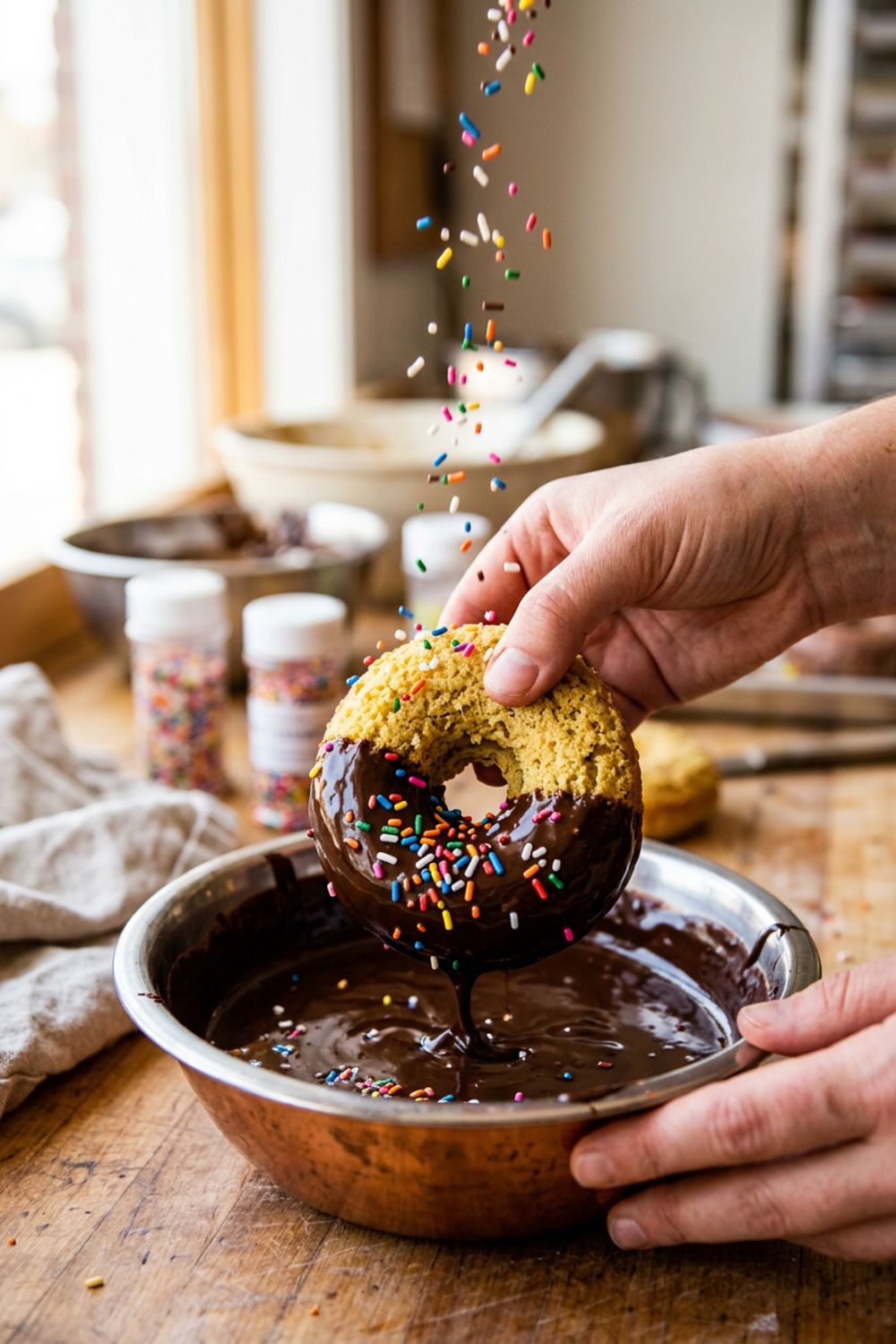
Glaze while still warm. The glaze adheres best to a slightly warm donut. If you wait until they are completely cool, the glaze sits on the surface and can flake off. Slightly warm donuts create a thin melted layer where the glaze meets the donut, which sets into that beautiful, crackly shell you see on bakery donuts. Dip, twist, and place glaze-side up. The glaze will set within 10 minutes.
Fry the donut holes separately. Those little donut hole cutouts are cook at a different rate than the full donuts because they are smaller. They only need about 45 seconds per side. I usually fry all the full-size donuts first, then do the holes in one batch at the end. They make great little snacks for the chef while you glaze the big donuts.
Variations to Try
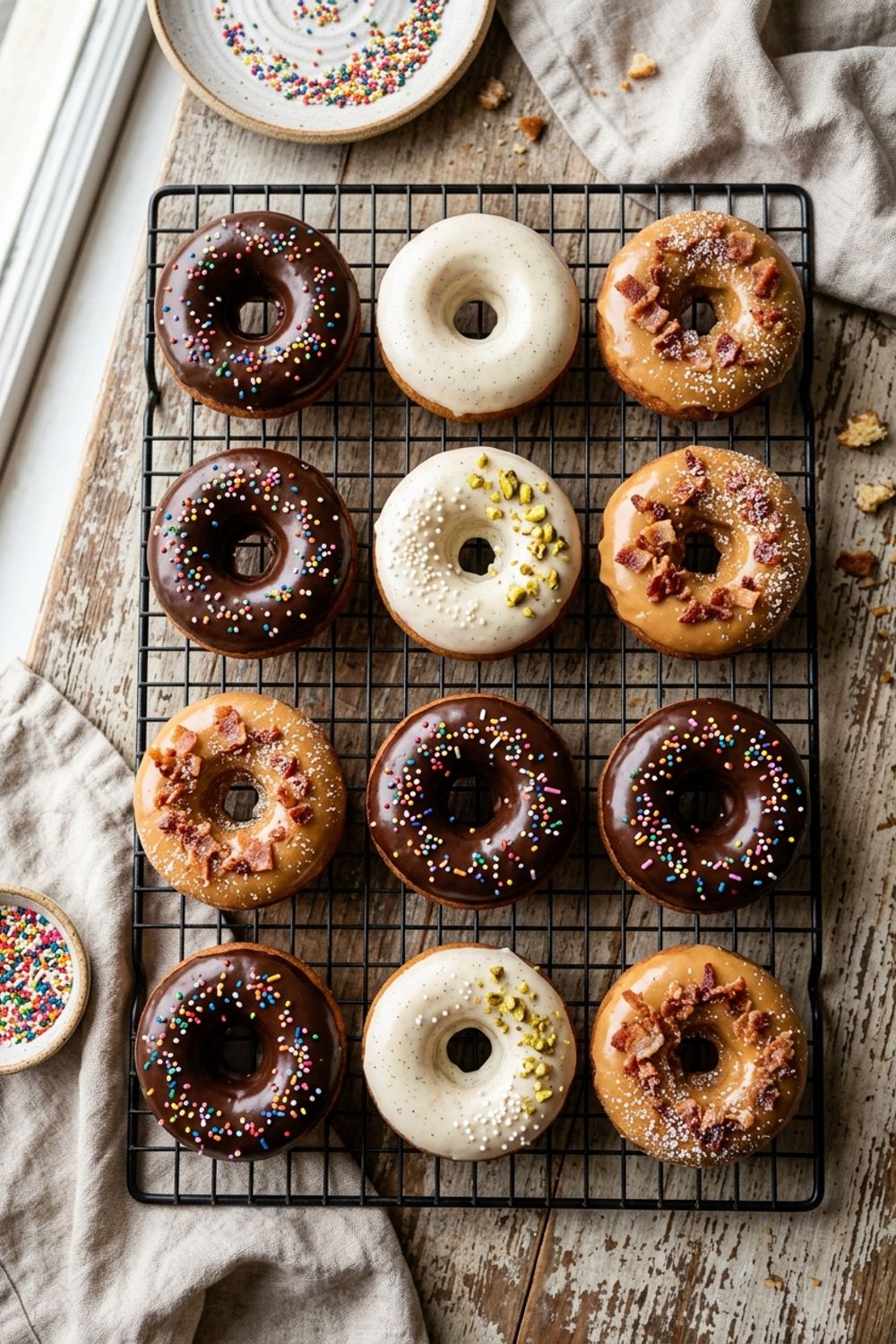
Chocolate Glazed Cake Donuts. Replace the vanilla glaze with a chocolate one: 2 cups powdered sugar, 1/3 cup cocoa powder, 1/4 cup milk, and 1 teaspoon vanilla. The combination of the nutmeg-spiced donut with rich chocolate glaze is outstanding. For extra decadence, add 2 ounces of melted semi-sweet chocolate to the glaze.
Cinnamon Sugar Cake Donuts. Skip the glaze and instead toss the warm donuts in a mixture of 1/2 cup granulated sugar and 2 tablespoons ground cinnamon. The warmth of the just-fried donut makes the cinnamon sugar stick perfectly. These taste like an old-fashioned churro in donut form.
Maple Glazed Cake Donuts. Replace the vanilla extract in the glaze with 2 tablespoons of pure maple syrup and reduce the milk to 3 tablespoons. The maple flavor pairs beautifully with the nutmeg in the donut. Top with a slice of crispy bacon for that trendy sweet-salty combination.
Apple Cider Donuts. Replace the buttermilk with apple cider that has been reduced by half (simmer 1 1/3 cups until you have 2/3 cup). The concentrated cider adds a natural apple sweetness and tanginess. Roll the warm donuts in cinnamon sugar. These are absolute perfection in the fall — they taste exactly like the ones from apple orchards.
Baked Donut Version. For a lighter take, pipe the batter into a greased donut pan and bake at 350°F (175°C) for 10 to 12 minutes. Brush the warm baked donuts with 2 tablespoons of melted butter before dipping in glaze. The butter adds moisture and helps the glaze stick. These are not as crispy as fried but are wonderful in their own right.
How to Store Cake Donuts
Cake donuts are at their peak freshness within the first 4 hours of frying. The exterior is at its crispiest and the glaze is at its most beautiful. That said, they are still very good the next day if stored properly. Place cooled donuts in a single layer in an airtight container or zip-top bag at room temperature. They will keep for 2 days, though the texture softens as they sit.
If you want to crisp them up the next day, pop unglazed donuts in a 350°F oven for 3 to 4 minutes. This revives some of that just-fried crunch. Then dip in fresh glaze. Microwaving for 10 seconds works too for a soft, warm donut experience, though you lose the crispness.
I do not recommend freezing glazed donuts because the glaze becomes wet and sticky when thawed. However, you can freeze unglazed donuts for up to 1 month. Wrap individually in plastic wrap and freeze in a zip-top bag. Thaw at room temperature, warm briefly in the oven, and glaze fresh.
Troubleshooting Cake Donut Problems
Donuts are greasy. The oil temperature was too low. Make sure your oil is at 375°F before adding donuts and allow it to recover between batches. Also, drain the donuts on a wire rack, not paper towels — the rack allows air to circulate so the bottom does not sit in oil.
Donuts are raw inside. The oil was too hot, cooking the outside before the inside was done. Lower the temperature to 365-375°F and fry for the full time specified. If they are browning faster than expected, your thermometer may need calibrating.
Donuts cracked or split while frying. The dough was overworked, creating too much gluten. Be gentler next time and mix only until combined. Cracks can also happen if the oil is too hot, causing the exterior to set before the interior has expanded.
Donuts lost their shape. The dough was too warm when it hit the oil. Make sure to chill it thoroughly and work quickly when rolling and cutting. If your kitchen is warm, put the cut donuts on a baking sheet in the fridge for 10 minutes before frying.
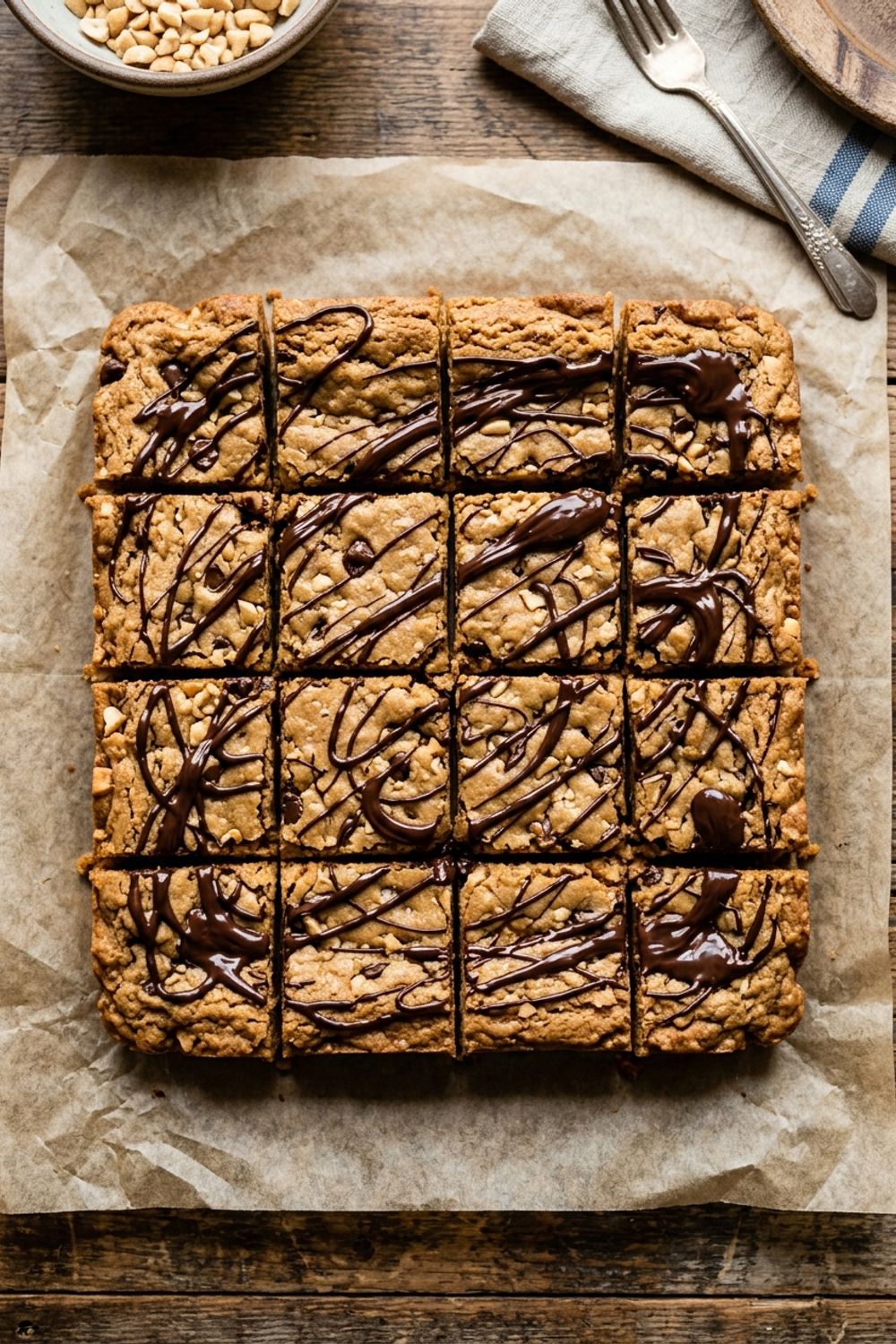
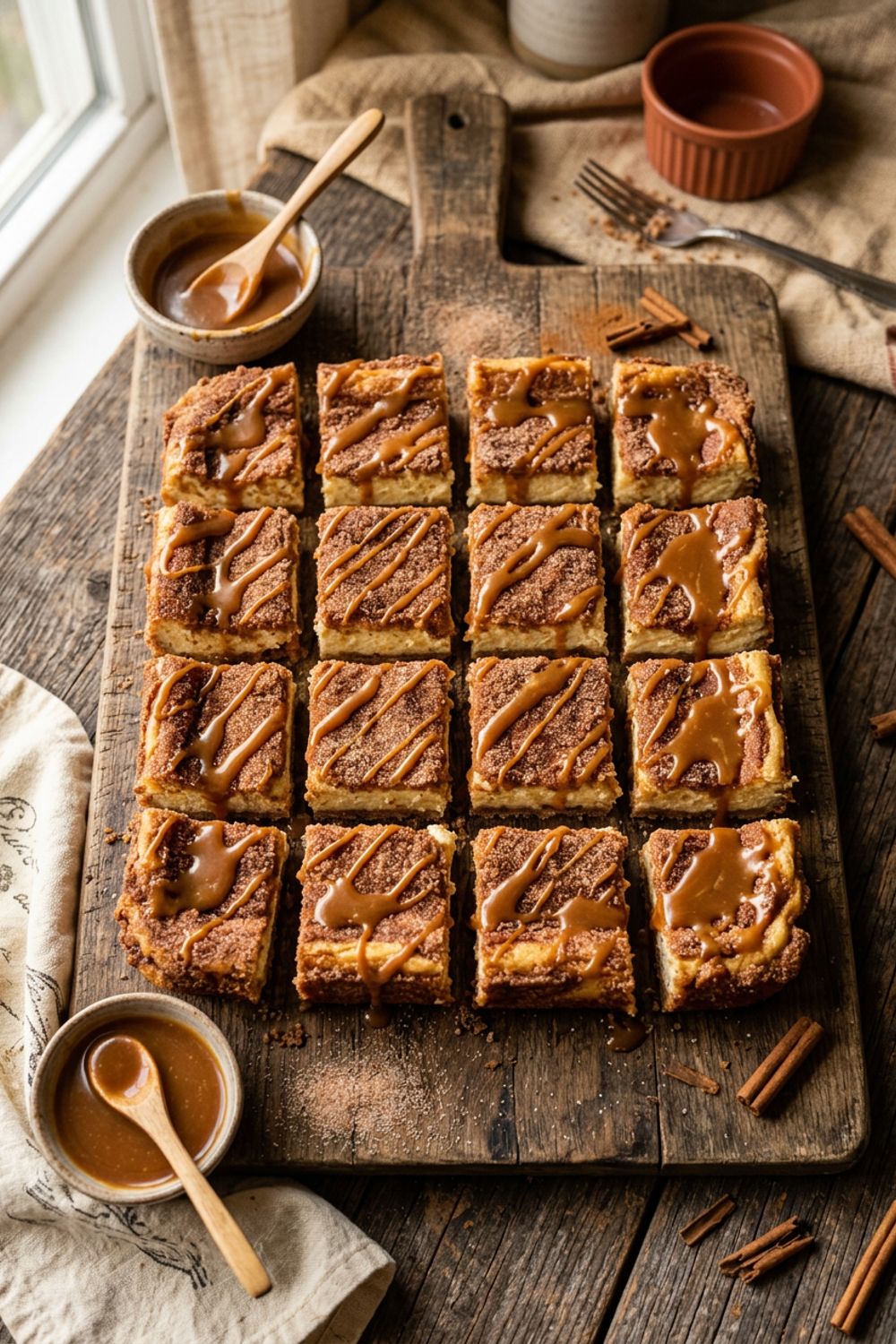
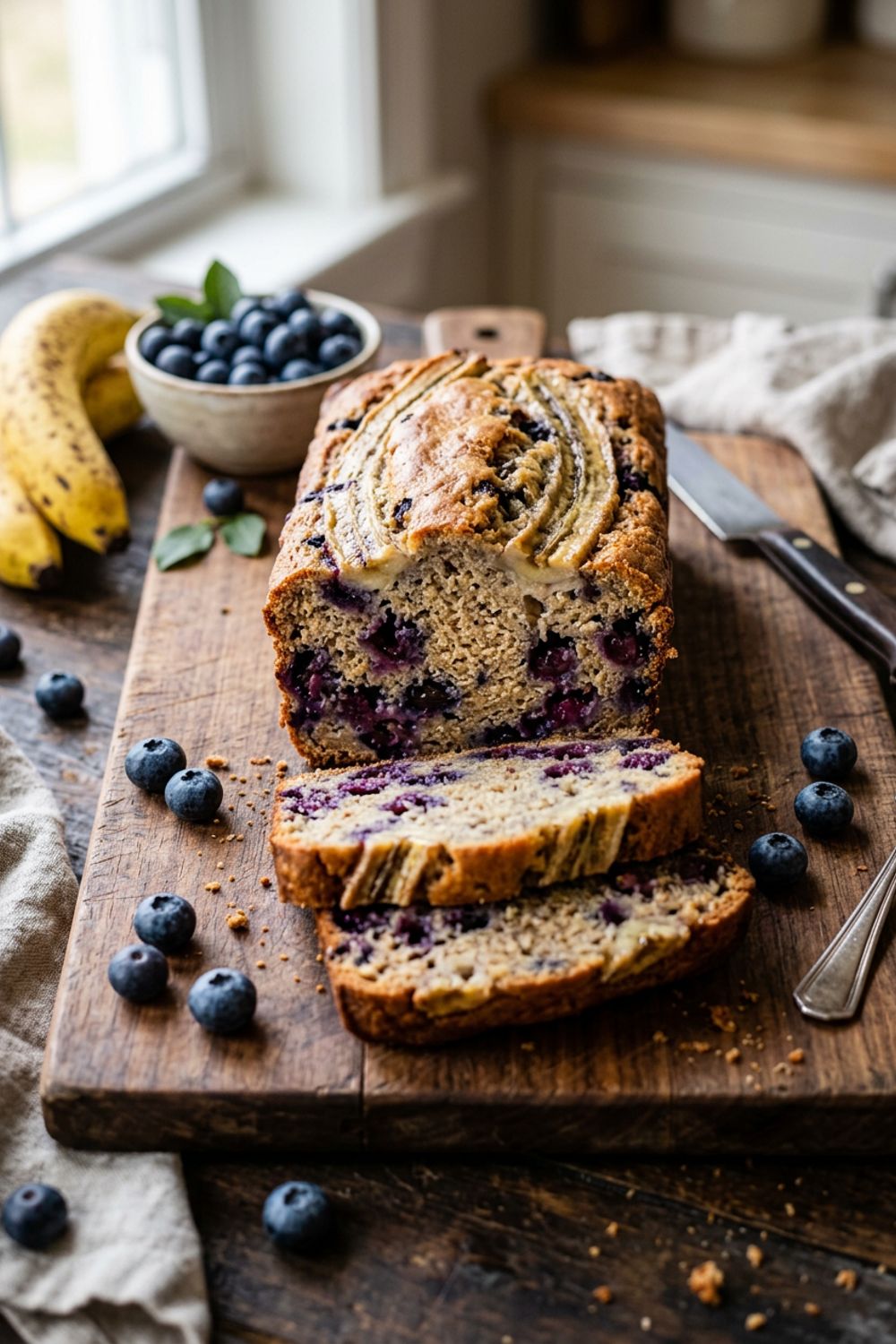
For more comforting baked treats, try my blueberry banana bread for a fruity breakfast staple, or my easy peanut butter cookie bars for another crowd-pleasing snack. If you love the cinnamon sugar donut variation, you will be obsessed with my churro cheesecake recipe.
Never Miss a Recipe
Join 5,000+ home cooks and get new recipes straight to your inbox.
Ingredients
Cake Donut Dough
For Frying
Vanilla Glaze
Instructions
- 1
Mix the Dry Ingredients
In a large bowl, whisk together the flour, baking powder, baking soda, salt, nutmeg, and cinnamon. Set aside. These leaveners work together — the baking powder provides the primary rise while the baking soda reacts with the buttermilk for extra lift and tenderness.
- 2
Cream the Butter and Sugar
In a separate bowl, beat the softened butter and sugar together with an electric mixer on medium speed until light and fluffy, about 2 minutes. Add the eggs one at a time, beating well after each addition. Mix in the buttermilk and vanilla extract on low speed until combined.
- 3
Form the Dough
Add the dry ingredients to the wet ingredients and stir with a wooden spoon or spatula until a soft, slightly sticky dough forms. Do not overmix. Cover the bowl with plastic wrap and refrigerate for at least 30 minutes. This chilling step firms up the butter, making the dough easier to handle and producing a more tender donut.
- 4
Cut the Donuts
On a well-floured surface, roll the dough to 1/2-inch thickness. Use a 3-inch donut cutter (or two round cutters — a large one and a small one) to cut out donuts. Gather the scraps, re-roll once, and cut more. You should get about 12 donuts and 12 donut holes. Place the cut donuts on a floured baking sheet.
- 5
Fry the Donuts
Heat oil in a heavy-bottomed pot or Dutch oven to 375°F (190°C). Use a thermometer for accuracy. Fry the donuts 2 to 3 at a time, being careful not to crowd the pot. Cook for about 1 minute and 30 seconds per side, until deep golden brown. Remove with a slotted spoon or spider and drain on a wire rack set over a baking sheet. Fry the donut holes for about 45 seconds per side.
- 6
Glaze the Donuts
Whisk together the powdered sugar, milk, vanilla extract, and salt until smooth. The glaze should be thick but pourable. While the donuts are still slightly warm, dip the top of each donut into the glaze, twist, and place glaze-side up on the wire rack. Let the glaze set for 10 minutes before serving.
Nutrition Information
Per serving (serves 12). Values are approximate.
| Calories | 275 calories |
| Total Fat | 10g |
| Saturated Fat | 3g |
| Carbohydrates | 42g |
| Sugar | 22g |
| Protein | 4g |
| Sodium | 195mg |
| Fiber | 1g |
* Percent Daily Values are based on a 2,000 calorie diet. Your daily values may be higher or lower depending on your calorie needs. Nutritional information is an estimate and may vary.
Frequently Asked Questions
Can I bake these instead of frying?
Yes! Pipe the batter into a greased donut pan and bake at 350°F (175°C) for 10 to 12 minutes. The texture will be lighter and more cake-like, and you will not get the crispy outer crust that frying produces, but they are still delicious.
Why are my cake donuts tough?
Overmixing the dough develops gluten, which makes donuts tough. Mix just until the flour disappears. Also, rerolling scraps more than once toughens the dough. Finally, make sure your oil is at the correct temperature — too low and the donut absorbs excess oil.
What kind of oil is best for frying donuts?
Vegetable oil, canola oil, or peanut oil all work well. They have high smoke points and neutral flavors. Avoid olive oil or coconut oil, which can impart unwanted flavors. Peanut oil gives the crispiest results but check for allergies.
Can I make the dough the night before?
Absolutely. Refrigerating the dough overnight makes it even easier to handle. Just let it sit at room temperature for 10 minutes before rolling so it is workable.

Hi, I'm Lisa!
I create simple, tested recipes from around the world that anyone can make at home.
Learn More →Reader Reviews
Based on 267 reviews